Selling My Record Albums, Except One

ImageAs I write, a record dealer I’ve never met is combing through boxes of my lifelong collection of Long Playing (LP) records. About 2000 LP’s total.
This morning I remembered one LP I want to keep. It is Mel Lewis’s Mel Lewis and Friends LP. Mel autographed it for me when I interviewed him for Modern Drummer. Mel was, I believe, my second feature MD interview.

But that day was also a landmark, a radical, monumental shift in my life. Everything, e-v-e-r-y-t-h-i-n-g, I believed about becoming a successful professional drummer exploded. Gone without a trace. Dust.

I’ll explain in another blog entry.

Mel was a drum hero, one of the best players, and a great, generous man. Mel was also, I learned much later, born on the same day as my Uncle Bob, the one person in my life who started me on my lifelong love of drums.

— end —

Posted in SKF Blog | Tagged , , | 2 Comments

Do Drum Endorsements Sell Drums?

SKF NOTE: For a little while in the early 1980’s I was Northeast District Sales Manager for the Gretsch Musical Instrument Company, which was then based out of Tennessee. Karl Dustman was an executive with Gretsch at the time. Karl and I knew each other from his many years at Ludwig Drum Company and my time as a freelance writer for Modern Drummer. A wonderful guy.

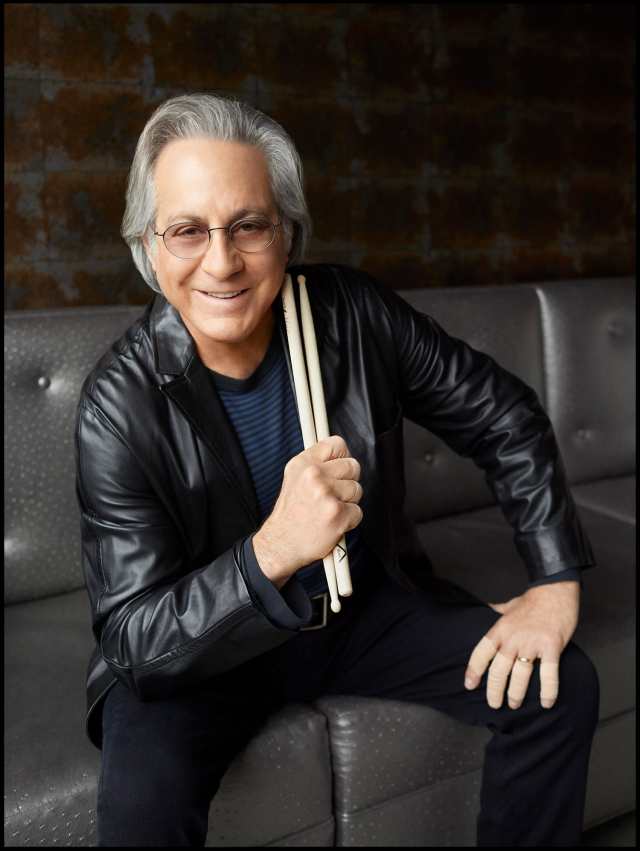
Max Weinberg and I had become friends through Modern Drummer. Not long after I moved to Gretsch from Modern Drummer, Max and I started talking about his endorsing and using Gretsch drums on Bruce Springsteen’s upcoming Born in the USA tour. I don’t remember whether Max first broached the subject or I did. But I thought it was a great idea that had to be a plus for a great American drum company in the process of rebuilding itself.

If memory serves, Max would need three four-piece Gretsch drumsets for the road in exchange for his endorsement. That was, I think, because of the logistics of the equipment trucks. Roadies might be loading one of Max’s kits onto trucks in New York City while roadies were unloading one of Max’s kits from a truck for the next gig in Chicago. Something like that.

I approached Karl Dustman with the idea. He said no. I don’t remember if that was Karl’s unilateral decision. It may have been a decision with which Karl disagreed, and he was merely the messenger. But the reason Gretsch said no to the Max Weinberg endorsement was interesting.

Karl asked me, “Can you guarantee Max Weinberg’s endorsement will sell a certain number of Gretsch drumsets?”

“No,” I answered, adding, “You don’t think Max Weinberg playing Gretsch drums on a worldwide Bruce Springsteen tour will sell more than three drumsets?”

What anyone thought, wasn’t the point. The point was, Gretsch saw no way of quantifying drum sales based on endorsements.

Jonathan Moffett was turned down as a Gretsch endorser for Michael Jackson’s Thriller tour for the same reason. And both Max and Jonathan toured the world endorsing other drum makers.

I still believe Gretsch was wrong, shortsighted. What do you think?

end

Posted in SKF Blog | Tagged , , , , , , , , , | 5 Comments

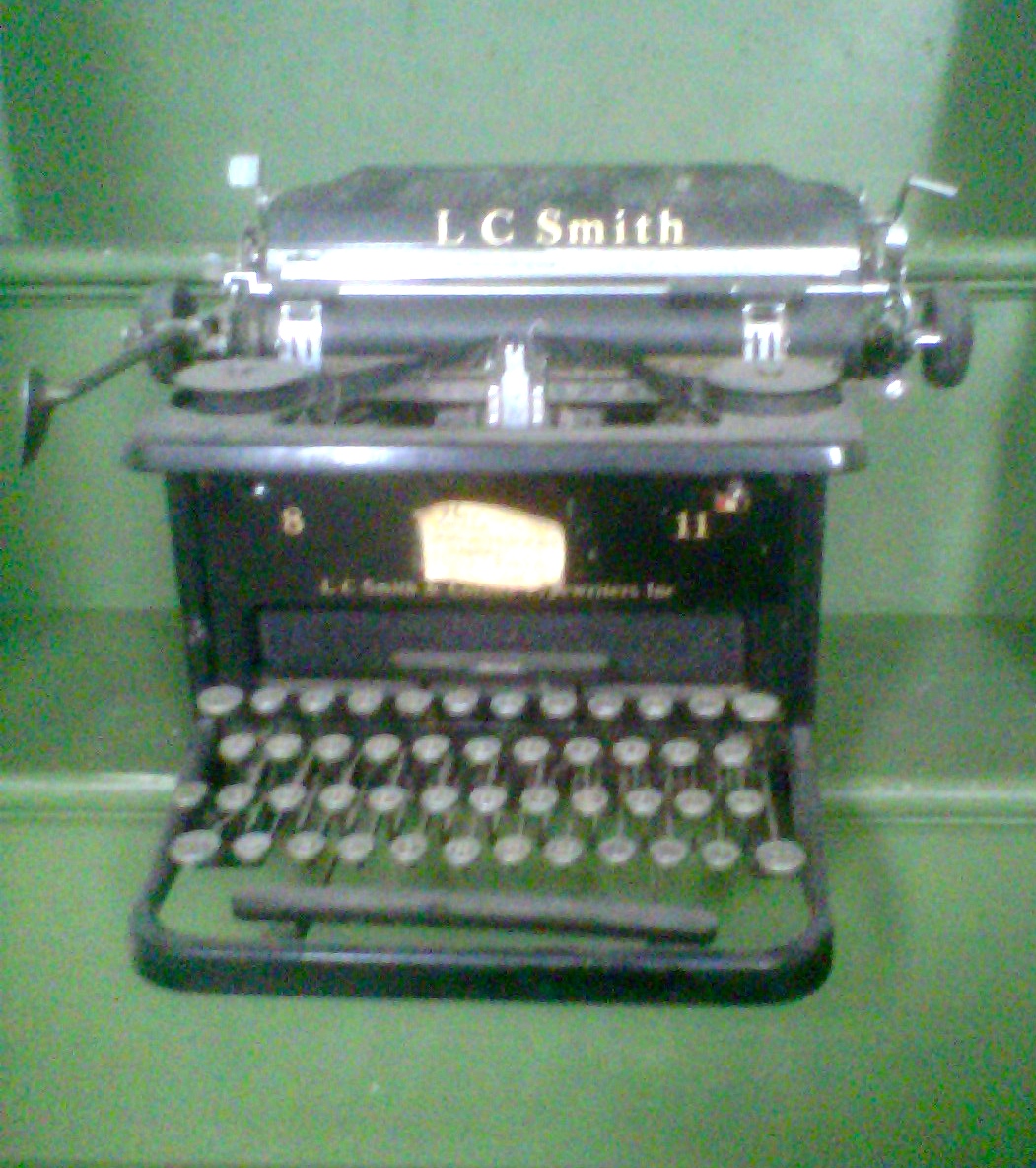
My First Interviews Were Written on this Typewriter

My First Interviews Were Written on this Typewriter

I bought this typewriter used for $35.00 at a Goodwill store in Huntington, NY. I sold $1,000 worth of freelance articles written on it, including several of my first feature Modern Drummer interviews.

end

Posted in SKF Blog | Tagged , , | Comments Off on My First Interviews Were Written on this Typewriter

Square Drumsticks

SKF NOTE: Remembering a Roy Burns drum clinic in Illinois. Probably Moline. I lived and played drums for a couple of years in the Quad-Cities area of Iowa. The Quad-Cities are Davenport and Bettendorf in Iowa; Moline and Rock Island in Illinois. The Mississippi River separates the two states and cities.

There is a great deal of jazz history there. Drummer Louis Bellson was born, grew up, and is buried in Moline. Trumpeter Bix Beiderbecke grew up and is buried in Davenport. And, of course, the Mississippi River is legendary to the migration of jazz.

But on this day, in a music shop, Roy Burns is giving a drum clinic. I recall him saying that drummers rarely practice their short rolls (RLRL) and long rolls (RRLLRRLL) – but those two rolls are the root of all drum rudiments. Roy also told of an encounter with a legendary New York City drummer, Sam Ulano. Sam handed Roy a pair of square drumsticks he’d invented. Roy gave the sticks a try and, handing them back to Sam Ulano, said they felt like they’d tear up his hands. Then Roy asked why Sam thought square drumsticks were an improvement over round drumsticks.

“Because,” answered Sam, “when you place them on top of your bass drum they won’t roll off.”

end

Posted in SKF Blog | Tagged , , , | 1 Comment

Innovator: Country Music’s First Drummer: Smokey Dacus

William

William “Smokey” Dacus

Smokey Dacus, original drummer with Bob Wills & the Texas Playboys, is credited as the first to play drumset in a country band. Modern Drummer founder/publisher Ron Spagnardi chose to not publish my interview with Smokey Dacus as a feature. Ron’s decision remains one of very few regrets from my MD days. If memory serves, only key points from the Dacus interview were included in the Country Drummers segment of my feature MD series, A History of Rock n Roll Drumming. The remainder of that interview is one of many manuscripts in a box in my closet.

[SKF NOTE: I did find the Smokey Dacus transcript. It is now available on this blog starting here.]

Smokey was in his early 80’s, I believe, when I interviewed him by phone. He and a few other original members of Bob Wills & the Texas Playboys were making a comeback of sorts, touring a bit, and recording new music on an independent Texas label.

When Bob Wills asked Smokey to play drums in the new Texas swing band he was putting together, Smokey said he thought Wills was crazy. Country bands just didn’t use drummers. To his credit, Smokey agreed to join the band. Then he ran into another challenge: what to play. No one else was doing what Smokey was doing. His first role model, Smokey told me, was drummer Sonny Greer with Duke Ellington’s Orchestra. But Greer’s style of drumming wasn’t quite right for the Texas Playboys.

Smokey’s signature style came about by accident at a gig in a huge arena similar to the venue pictured in this YouTube video. The pianist and upright bassist kept playing for the dancers while the rest of the Texas Playboys took a break. Smokey walked to the other side of the arena. From that spot, he said, the only thing he – and the dancers – could hear was the bassist slapping his bass strings on the backbeats, the 2 and 4 beats. No one, he realized, could hear the Greer-like wire brush playing and snare drum press rolls Smokey had been playing. That gave Smokey an idea.

When he returned to his drumset, he picked up one drumstick and one wire brush. He used the stick for keeping time on his cymbal and hi-hat. Smokey used the wire brush to play backbeats on his snare drum. He also played drums sitting on his trap case – a container on wheels, like a big suitcase made of strong, thin material used to store the snare drum and the drumset’s metal hardware. Smokey said when he needed a backbeat accent louder than his wire brush on his snare, he would bring his drumstick off the cymbal and smack the stick on the backbeats against the side of his trap case.

“I looked like I was riding a horse!” he laughed.

And that’s the story of one of the great innovations, by one of the great innovators, in drumset history.

end

Posted in SKF Blog | Tagged , , , , , | 3 Comments