Victor Wooten’s “The Music Lesson” is a Keeper

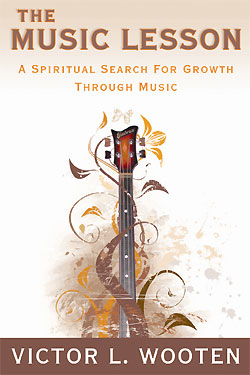
Finished reading Victor Wooten’s The Music Lesson this week. Mr. Wooten is perhaps known best as bassist with Bela Fleck & the Flecktones

I like to underscore in pencil favorite book parts: words I’m learning for the first time, phrases I think will make good song titles or songs per se, new concepts/ideas. When I want to highlight a book part I might want to find again in the future I underscore the part, and next to the part in the book margin I write a small checkmark. When I really want to remember a book part I underscore the part and, in the margin, write the word key.

My copy of The Music Lesson has plenty of underscoring, plenty of checkmarks and places where the word key is written in the margins. For example, here’s a paragraph from a chapter on technique.

“Notice you did not develop your speaking technique through diligent practice, at least not the type of practice you are familiar with. Your parents didn’t lock you in a room and make you work on it three hours a day, and they didn’t make you take lessons.  You learned to speak through a natural process. Musicians could benefit from looking at this process.”

So, thank you, Victor Wooten for a keeper book.

Image

Posted in Drum/Music News | Tagged , , | Comments Off on Victor Wooten’s “The Music Lesson” is a Keeper

Personal Growth as a Drummer Thru Painful Moments

SKF NOTE: My personal growth as a drummer often came in the wake of painful moments. For example, I’m remembering the day I subbed on live t.v. with the Warren Parrish Trio in Moline, Illinois. The trio’s regular drummer, Tommy Phares (pronounced Farris), couldn’t make it and asked me to take his place.

Warren Parrish was a first-class jazz pianist. The trio’s bassist, Craig Dove, described Warren as “a cross between Horace Silver and Oscar Peterson.” I was drummer with the Millard Cowan Trio in Davenport, Iowa – a group getting a decent amount of attention playing at Millard’s club, The Steamboat Lounge.

Iowa night clubs closed earlier than Illinois night clubs. So whenever possible, we would drive across the Mississippi River to the The Plantation restaurant in Moline, where the Warren Parrish Trio held court.

I showed up at the t.v. station. It was a brief interview with Warren Parrish, followed by one song. I set up my drum kit, ready to impress Warren and Craig. Craig leaned over and asked if I had ever heard their trio play Get Me To The Church On Time. No, I said, but I knew the tune. “We play it really, really fast,” said Craig. I said something like, “Ah, no sweat.”

Famous last words! Warren counted off Get Me To The Church at a tempo much, much faster than I had ever played. I barely had enough chops to fake my way through the tune, but not without Warren shooting me dagger eyes, and bassist Craig Dove giving me a disappointed, “Come on!” — all on live television!

When the gig was over I packed up my drums, drove home, and felt like throwing my drum sticks in the garbage. Instead, I told Tommy Phares what happened. He, in turn, shared a technique for playing uptempo that helped a great deal.

Temporary inconvenience for permanent improvement.

Posted in SKF Blog | 2 Comments

The Case for Anonymous Web Posting

Ask someone what bothers them most about internet web forums. They’re likely to answer, “Anonymous posters. People who post comments under fake names.”

Recently, Dr. Brene Brown’s TED Talk on creativity and vulnerability prompted me to buy and read her book, “Daring Greatly.” In it, Brown describes her hurt over “anonymous posters” reacting to her TED Talk with their “mean spirited criticism that’s so rampant in Internet culture.” She asks web forum owners to “make users…use real names, and hold the community responsible for creating a respectful environment.”

For 16-years I was founder, owner, editor of Maine’s premier political web forum, AsMaineGoes.com (AMG). I support anonymous posting online and I will tell you why.

First of all, anonymous postings don’t bother people. Negative anonymous postings bother people. I’ve never known anyone upset over an anonymous poster praising their good works, wisdom, or good looks. It doesn’t happen.

Dr. Brown was hurt by cruel remarks about her weight, skin, fitness as a mother. Her common-sense solution to stop reading those anonymous comments is perfect. Not every web forum owner wants a respectful environment. Neither does every web forum community. But those who do can have a respectful environment AND anonymous posters.

AMG had zero tolerance for profanity for “real name” and anonymous posters. I wanted a web forum with spirited and civil debate. For most of its life AMG had no automatic word censor in place. It was possible for registered posters to post any language. But vulgarity happened only on the rarest occasions. When it did, it was fixed immediately by the community, me, or both.

Second, anonymity in public discourse is an American tradition. Think of the anonymous writers publishing pamphlets which influenced public thinking in the years leading up to the American Revolution. What has often been called the greatest political book, The Federalist Papers, was originally a series of newspaper essays meant to garner public support for ratification of the U.S. Constitution. All the essays were attributed to one fake author: Publius. The real writers were James Madison, Alexander Hamilton, and John Jay.

Third, when I was questioned on radio, t.v., or by print reporters about anonymous posters, I would remind them they were pots calling the kettles black.

Talk radio callers are identified by first name only, and sometimes by the town from which they’re calling: “John in Smithville. Go ahead, John. You’re on the air.” Do talk radio hosts or listeners ever ask if the caller is really John from Smithville? And does it matter? Yes, if John from Smithville is on air pretending to be author Stephen King or another well-known person. But if John from Smithville is, in fact, Bruce from Bangor, on air opposing higher gas taxes – who cares?

Ghostwriting is another longstanding, accepted form of anonymity. That’s when someone writes for someone else. For example, a newspaper column or a letter-to-the-editor.

Finally, how often do t.v., radio, and print news sources attribute stories to “unnamed sources,” or “someone who asked not to be identified”?

As AMG owner, to protect myself from liability, I knew the real identities of all AMG posters. That was a prerequisite for anyone registering to post. But I was also offering excellent posters a place to share with the public valuable information they could not, or would not, have shared under their real names. Usually because doing so might jeopardize their jobs.

Web forums can be an incredible means of bringing together people worldwide for sharing ideas, asking questions, teaching, learning. And if some of these people choose to share, to ask, to teach, to learn anonymously – do we say no to that opportunity? I think not.

-end-

Posted in SKF Blog | Comments Off on The Case for Anonymous Web Posting

Touch Wood in a Japanese Forest with Bach

I love everything about this. I love the percussion. I love the forest. I love the brains, heart, and creativity that figured out how to do this. I love that it is captured on film. Thank you.

Posted in Drum/Music News | Comments Off on Touch Wood in a Japanese Forest with Bach

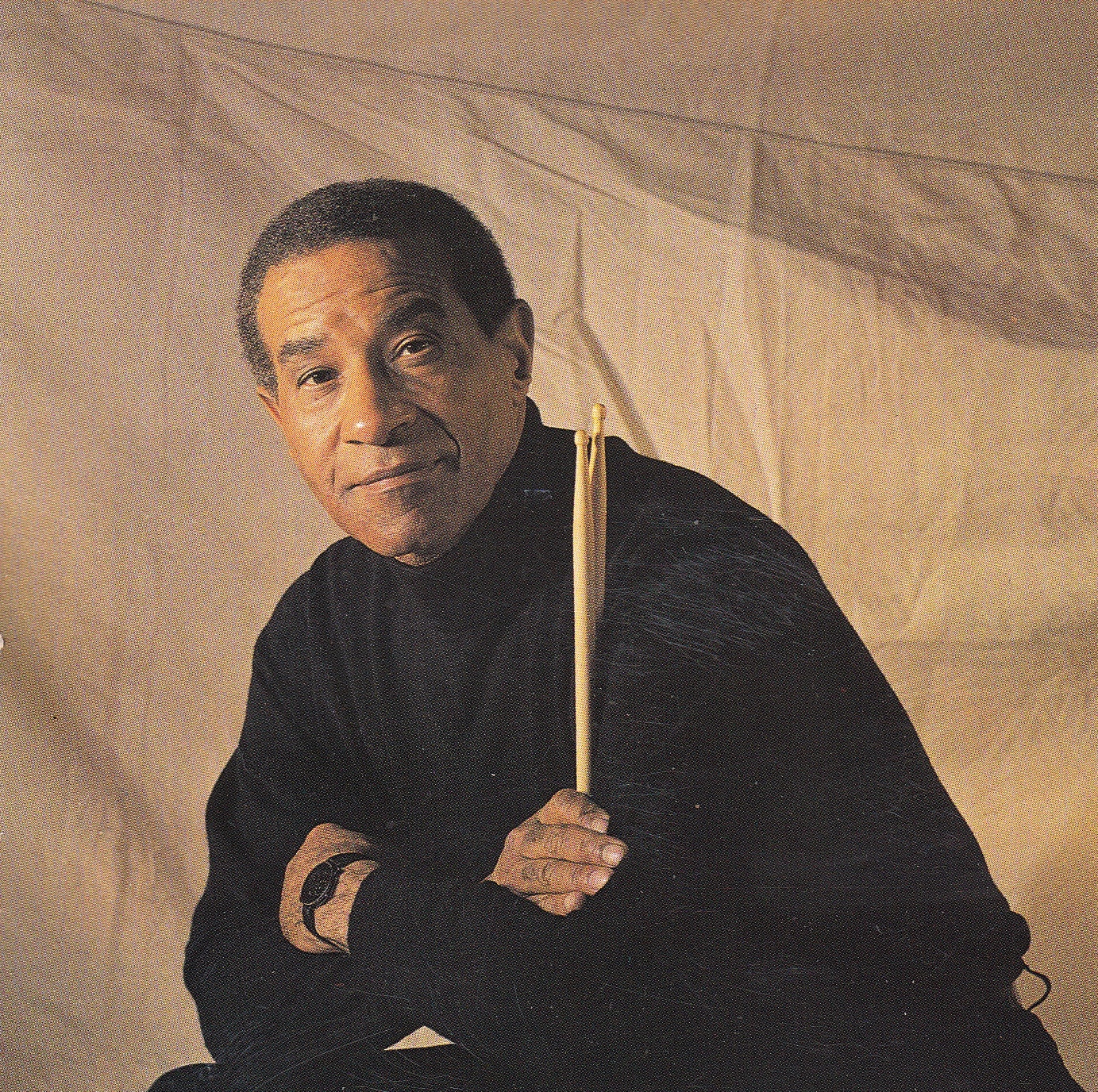
Max Roach: One Original Idea

roach_max_1987

SKF NOTE: I first saw Max Roach live in a Chicago jazz club with his quartet. Cecil Bridgewater (flugelhorn), Odean Pope (sax), and I can’t remember the bassist. Maybe it was Calvin Hill.

I noticed a twentysomething guy sitting in the audience with a trumpet case. Was he a musician I should know? A local talent?

Max invited the unknown trumpet player onstage to play a tune all the musicians knew, but I’ve forgotten! When it was his turn, the twentysomething trumpet player blew a series of choruses. Finally, Max raised his left hand, signaling his band members to end the tune. And they did.

The trumpeter went back to his seat while Max came from behind his drumset to the mic at center stage. And in his professorial way, Max criticized the guest musician for wasting the band’s time and the audience’s time with solos of running scales and arpeggios – while having nothing original to say.

I have been fortunate, Max said, to have played with Charlie Parker, Miles Davis, Dizzy Gillespie, Billie Holiday, Lester Young, Coleman Hawkins and other great musicians. Each of these musicians, Max said, had one original idea. And you heard it in everything they played. And they were able to make themselves heard among people without being oppressive about it.

end

Posted in SKF Blog | Tagged , , , , | 6 Comments