Drum Inspiration from Jazz Piano Trios

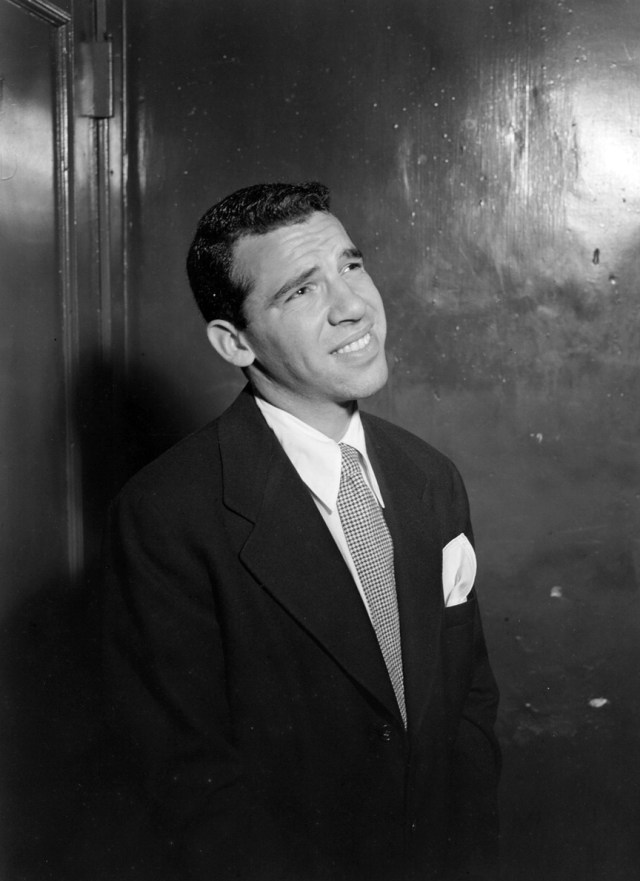
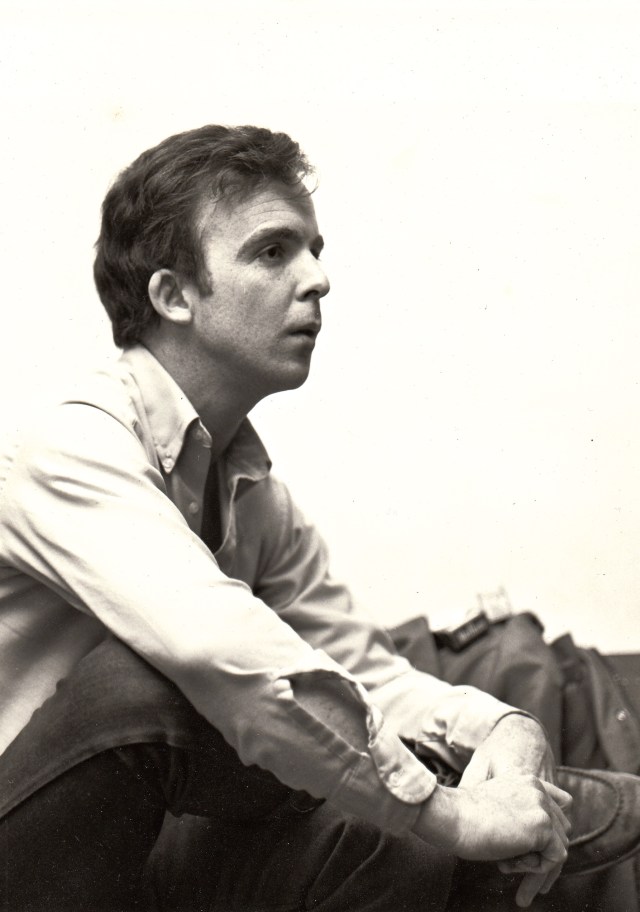
Scott K Fish circa 1982 at MD interview for M’Boom. Photo courtesy Charles Stewart.

As a new pro drummer in my twenties, I spent countless hours listening to, and studying, jazz piano trios: drummer, acoustic bass, acoustic piano. In part, because I was playing in the Millard Cowan piano trio – my first full-time gig, and I wanted to hear how other musicians were expressing themselves in that format. But also, because there were several piano trios made up of top-shelf musicians playing timeless music.

I listened mostly to Ed Thigpen with the Oscar Peterson Trio (1959-1965), Vernell Fournier with the Ahmad Jamal Trio (1956-1962), and Redd Holt with the Ramsey Lewis Trio (1956-1965). These innovative trios were each made up of innovators on their respective instruments: Pianists Oscar Peterson, Ahmad Jamal, and Ramsey Lewis. Bassists Ray Brown, Israel Crosby, and Eldee Young. And the drummers.

The groups expanded the traditional role of the jazz piano trio beyond the familiar song format of: head, solos, trading fours/eights, end. The trios played unique arrangements. In a larger sense, these three groups redefined jazz rhythm sections.

Ed Thigpen, Vernell Fournier, and Redd Holt all had great sounding drums and cymbals. All three endorsed Ludwig drums. They kept their drums tuned/tensioned tight. They created sounds with sticks, brushes, mallets, bare hands – whatever best fit the songs. They sometimes augmented their drumsets with other percussion instruments, i.e. triangles, tambourines. But whatever they played, whether accompanying or soloing – these drummers were always musical. Fournier and Thigpen remain a source of inspiration for any drummer interested in playing brushes.

If I had to choose one album for each drummer? These three had a major impact on me and a bazillion other drummers:

Oscar Peterson Trio: Affinity
Ahmad Jamal Trio: Live at the Pershing
Ramsey Lewis Trio: The In Crowd

In closing, back in my twenties, when i bought the Peter Nero In Person album, I didn’t expect it to be the great jazz piano trio album it is. Nero on piano, Frank Sostek on bass, and Joe Cusatis on drums left us a marvelous live set. Not a weak song in the bunch. And Cusatis, who plays great throughout, is especially great on Cute and during the West Side Story Medley. This LP was my intro to Cusatis. I’m sorry to report, as of this writing, this date is unavailable in MP3 format.

About ten years ago I started re-listening to those jazz piano trios. And I’ve discovered others of note, i.e. The Great Jazz Trio with Hank Jones (piano), Ron Carter (bass), and Tony Williams (drums). Tommy Flanagan has three terrific piano trio dates with George Mraz (bass) and Elvin Jones (drums). Ron Carter and Tony Williams have also recorded trio dates with pianist Herbie Hancock.

The jazz piano trio remains a classic configuration with unending great musicianship. If readers have suggestions for listening, I thank you in advance for letting me know.

-end-
Posted in SKF Blog | Tagged | 1 Comment

The Joy of Discovering New Drummers

SKF NOTE: Three times I helped compile Modern Drummer Annual Readers Polls. That is, I opened reader envelopes, removed the official MD Readers Poll ballots, and kept score on large sheets of paper taped to my MD Managing Editor’s office wall.

One year, while compiling Readers Poll results, I realized there are great drummers who deserve to be in MD‘s Hall of Fame, but never will be. It is a case of bad timing. Not bad time keeping. These drummers’ heydey came, went, and, based on how I saw MD Readers Poll votes falling, I knew these drummers would never be in MD‘s Hall of Fame. Papa Jo Jones, Kenny Clarke, Philly Joe JonesEarl Palmer, D.J. Fontana, Jerry Allison, Ed Blackwell are players who come quickly to mind. There are many others.

At the time, this had me feeling blue. It was as if the Universe would be the worse for so many great players absent from MD‘s Hall of Fame.

Today, away from the hallowed halls of MD, I have a different view. I realize there is life for drummers outside of MD‘s Hall of Fame. And while an MD Hall of Fame entry would help bring attention to a drummer – there are other ways for drummers to grab attention.

Finding out about drummers really is an individual journey. I love discovering great drummers, or listening in-depth to drummers I once knew by name only, or from one track or album. Such discovery remains one of my great joys in music. It doesn’t matter if the drummers are from the past or the present.

In the last decade or two I bought several Blue Note CD’s with Joe Chambers on drums. I met Mr. Chambers in New York City during an interview with the percussion ensemble M’Boom. And I was first knocked out by Joe’s playing on Charles Mingus’s Three Worlds of Drums where Chambers, Steve Gadd, and Dannie Richmond are playing together.

Fast forward 20 years or so and I began hearing much more of Chambers on Blue Note dates by Wayne Shorter, Bobby Hutcherson, Andrew Hill, and others. What a great player! For me, a new discovery. Mine is often a mixed feeling: part joy in my new discovery; part regret that I hadn’t discovered a great drummer sooner.

Clifford Jarvis is another of my new discoveries. I knew of him – from an old Down Beat interview – but had never heard Mr. Jarvis play. During my renewed Jackie McLean study phase I heard Jarvis on McLean’s Right Now! album — and was bowled over. Great player.

That’s the way it goes, I suppose. The road from fledgling drummer to seasoned pro, from fledgling listener to seasoned pro, passes by every drummer who ever added to the language of drumming today and forever. Whether we choose to stop along the road to say hello, or to spend time getting to know each drummer, is up to us.

Posted in SKF Blog | Comments Off on The Joy of Discovering New Drummers

Interviewing Advice from Buddy Rich

Buddy Rich

In an earlier post I wrote about my interview with Freddie Gruber. It took me a long, long time – and several attempts on different days – to make Freddie relaxed enough to allow me to turn on my tape recorder and interview him.

Today I remembered an incident in the wake of our interview. As was my practice during my years at Modern Drummer magazine with everyone I interviewed, when I had transcribed and edited his interview for publication, I mailed Freddie a copy to review before publication. And I welcomed any corrections or additions he might want to make to the piece.

Freddie read the interview and telephoned me. He was okay with the interview. He told me he had also shown it to Buddy Rich, asking Buddy what he thought about it. (Freddie was in New York City staying as a guest in Buddy Rich’s apartment.)

I asked Freddie THE QUESTION I feared asking, but knew I had to ask: What did Buddy Rich think of the interview?

Freddie said Buddy thought the interview was okay, but he also thought some of the questions I asked Freddie were — I think he used the phrase typical drum interview questions.

I heard that and started feeling defensive, but realized this was a great opportunity for me to improve as a drum writer.

If he had the chance to ask him, I told Freddie, I would love to know what questions Buddy Rich would ask drummers in an interview.

Son of a gun if Freddie Gruber didn’t ask Buddy Rich my question. The only interview question Buddy suggested, said Freddie, was, “What’s the world’s greatest four-bar drum break?”

Freddie continued telling me about his exchange with Buddy while I’m asking myself, “What IS the world’s greatest four-bar drum break?”

Freddie brushed off Buddy’s question as nothing special. “That’s easy!” Freddie said. “Everybody knows that!”

I’m thinking while Freddie’s talking, “They do? I don’t!” And I’m dying to know the answer. But after Freddie’s last remark I wasn’t going to ask, and tip my hand as the woefully ignorant drummer/writer I, at that moment, imagined myself to be.

Mercifully, Freddie finished his story by answering his own question to Buddy: “It’s Shadow Wilson. Queer Street.”

Modern Drummer Features Editor Rick Mattingly later asked Buddy about his Queer Street remark. As I recall, Buddy modify his world’s greatest four-bar drum break remark a bit. Shadow Wilson’s wasn’t the only drum break to fit that category, citing Bobby Colomby’s drum break in the Blood, Sweat and Tears song, Spinning Wheel as another example.

Buddy’s point: It is difficult, if not impossible, to imagine a better drum break for those two songs.

-end-

Posted in SKF Blog | Tagged , , | 2 Comments

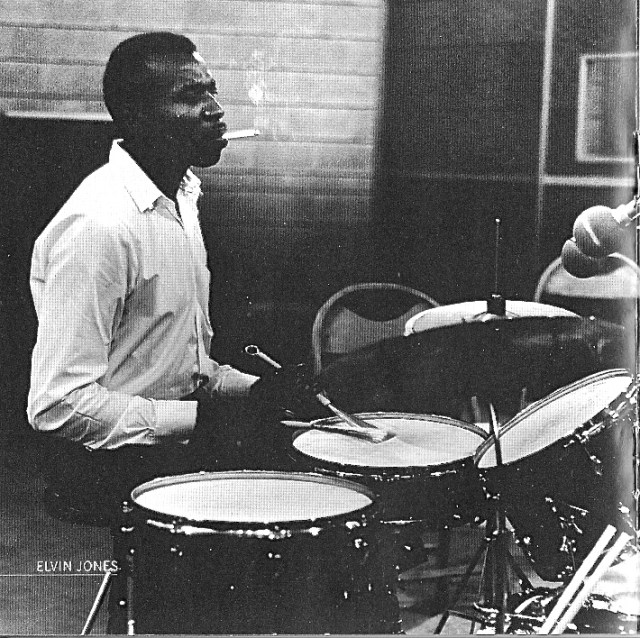
First Time I Heard Elvin Jones

SKF NOTE: I first heard Elvin Jones on John Coltrane’s Africa/Brass album – also my intro to Coltrane – when I was about 16 years old. I bought a cut-out monaural copy of that LP in a Huntington, NY drug store. My drummer listening experiences, at that time, were confined to swing drummers like Buddy Rich, Gene Krupa and rock drummers of the day.

I didn’t know what Elvin was playing. That is, I hadn’t the ability to analyze it. Plus, I didn’t own a drumset at the time; not until I was 18 years old. But I liked Elvin’s sound: his crisp snare, rise-andfall drum rolls, his cymbals, his ideas. Africa/Brass opens with Greensleeves – a song with which I was familiar. And it is a big band date. The Coltrane Quartet of Coltrane, Elvin, McCoy Tyner (piano), and Reggie Workman (bass) — Art Davis (bass) was added — with brass and reeds: A total of 21 musicians. I was, as I said, familiar with big bands.

But my first Holy smoke! intro to Elvin Jones came a few years later with his trio date, Puttin’ It Together, on the Blue Note label (1968): Elvin Jones (drums), Jimmy Garrison (bass), Joe Farrell (saxes). This LP opens with Reza. Puttin’ It Together and its companion LP, The Ultimate (1968), remain among my favorite albums.

Listening to those trio dates today is a 180-degree different experience than my first hearing 45 years ago. Three essentially single note, non-chordal instruments – no piano, no guitar, no horn sections riffing – my new ears were lost in search of familiar ground. And there was none. But the music – especially Elvin’s playing – kept drawing me back in, listen after listen.

Fast forward many years to my first time seeing Elvin playing live. It was at a forgotten New York City jazz club. Based solely on Elvin’s playing on records, and from still photos of Elvin in Down Beat magazine, from descriptions of him by other musicians and music journalists as a loud or busy drummer – I expected that night to see a basher. Elvin pummeling the bejesus out of his long suffering drum set.

Instead, I watched and listened to a very relaxed Elvin Jones playing just as he played on records, with almost no wasted motion, no wasted energy. That was, for me, a great lesson, a revelation.

Sometime in the 1990s I went back to really listening and studying Elvin Jones. Not so I could play like him, but so I could understand him. I bought every CD I could find on which Elvin was playing. Not only the Coltrane dates, but Elvin’s own CD’s, his dates with several Blue Note artists, i.e. Wayne Shorter, Freddie Hubbard, Grant Green, Andrew Hill, Joe Henderson, and even his earlier work with musicians like Steve Lacy, Miles Davis, Donald Byrd, and Pepper Adams.

In spite of decades of listening to Elvin, there were still cuts on albums – drum breaks, intros, drum solos – where I’d get lost and have no idea where Elvin was in the song. On a few songs I’d swear he dropped the beat! But that didn’t make sense. Even if Elvin did drop the beat – would Wayne Shorter, Joe Henderson, and all those other great players let that mistake stand forever on their record date?

Also, the musicians on these CDs were never lost during Elvin’s breaks and solos. The problem was with my ears, my inability to hear Elvin. So I just kept listening.

One major breakthrough for me was learning to listen to Elvin without expectations. I would listen to a cut through the intro, other instrument solos. When it came time for trading fours, eights, or soloing – I was expecting to hear Elvin lead with his snare drum. That’s what my ears were trained to hear; what my brain was trained to expect. Elvin would lead, say, with his bass drum, followed by his snare – and that fresh combination of sounds threw my listening off balance. It was the same as hearing someone speaking my native tongue using unfamiliar words and phrases. Say, American English vs British English.

As my friend, Chip Stern, reminds me, those of us who were alive to see, as well as, listen to Elvin Jones, are truly blessed. What a gift.

For aspiring drummers who arrived here after Elvin’s spirit departed – fear not. You have a lifetime of joy absorbing Elvin Jones’s amazing legacy of recorded music, clinics to hear and to see.

-end-

Posted in SKF Blog | Tagged , , , , , | 8 Comments

Mel Lewis to Steve Gadd: You’re a Drag

SKF NOTE: Around 1976, Mel Lewis told me of the time he first met Steve Gadd.

In 1976 Steve Gadd was really starting to grab the attention of musicians everywhere – especially drummers. I first heard Steve Gadd in 1974 on Bob James’s One album, including his mind-boggling drumming on the track, Night on Bald Mountain.

Mel’s busy career as a studio drummer had slowed. There wasn’t as much of a demand for instrumental or singer big band dates. Steve’s career as a studio drummer was on the rise. I don’t think it’s a stretch to say Steve Gadd put studio drumming as a career path on the map!

When Steve Gadd introduced himself to Mel Lewis on a New York City sidewalk, he was certainly familiar with Mel’s playing. Mel had heard of Steve Gadd as a rising star. At one point, Steve asked Mel, or commented to Mel, about cracking or breaking cymbals.

What kind of cymbals are you using? Mel asked. Steve said, K. Zildjians. Mel was beside himself. “You’re using K. Zildjian cymbals for playing rock? Oh man, you’re a drag. I don’t know if I even want to talk to you!”

But Mel did continue talking: “You don’t play rock with K. Zildjian cymbals. They’re not made for that. You use A. Zildjian cymbals.”

A tip from the veteran studio drummer to the new guy.

-end-

Posted in SKF Blog | Tagged , , | 3 Comments