SKF NOTE: In 1994, my friend and former Modern Drummer colleague, Rick Mattingly, was on staff at the Percussive Arts Society’s magazine, Percussive Notes. Rick asked if I would expand on and take a slightly different tack on a subject I touched on in a five-part series I wrote for Modern Drummer called History of Rock Drumming.
I gladly accepted Rick’s assignment. The resulting article was published in two Percussive Notes as Innovators of Jazz Drumset: Part 1 and Innovators of Jazz Drumset: Part 2. Here’s Part 2.
SKF NOTE: In 1994, my friend and former Modern Drummer colleague, Rick Mattingly, was on staff at the Percussive Arts Society’s magazine, Percussive Notes. Rick asked if I would expand on and take a slightly different tack on a subject I touched on in a five-part series I wrote for Modern Drummer called History of Rock Drumming.
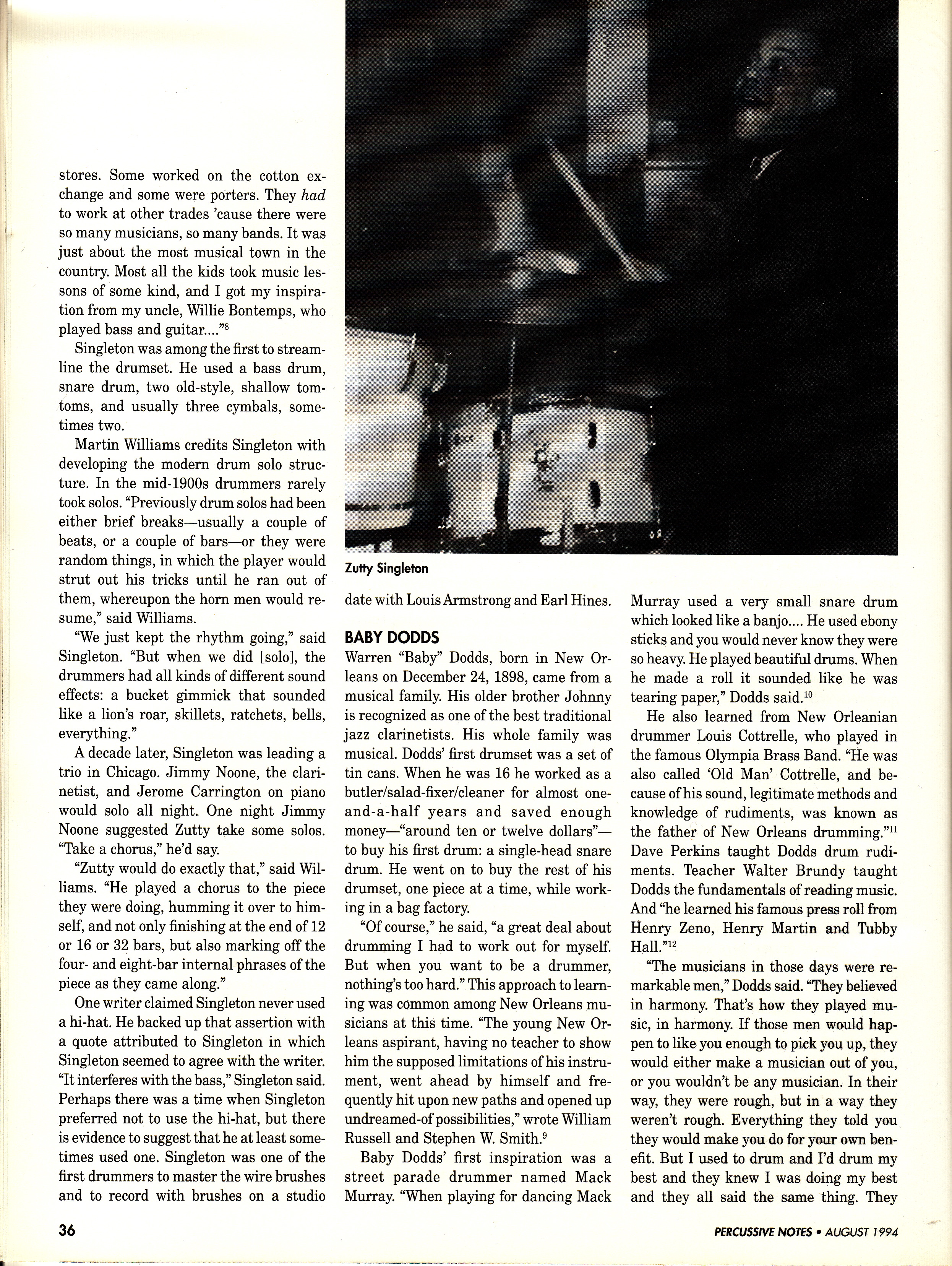
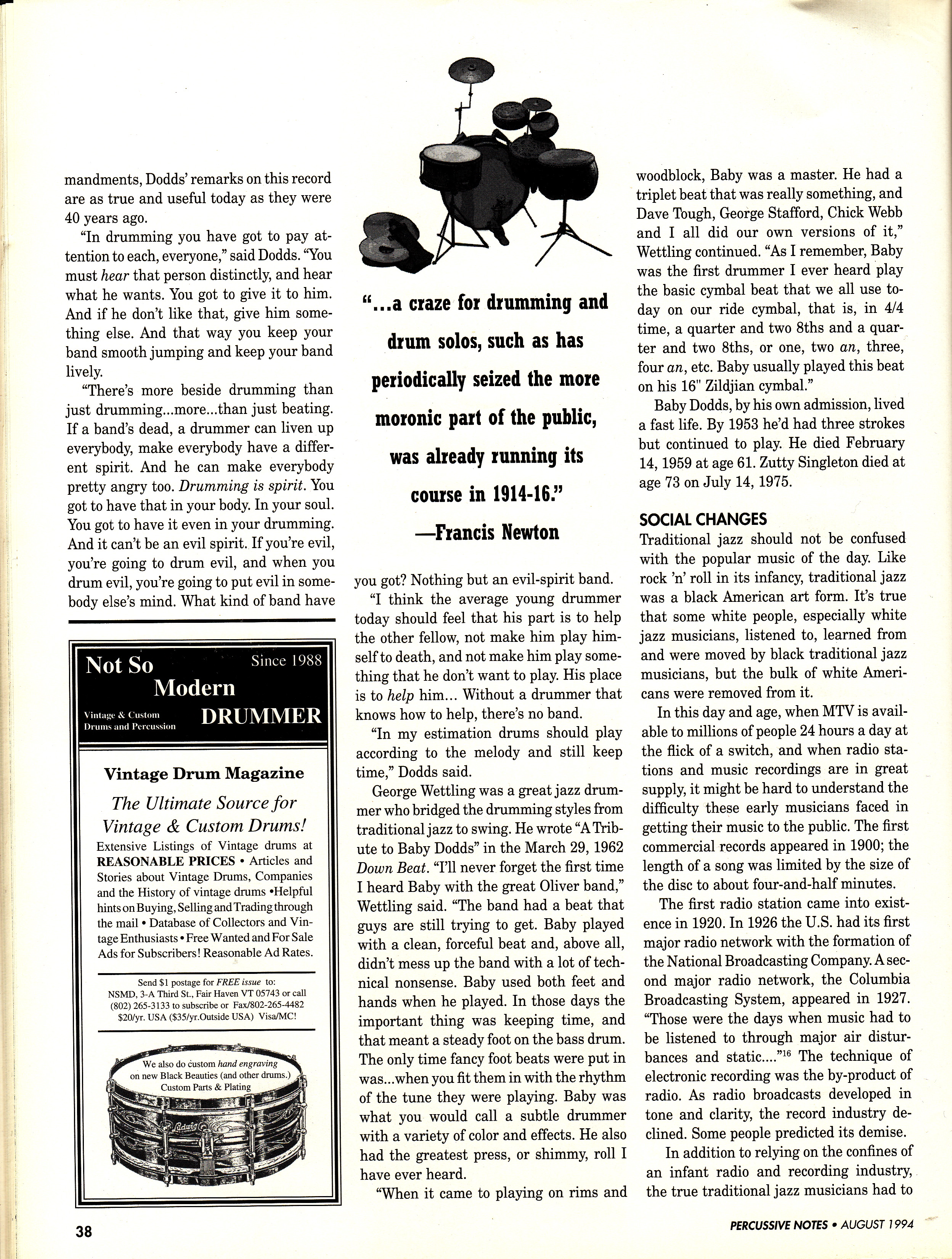
I gladly accepted Rick’s assignment. The resulting article was published in two Percussive Notes as Innovators of Jazz Drumset: Part 1 and Innovators of Jazz Drumset: Part 2. Here’s Part 1.
SKF NOTE: This segment is from a good interview by Vernon Gibbs called, Tony Williams: Report On A Musical Lifetime, in the January 29, 1976 Down Beat. I am unable to find the full interview online.
Vernon Gibbs: What was there about Art Blakey and Max Roach that impressed you?
Tony Williams: The sound was the thing I liked about Art Blakey. At the time, ’54 or ’55, that sound was pretty huge, as big as any sound today. The thing about Art Blakey was his rhythm and the way he made music sound when he played it. Art Blakey was the first drummer that impressed me because he played with such steady drive, the feeling he had was a feeling that no one else was playing with.
Max Roach played more musically than anybody else. When Max took a solo, if the solo was a 32-bar tune, he could take the tune and make you know exactly where he was. Whether he was in the bridge or the last eight, you’d know it by what he was playing. At the time that’s what made him the master, he took playing the drums to a really sophisticated level. He played with such command.
Philly Joe Jones was the other drummer that influenced me. He played more animated than the two of them. His stuff was stuff that drummers just wouldn’t play. Max played things that were really logical, Art Blakey played things that were just feeling, but Philly Joe played things that were just caricatures of music, he could do things that were just magical with the drums.
The way all of them looked when they played had something to do with the way they played and I was drawn to the glamour of all of it. That’s why I play the way I do.
Roy Haynes was also very influential. I also learned a lot from Louis Hayes and Jimmy Cobb. They gave me a lot of personal help because they actually sat down and showed me things.
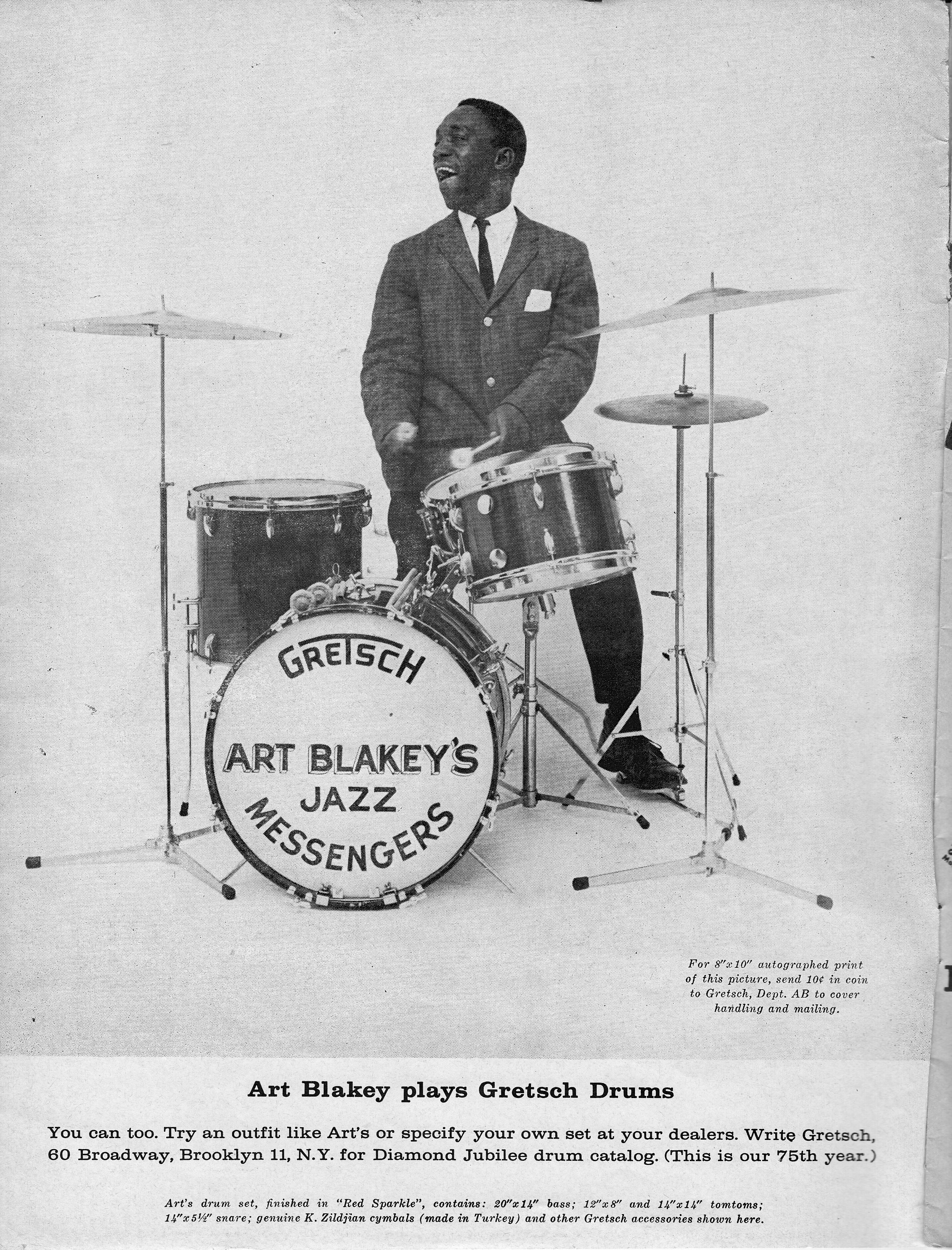
SKF NOTE: A beautiful photo of Art Blakey and his Gretsch drumset taken by photographer extraordinaire Chuck Stewart. This was the inside front cover of Down Beat‘s March 6, 1958 issue.
Drummer Joe Vitale Reflects on Collaborating with Classic Rocker Joe Walsh
Concert Preview
Posted By Matt Wardlaw on Sat, Sep 12, 2015 at 10:31 am
Joe Vitale
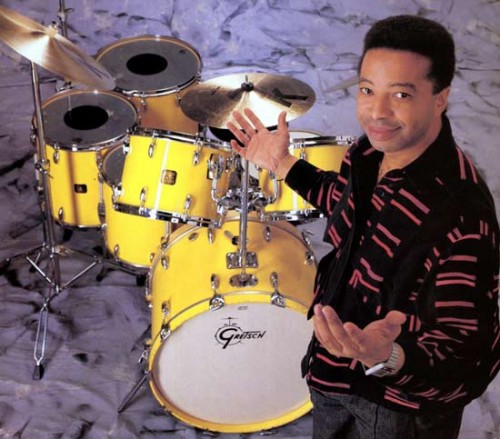
Joe Vitale: “I started out with jazz guys and jazz guys used to drive big bands and I learned that years ago from my teachers that you have to be in the pocket, but you have to take charge and drive the band sometimes,” he says. “And then on into early rock ’n’ roll days, I noticed that people like Ringo, Keith Moon, people like that that really had a driving presence in the band and even though Ringo was pretty laid back at times, he did stuff that if you pull the drum tracks out of some of those songs, the songs go away.
“I learned that my job is more than just to keep time, it’s actually to direct the dynamics. [T]he dynamics are so important. A lot of bands just play at one level and the rock and roll stuff doesn’t always have to be on 10 — it doesn’t have to be that loud. It can come back and then get loud again.
“[Drummers] really are musicians — we understand the music and we’ve got a lot of control in our hands for what the band sounds like because I’ve heard bands that weren’t that great, but the drummer was really great, so the bands actually sound pretty good, but they’re not that good. So drummers are really important….”






 Scott K Fish
You must be logged in to post a comment.