Louie Bellson: The Finger Method of Drumming

SKF NOTE: I found this incomplete column posted awhile ago on The Great Drummers Group Facebook page. When I went back weeks later to find it again so I could credit the original poster, I could not find it. If someone knows or is the original poster, please let me know. I’d like to correct the record.

This is an insightful, detailed description on the finger method of drumming. Louis and Joe Morello were its two best known proponents. This is the best how-to description I’ve read or heard on the subject.

Also, I did not know Louie Bellson wrote columns for Down Beat magazine. I’m unable to find any info about his DB columns online.

bellson_louie_article 2

Posted in SKF Blog | Tagged , , , , , | 1 Comment

Shelly Manne for the First Time

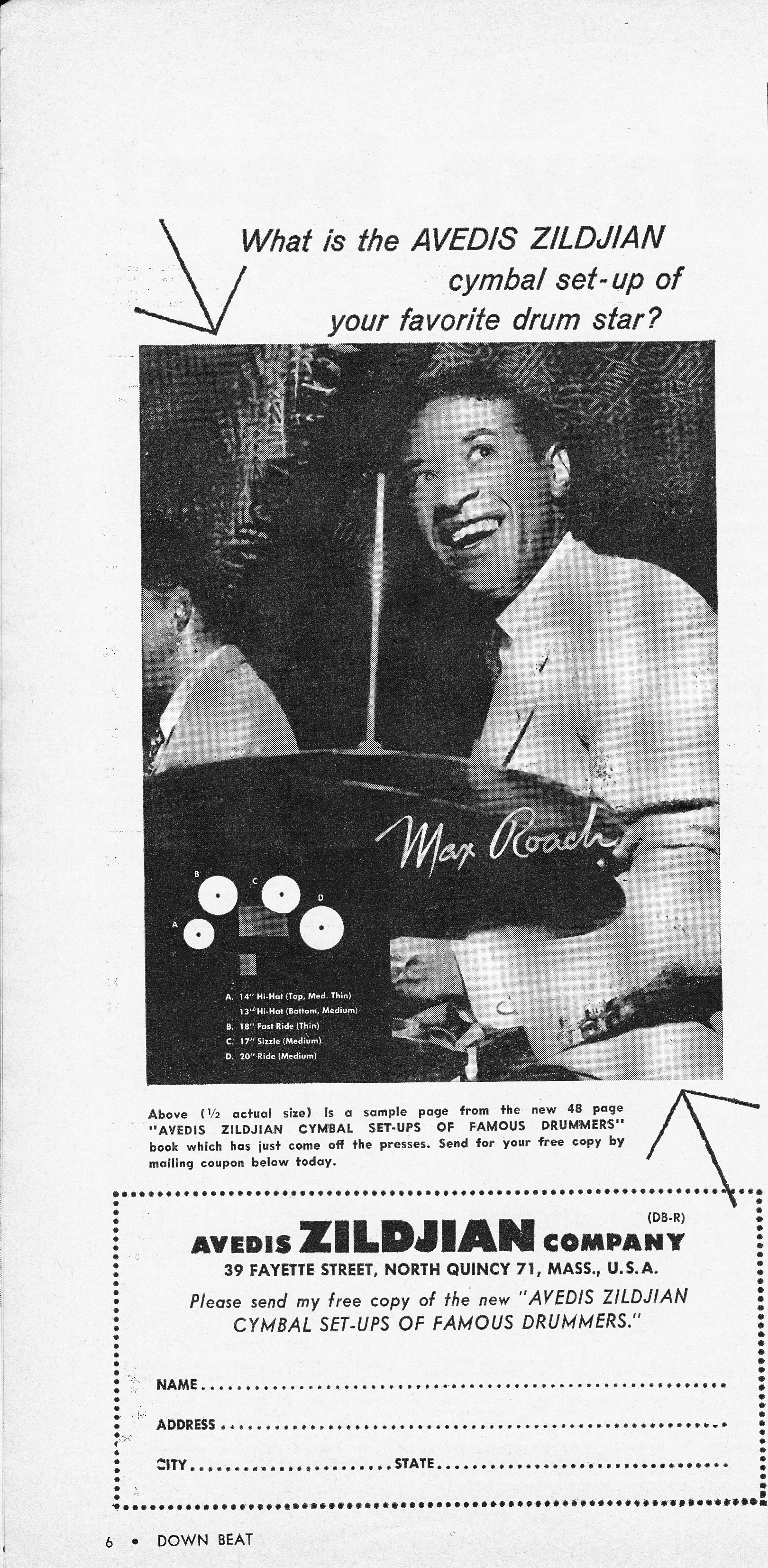
The first I remember seeing Shelly Manne‘s name/photo is the early 1970s in Avedis Zildjian’s Cymbal Set-Ups of Famous Drummers booklet. I wanted to buy a 20-inch A Zildjian Ride cymbal, but the local music store had only a few in stock, all bad sounding. So I bought a 22-inch A Medium Ride instead. But I didn’t know any drummers who used a 22-inch Ride, and I went to Zildjian’s Cymbal Set-Ups to find one. And there was Shelly Manne!

The first time I was blown away by Shelly’s playing was on pianist Bill Evans’s trio date, A Simple Matter of Conviction with Shelly and Eddie Gomez on bass. I can’t tell you the precise year, but it had to be around the mid-1970s.

From the opening number, Shelly redefined for me the musical possibilities for drummers in piano trios. I had listened to several piano trios – even great piano trios – but none like this one. And none of the drummers played with Shelly’s conception of musicality, interplay with the other musicians, use of space, humor, surprise, and swing!

Also, Shelly’s playing was simple. Imagine someone with an adequate command of the English language creating unique, beautiful sentences and paragraphs, weaving them into great stories.

Flashback: Joe Morello told me he would have liked to record an album with Shelly Manne. I responded with, “He doesn’t have a lot of chops, does he?” Joe winced — WINCED! — saying, “He has enough.” (Boy, if I could have withdrawn my “chops” statement I wold have done so in a heartbeat!).

Shelly’s band with Frank Strozier (alto), Conte Condoli (trumpet), Monty Budwig (bass), Mike Wofford or Russ Freeman (piano) recorded some of my favorite albums: Boss Sounds!, Jazz Gunn, Perk Up!, The Navy Swings.

Also, a friend and club owner had a compilation album with one track, The Girls of Sao Paulo, by Shelly Manne (percussion) and Jack Marshall (guitar) that absolutely fascinated me. As with all of my favorite Shelly songs, what he plays is exactly right for the music. The Girls of Sao Paulo is on the Manne/Marshall album Sounds!.

I can’t vouch for the Sounds! album because I haven’t heard it in over 40 years. But whenever The Girls of Sao Paulo played in my friend’s nightclub, for one minute and 51 seconds I stayed glued to that song. As with Shelly’s playing with Bill Evans and Eddie Gomez, his playing with Jack Marshall’s acoustic guitar opened a whole new world of drum sound possibilities.

Posted in SKF Blog | Tagged , , , , , , , , , | 5 Comments

Would Today’s Music Make Me Want to Be a Drummer? Part 2

skf_profileI posted my previous thread, Would Today’s Music Make Me Want to Be a Drummer?, on two favorite drum forums: DrumForum.org and Drummerworld.com. Interesting, thoughtful responses. Conclusion: I am not alone.

Some forum readers said, no, they would not be inspired to be drummers by today’s Pop music. But, Chunkaway on DrumForum writes, “[B]eyond the mainstream pop-music megabuck machine, there is a ton of great, interesting and even innovative music being made. Bands and projects that are fusing elements of rock, jazz, classical, electronic, etc. Usually it’s found in areas of music classified as ‘indie’ or ‘indie-folk’ or ‘underground’ and otherwise.”

Chunkaway also points out you have to “look for this music. You are not going to turn on the radio and hear it, certainly. But all it takes is one YouTube search of shows like NPR’s Tiny Desk Concerts or Live from KEXP and you’ll have access to a lot of really substantive music being made.”

Another person said he was never inspired by pop music to be a drummer. He was, he said, inspired by jazz. A couple of posters said they were inspired by metal drummers, not pop.

In the main, I agree with everything written – including inspiration from metal drummers. For example, Blue Cheer’s Paul Whaley and Tommy Aldridge.

What has almost disappeared from mainstream radio (i.e. pop and modern country) is good songwriting and unique sounding headliner musicians. My best guess? These songs are written primarily with video in mind. That is, what the song looks like, what the artist(s) look like, is much more important than how they sound. Music is a visual media first, an aural media second.

It’s sad and disappointing. Early on I took to heart tenor saxophonist Lester Young’s counsel on the importance of instrumentalists, including drummers, learning song lyrics. Instrumentalists do a much better job interpreting songs knowing what the songs are about. Knowing lyrics always helped my drumset phrasing. I phrased to the song melody, or I improvised melodic drum phrases around the song melody.

Mainstream Radio is Dead! Maybe that’s real answer. Can’t find inspirational music on mainstream radio? Look elsewhere, young man, look elsewhere. Instead of lamenting the death of what was once THE source of great music, accept that great music’s new home is scattered around the internet: YouTube, Facebook, Twitter, Instagram.

True Confession: Now and then a good song sneaks through mainstream radio’s Sameness Filter. I like Beyonce’s Single Ladies (Put a Ring on It), and Jamey Johnson’s In Color.

I’m just now starting to use YouTube as a go to source of new and new-to-me music. Before I mostly used YouTube for researching, i.e. “Any old footage of Dave Tough? Big Sid Catlett?”

Twitter’s been a new music source. I’ve had a few musicians “follow” my Life Beyond the Cymbals” posts on my @ScottKFish account. Trumpeter Jeff Oster did just that. I visited his Twitter account, then his web site, and ended up buying the MP3 version of his album, next, which I like very much.

Jim Fusilli reviews and interviews excellent “indie” musicians for the Wall Street Journal. His Twitter account is @WSJRock

Bottom line: No matter how it’s made, there are still only two kinds of music: good and bad. Also, as a student of music history, I know music moves forward in waves. There are times when great music is coming from all over the place. Other times we’re hard-pressed to find great music at all.

Circling back to my original question: Would Today’s Music Make Me Want to Be a Drummer? I would like to say yes, but mine would be a very unsure yes. I love good songs, good lyrics, and good melodies. Today’s pop music — let’s call it “Top 40” music — with rare exceptions, is in a low wave phase with a Least Common Denominator sameness to it. To my ears, the same is true of Modern Country.

But, as others have said, great music is alive and well. And the internet is a showplace for tons of great musicians.

Final point: I’m not now, nor have I ever been, frozen in musical time or locked into one musical style. I’ve met people who think jazz died with Louis Armstrong, Rock with Buddy Holly, and Country with Hank Williams. Not me.

As for young drummers and would-be drummers? I suppose a bunch of them will come up through a phase of playing always loud on dead-sounding drums. (One of the forum posters points out playing drums has become more like an exercise machine than a musical instrument. I love that analogy! Bullseye!)

But, as always happens, a small percentage of drummers will get bored, will want to be creative, will want to express themselves in their own way. They are the future of drumming.

— end —

Posted in SKF Blog | Tagged , | Leave a comment

Scott K Fish: Would Today’s Music Make Me Want to Be a Drummer?

Scott K Fish

Scott K Fish

I rarely listen to my car radio. Music? I plug in my MP3 player. Audiobooks and podcasts? I plug in my MP3 player.

For three days this week I am driving to Florida with Eileen, in Eileen’s car, and she always listen to music on her car radio. Plus, she likes to bounce between radio stations whenever one is playing a song she doesn’t like.

To make the best of this experience I decided to listen, focus, on the drummers in all the radio songs. Something I’ve not done in a long, long time.

Mostly I’m hearing pop songs from the 1960’s to today. Also, contemporary country.

First impression? At some point, recording techniques for drummers changed. And on contemporary pop/country music, so far, I’m hearing a sameness to the drumming. Start to finish, every drum beat, every cymbal crash is the same volume, played with metronomic sameness. I know, in some cases, I’m listening to drumming, but not a drummer.

At one point on this trip I asked myself, “If I was growing up on this music would I want to be a drummer?”

Well, I have to get back on the road for the last leg of this trip. I’ll write more on this topic in a day or so.

— end —

Posted in SKF Blog | Tagged , | 1 Comment

Daniel Freedman: It’s Always Been Hard Being a Jazz Musician

Quest to make drum set not sound like one
By ROBIN CAUDELL Press-Republican | Posted: Wednesday, September 30, 2015 5:20 pm

freedman_danielUPPER JAY/WHALLONSBURG — Daniel Freedman absorbed the art of drumming from the hands of masters, so it’s little wonder he’s considered one of the mercurial rhythm changers of jazz today.

“My father took me to hear Art Blakey when I was young,” said Freedman….

“A lot of these guys were friends of his. My uncle was a great guitar player. I heard the stories and legends. As a grown man now, I look back and have more appreciation for that.”

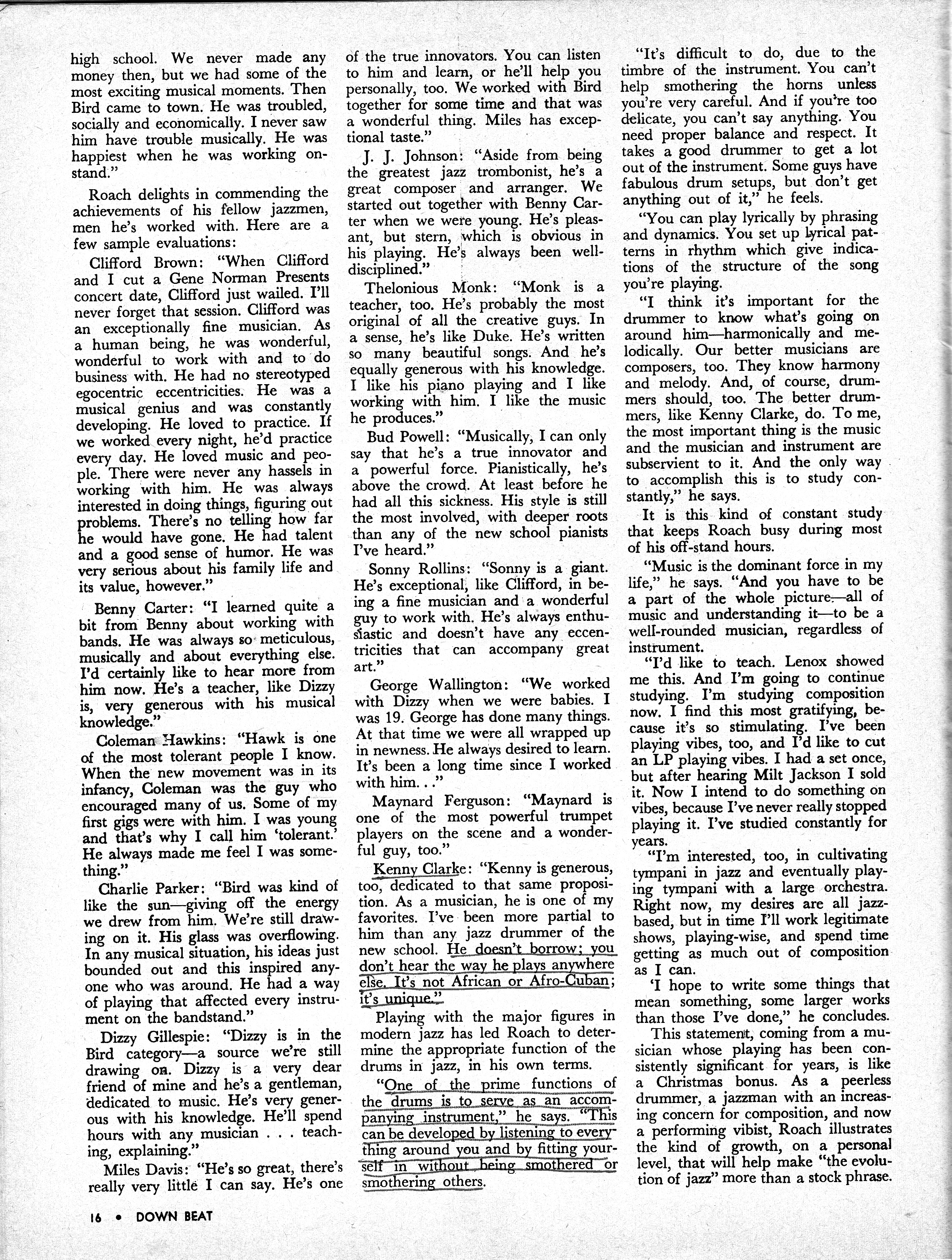
At LaGuardia High School, he learned drumming fundamentals from jazz royalty: Max Roach, Billy Higgins and Vernel Fournier.

“I grew up being aware of the legacy of Max Roach,” Freedman said.

“Max always stressed focus on composition and being a complete musician. If I saw him, he would ask, ‘How’s your piano playing?’ He was less concerned with specific drumming and technical things and about being an overall musician and composing and being complete.”

….Freedman wishes he had hung out more with [Higgins].

“He stressed don’t be afraid to imitate the masters and to learn and be supportive of the other musicians,” Freedman said. “He talked about listening and using your ears and being supportive. He was one of the most supportive drummers ever.”

Integrity on the drums was Fournier’s edict, and he didn’t suffer slackers gladly.

“Always playing like you mean it,” Freedman said.

“One time I had a lesson with him, and I played something halfway. He yelled at me. He wasn’t kidding around. A lot of the older guys were not playing. It’s hard to be a jazz musician now. It’s always been hard.”

Full Story

Posted in Drum/Music News | Tagged , , , , , | Comments Off on Daniel Freedman: It’s Always Been Hard Being a Jazz Musician