Carol Kaye: I Never Really Wanted to Do Studio Work

Carol-Kaye-opener

SKF NOTE: In the early 1980s, when I spoke with musician Carol Kaye, I felt incredibly fortunate. I still feel that way. I was working to put together a history of rock drummers that, at times, was tough to piece together. This was pre-internet and a time when drummers were just starting to gain recognition for their pivotal role in music history. Ron Spagnardi’s Modern Drummer magazine helped in that regard in a big way.

Click here for more on the back story to my backgrounder interviews.

This is a transcript from the early 1980s, I’m sure, of Carol Kaye’s half of our interview. I transcribed none of my questions. My interest at the time was in what Ms. Kaye had to say. I would remember what questions I asked. So in the interest of time, I limited my manual typewriter transcribing to Carol Kaye’s comments.

Ours was a phone interview taped to audio cassette. I was in my office at Modern Drummer. Carol was in California in, I believe, her home. I don’t remember specifically how she and I met, or the circumstances leading up to this interview. I might have been given Carol’s name and number by another musician. But I think I found her phone number on my own.

As with some of my other background interviews, Carol has some intriguing stories about Motown recording sessions. And we learn more about session drummer Jesse Sailes. Then Carol speaks about working with Phil Spector and other hit — she calls them “biggies” — records on which she played either guitar or bass.

I was unable to fact check every one of Ms. Kaye’s memories. But I was able to fact check many of them — and found no conflicts. Maybe some other writer or blogger has already solved the various Motown session stories. And maybe Carol Kaye’s remarks here include a missing piece or two of the puzzle.

=====

Carol Kaye: We were recording in a studio above a garage. Armin Steiner‘s garage. We did an awful lot of records there for about two or three years. And the first drummer I worked with was Jesse Sailes. He told Motown about me because I’d worked a few other kind of record dates with Jesse. He’s a Dixieland drummer who plays with Teddy Buckner out at Disneyland now. He had done an awful lot of Motown.

After that came Earl Palmer. And then they used Paul Humphrey on a very few of them. It was mostly Jesse Sailes first and then Earl Palmer later. Earl played on some of the biggies like Bernadette and Love Child.

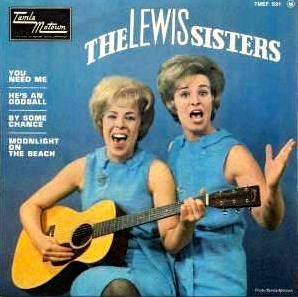
lewis_sisters

The Lewis Sisters were two white girls who couldn’t really sing, and we spent a lot of time trying to get tracks for them. And we come to find out it was The Supremes, The Temptations, and all that other stuff.

I met Stevie Wonder there as a kid because I played on I Was Made to Love Her. Now, Jamie Jamerson was in contention with that and we talked about that. So I listened to the record again and I said, “No, that’s me because I can remember the mistakes I was making.” But I think what may have happened is that they tried to cut it back East and they just gave those guys booze, see. Maybe it didn’t turn out just right. But that is definitely me playing on that. That’s Earl Palmer on drums too.

They [Motown] did so many wrong things according to the Union back then. They really kept quiet about what they did. Nobody really knew the inside workings of it. One guy did, [a Hollywood contractor] named Ben Barrett. He’s the master contractor in town. When Motown got into some financial difficulties, he stepped in there and loaned them his license — about 1967 or so — and pulled them out of the difficulty that they were in. They had quite a few hits on the market, but they ran into some mone problems and they could have failed at that point. But Ben Barrett stepped in and shaped them up and helped them.

The last records I did, they were using a big band and it was with the Union’s blessing. And they were using a couple of drummers all the time. Benny Benjamin did the stuff back in Detroit. So, I don’t know anything about the Detroit gang.

They used all the best players. Now, toward the end of the time when I worked with them they used a guy named Ed Greene out in L.A. And he was a very good groove drummer.

So I worked for Motown from about ’62 through ’69. A lot of that stuff I played guitar on — the very first stuff like Come On Do The Jerk and a whole bunch of early hits. Jesse got me in there and I didn’t play bass until about the first of ’64.

So, the very first stuff — I played guitar on. You hear me do riff patterns and that kind of thing. I played on a lot of Martha and the Vandellas. I played the six-string bass guitar on Dancing in the Streets. That was done at Gold Star. It was either Sharkey Hall or Earl Palmer on that. Jesse Sailes plays all the stuff at the Steiner garage things. I think it was Jesse playing on I Was Made to Love Her.

Jamie Jamerson was in Detroit. He didn’t move to Los Angeles until ’69 or ’70, ’71, I think. I’m not trying to take away from him. But I don’t think those guys back there knew about the West coast guys.

I played on all the Phil Spector stuff with Hal Blaine, and all the Beach Boys stuff. All the dates. But it was all guitar except, the last big hit that Phil Spector had, I played bass on. I played on all the Beach Boys stuff with Hal.

I played bass on Wichita Lineman and Joe Cocker’s Feelin’ Alright. Some of the biggies. Good Vibrations, and [Love Theme from] Romeo & Juliet by [Henry] Mancini. My work was kind of varied, but I’m mostly a jazz player. I gave up a jazz career in the late ’50s to do all that.


I never really wanted to do studio work. I never tried to break in. I wanted to play. But then it was a chance to make some money, and I realized the money…. I said, “Okay. I’ve got kids.” And I was working a horrible day job. I was working days and playing nights both.

john-guerin-slider3a
John Guerin

Hal Blaine was never quite the jazz drummer that he wanted to be. But Earl Palmer was. And Paul Humphrey. And Johnny Guerin was. Those cats were really hot, hot jazz players when they first got in the studios.

Hal’s a beautiful person and he worked his tail off. Because I was right there and I saw them just beat him to death for an hour before they’d even touch us. Just trying to get a balance on the drums. And he’d come up with some beautiful little things on the drums. He’d be sitting there doing his crossword puzzles and he’d be thinking abut some thing and say, “Yeah. I can do this and make it better.” And he did.

But I want to raise the consciousness of music in this country so we can go and get car insurance without feeling like a dog.

I play on the whole album of Pet Sounds. And then I’m on Heroes and Villains, Good Vibrations. There’s a few I’m not playing bass on because the early Beach Boys — I played guitar on. Some of the surfing stuff like, Surf, Surf, Surf. [SKF NOTE: I’m not sure what song Carol Kaye means.]. I played rhythm. Tommy Tedesco played lead.

The Beach Boys never played on their records. But, Carl [Wilson] did occasionally. Like on the opening of Sloop John B. That’s Carl playing on that. I played bass on that. That’s one of my favorite records.

Good Vibrations took 12 record dates. It took us a long time to groove. But everything on that record came out of Brian [Wilson]’s head. There’s a bass like that I created every once in a while, but every note I played came out of Brian’s head. He definitely had it together.

Hal Blaine
Hal Blaine

Johnny Guerin played on the Paul Revere [and the Raiders] records. The Buckinghams. I played bass on that stuff. When they hired us for The Buckinghams they hired us for all the dates. And if we couldn’t make it, they’d lose the dates.

It was like that with Motown too. Motown use to move the whole band to get me and the drummer. Me and Earl.

The Turtles started playing their own stuff. We were doing the Beach Boys and we’d sneak into the studio and we’d say, “Look at them! They’re cutting their own music. How dare they?” They were really good.

About ’66 or ’67 they tried to get self-contained groups, but they ran up studio time, and they couldn’t get the right sound, and the playing wasn’t very good. So they went back to using studio players. It was about the first part of the ’70s that the groups came along that could really play and started knocking guys out of studio work.

Jesse Sailes was playing for Motown from about ’62 to ’64 — and then they used Earl after that. They used Paul Humphrey later on on a few of those things, and I forget which ones.

They cut a lot of the biggies back in Detroit too. But certain tunes like Bernadette, and Love Child, and I Second That Emotion, Dancing in the Streets, [I] Can’t Help Myself, Stop in the Name of Love — I’m telling you about the biggies that I know were all West coast. I played bass on the original My Girl. That was cut out here. I Was Made to Love Her was West coast.


Jesse Sailes was from Denver, see. They’ve got a little bit different drum feel. Earl’s from the French Quarter.

Jim Gordon did the Nancy Sinatra stuff and Wichita Lineman. He did a lot of stuff for Glen Campbell. He’s got a good feel. He’s kind of underrated because he’s soft-spoken. He doesn’t talk very much.

Sharkey Hall did some of the Phil Spector things. The early stuff. But, then Hal Blaine did most of it. That guy should have really gotten known. He played on some big hits.

— end —

Posted in Backgrounder Interviews, SKF Blog | Tagged , , , , , , , , , , , | 2 Comments

This Woodshed Changed My Life

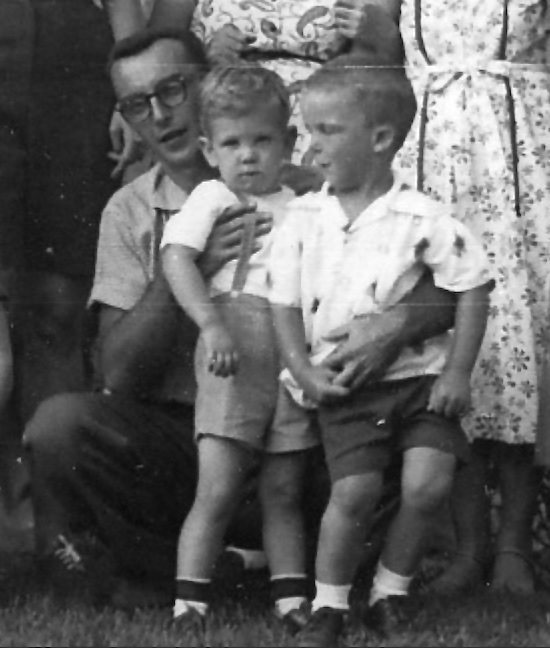
L to R: Uncle Bob Fish, Cousin Gregg Fish, Scott K Fish

L to R: Uncle Bob Fish, Cousin Gregg Fish, Scott K Fish

SKF NOTE: These are photos of Charles R. Fish Nursery in Auburn, MA. It was 100 square acres of tree nursery belonging to my paternal grandparents. It is also where my father, Chet Fish, and his two brothers, my Uncle Ivan and Uncle Bob, grew up.

My Uncle Bob introduced me to drums and drumming. In the first photo below, I’ve used a yellow arrow and the letter “A” to point out a window in the upper part of the “L” on the house. That was a drafting room for landscaping plans. It was also where Uncle Bob kept his record player on which, when I was age 6, I first heard Gene Krupa‘s China Boy and was hooked on drums.

There was also a tall wooden tube radio up there. It was about the size of a jukebox and it had great sound. My brother, Craig, and I loved to hang out in that room. We laughed every time a disc jockey would play The Coaster‘s Charlie Brown, not realizing that at age 8 I was hearing for the first time, Gary Chester.

In the far right of the photo I’ve market the light colored barn-like building with a yellow arrow and the letter “B.” That building was The Shed. Upstairs it held nursery supplies. And it is where I came upon, quite by accident, my Uncle Bob’s assembled drum set. I sat down, picked up a pair of drumsticks, tapped the snare drum, small tom, ride cymbal. With my right toes I tapped the bass drum pedal, striking the bass drum head. And the rest is history.

nursery_largtree nurseyr

— end —

Posted in Revisiting My Life in Music | Tagged , , , | 5 Comments

Fred Below: They Didn’t Teach Blues Music in School

below_myers_brothers
Fred Below with David and Louis Myers

SKF NOTE: This is another in my series of Modern Drummer backgrounder interviews. I wrote on the transcript that I edited this interview on June 11, 1981 for use in the Blues Drummers segment of my History of Rock Drumming. The interview itself took place around that time, perhaps as soon as the day before I transcribed it.

This is the full transcript, published here for the first time. You can see from the first page alone, shown at the end of this post, how heavily edited was this backgrounder interview.

For me, this was an exciting interview for a couple of reasons. Fred Below had been an inspiration to me for many years. And it was surprising, because it was not stereotypical of blues drummers, to hear Fred Below outline his musical background and his influence in shaping the forms, the phrasing of Chicago blues. That is, Mr. Below was key in moving blues players from “haphazard” odd number phrasing to the standard blues phrasing of 8 bars, 12 bars and so forth.

Enjoy.

Scott K Fish: I know you played a lot with Muddy Waters, Little Walter, The Aces, Howlin’ Wolf, and some with Chuck Berry. What kind of an input did you have on thos sessions?

Fred Below: Well, the sessions I did when I came in was in the ’50s. The early ’50s. I began to work with Little Walter on the records, and then, through…. by me working with Little Walter I was able to meet a lot of the other blues artists. Well, when I entered into the blues I wasn’t familiar with the tunes that they were doing.

SKF: You were coming from a jazz background, right?

FB: I was coming strictly from jazz. And so therefore, I had to learn what they were doing. So, I had to learn from just by going around and meeting some of the players like Junior Wells, Dave and Louis Meyers. And Louis and David Meyers was the ones who taught me how to play the blues.

SKF: Who had you been listening to from a jazz background?

FB: Well, not listening. I went to school with, my goodness, Gene Ammons. And I went – oh, my goodness – Bennie Green. In fact, the first band I had I had Bennie Green in it.

Johnny Griffin. He and I set side-by-side in the came class. Same room.

I had went into the Army and I came back in 1950. I came back from the service, because I took a stint in Germany. I came back from Germany. Then I got back on the scene and then all the fellows that I knew – like Johnny Griffin, oh, Buddy Rich and Louis Bellson, and all those cats. Man, they was so far out it was gone! So, I had to get back in to the scene.

And back in Chicago, all the guys like Gene Ammons and all the players that I knew — they weren’t in Chicago no more. They was on the scene with big white bands. There was no way for me to get in touch with anybody.

So, while I was here in Chicago I happened to run across a drummer named Elgin Evans. He use to be with Muddy Waters. And he introduced me to some of the players that he were playing with.

So, through him I met guys like Memphis Slim, and T-Bone Walker, and guys like that. And I really didn’t understand the kind of music that Muddy was playing, but I was willing to learn, because at that time it was selling in the city. And, so I just paid attention to the guys that I was around and learned it. Learned how to play it.

But, I had to put some to it myself. And somehow or other, what I was doing, I established my way of playing it and it caught on with all the other blues guys.

So my style was very familiar with all the harp players. They all wanted ones to get into it. So by me playing with one of the best – which was Little Walter – that set me a little apart from the rest. Because I had established a style that was from a jazz musician interpreting the blues in a different way. And I established a beat.

SKF: Did you find it frustrating to go from jazz to blues sometimes?

FB: No. I found it very illuminating because, you see, I went to school to learn and finish music. I’ve been through the Roy C. Knapp School. And I met some of the greatest drummers in the world there. Buddy Rich, I met him. I met [Louis] Bellson. I met Gene Krupa and all of the guys, all of the big guys, because we use to go downtown to the Chicago Theater when they came to town and see them.

What made blues fascinating with me was because it was a type of music that I wan’t familiar with — and they didn’t teach it in school! And I don’t think they do it now. So, it’s an altogether different style. So, I had to play it in a way that it would make sense to me. What I did was worth the finest finished product right now.

SKF: Yeah. You’ve got a great style. I’ve been listening to you for a long time.

FB: Yeah. So I played with Dinah Washington, Big Bill [Broonzy], Memphis Slim – oh, my goodness – The Moonglows. I made some of the hit records with The Moonglows. You know a record called Sincerely?

SKF: Yup. That’s you?

FB: That was me on the drums. (laughs)

SKF: Well, when you went into the Chess Studios to record, did the band know what they were going to record before they went in?

FB: Depend on who you went with. When I went in with Little Walter we always rehearsed our stuff. Then we got it down. Like, with other people — no. They just called me and say that they had a session, and that they would like to have me on it. And I would come down to the studio. They would run over the stuff. And after they got it down pat, then they would send me in, and I’d listen to what they were doing. Then they’d tell me, “Say, can you put something with this?” And that’s the way it were.

SKF: But, with The Aces — that was with you and the Meyers brothers?

FB: No, no, no. That’s altogether different. See, The Aces, it started out with Little Walter. But then Dave and Louis [Meyers] left. And that left me by myself with Walter. And then they had Robert Jr. Lockwood and then Luther Tucker.

SKF: And that was the band that was called The Aces? You four?

FB: No. The first band was called Jukes – which had The Aces in it, which was Dave and Louis Meyers. Then we regrouped later on in the early ’70s and we went to Europe.

SKF: Were you able to use your own drums on those recording sessions?

FB: Oh, I always use my own drums. I don’t play on nobody else’s drums. I made it a point. You know, I’m a jazz drummer and I like sound. And I like to tune my own drums. I don’t like to play on no one elses drums. I know how mine’s going to sound when I touch them.

See, I tune my drums. This is a main thing about any drummer. That is, if you call yourself a drummer. You should know something about your instrument. So this is what I know how to do — is to tune. I learned that from going to school. I didn’t spend all that time going to school and not paying attention to what they was telling me. Irregardless of what type of music I’m playing.

See, I went to school to learn how to play well. Where, a lot of the drummers that you see out here, they just pick it up and don’t really know what they doing. So I’m able to adjust myself and play in all types of bands and music. Because not only do I play it, I can read it. And that’s where my musical experience is a lot different from the average blues drummer. Because they don’t have any musical background. And I came in with the background of reading and writing and really understanding, into a blues type of music that didn’t really have any form to it.

And by me coming in in the ’50s, I had to — where they use to play 3 bars or 6 bars, I came in and stretched the 3 bars to 4 bars. And where they played 6 [bars] I made it 8. And I adjusted the music from the 1950’s up to today, you see. The blues players [today], they play in phrases, but they play in 8 bar and 12 bar phrases. Where, at the time when I came in, they were playing haphazard type of phrases. There was no form. And the only way you would know what they were doing is by listening and learning the tunes.

SKF: Do you remember what set you used in the studio? Were you playing on the same set in all those sessions?

FB: No. I played WFL, and then I played Slingerland, and then Gretsch, and then later on, when I first went to Europe, I played on a Sonor set. And that was in 1965.

The people from the Sonor Company contacted me and asked me how did I like their drums and everything. And I said, well, that I liked them very much. And so, when I came back to the United States they were presented to me. And they made me a Sonor drummer. I went to Europe and played all over the United States. And I went to Africa in different places. I had the Sonor drums with me. They’re very good. I still have them.

SKF: How many mic’s did they use to record your drums in the ’50s?

FB: Well, let’s see. They use to put on on the bass [drum], one on the sock cymbal, and then one in between the sock and the ride cymbal on the right. So, they was using just three microphones.

SKF: That was the sessions with Muddy and Little Walter that they’d have that many microphones on your drums?

FB: Most all the blues sessions are set up that way. Jazz set ups are a lot different.

SKF: But they wouldn’t mess with your drums as far as  muffling them, sticking pillows in them, and stuff like that?

FB: Oh, yes. Like on a blues session we would take the front head of the [bass] drum off and muffle the inside.

SKF: That didn’t drive you crazy?

FB: No, no. You get used to it.

SKF: You don’t play like that live with the blues bands though, do you?

FB: No. I don’t play live like that with any band. I don’t take no heads off no drums. I’ve never understood the reason why. If a drummer has a foot, and you have a control of your foot, and you can tune your drums — you can tune your drums down to whatever sound that you like. But this is control. If you don’t have no control, then you don’t really know what you’re doing. That’s why I’ve never understood what this electrified drum outfit was about. It’s not really for a drummer. It’s just merely for a certain type of music or sound — and that’s it.

SKF: So do you get a chance to get out of Chicago much?

FB: I go anywhere where the job is presented.

SKF: And do you take the same band with you?

FB: Well, it depends. I have a group of musicians that I’m able to get in touch with whenever the job is. But since I’ve had, you know, I’ve had a couple of operations on my eye. I had a cataract surgery on both eyes.

SKF: Oh! How are you doing?

FB: I’m alright now.

SKF: Great. Great.

FB: I’m all through with that. I had a couple of jobs with my band. But mostly what has been coming in now is singles. Where they feature me on the different shows and things like that. In fact, I have a show tomorrow at the Chicago University. A blues session. That’s [Little] Willie Anderson. He’s a harmonica player from Chicago, which I recently made some recordings with.

fred_below_interview_first_page

Posted in Backgrounder Interviews, SKF Blog | Tagged , , , , , , , | 2 Comments

What Makes a Music Journalist Good?

Scott K Fish 2024 (Photo by Jason Carey)

SKF NOTE: Getting to know, to work with, great freelance writers and photographers was a favorite part of my work at Modern Drummer. As Managing Editor I was MD‘s chief liaison for work assignments with freelance writers and photographers.

Last year I was invited to speak to a class of music majors at the University of Maine in Augusta about their opportunities in music journalism. One of the topics I had in mind was, from my Managing Editor’s point of view, what makes a good music journalist or writer?

The internet has changed much of the relationship between music writers and editors. Sometimes the internet has made that relationship obsolete. But there are principles of music journalism, whether a person is writing for a publication or for their own blog, that still hold true. For example, here are the qualities I valued most in MD’s freelance writers and photographers. (There are some qualities unique to photographers I will address in a later post.)

  • Has good, unique ideas and can follow through on them.
  • Meets deadlines.
  • Sense of humor.
  • Flexible. Has a Plan B, C and D in mind for when Plan A fails and can easily adapt to them.
  • Great personality. Is a good ambassador for MD.
  • Knows the subject.
  • Makes the interview about the subject, not about the writer.
  • Submits manuscripts needing no or little editing.
  • Dependable. If they say they are going to do something, they do it.
  • Willing and able to make/take constructive criticism and direction.

— end —

Posted in SKF Blog | Tagged , , , | 1 Comment

Hal Blaine: Spector Sessions Were Agony, Ecstasy and Magic

SKF NOTE: This Hal Blaine interview is another of my backgrounder interviews for my History of Rock Drumming feature series for Modern Drummer in the early 1980s. This interview is published here for the first time. All of these interviews can easily be accessed here by clicking the Backgrounder Interviews link.

This telephone interview requires a bit of clarification. My best guess is, the last three paragraphs of this transcript are separate bits of information I wanted to keep as source material. It’s information likely said within small talk between Hal and I during the interview. So, if the last paragraphs of this transcript seem disjointed — they probably are.

Also, in his last answer in this interview, Hal says he played drums on The Supremes’s Baby Love. I don’t know if he meant he did so as part of the backup band on the T.A.M.I. show, or as part of the studio session resulting in The Supremes’s Baby Love hit single.

Hopefully readers can clarify. Thank you.

=====

Scott K Fish: What were the Phil Spector recording sessions like?

blaine_hal_ludwigsHal Blaine: Well, it was all magic, first of all. We were all new people in the studios — the early ’60s. We were, I guess, the stars to be. There was so much spirit, and so much vitality. The adrenalin was unbelievable. Phillip just had that mystique, that magic. It was always a closed session, and anyone that passed by, Phillip grabbed them and sat them down in the booth. Every producer in the world use to hang out at those sessions just to touch Phillip, just to try and hear something just that, hopefully something would rub off on them.

They were wonderful. They were agony and they were ecstasy. We worked for many hours at a clip — without breaks, generally — and we made the biggest records in the world. Really, from the nucleus of the Phil Spector records came The Beach Boys, and Jan & Dean, and Johnny Rivers, and everybody that happened, really happened after that. Sonny & Cher — all of them. It all happened because Phil Spector had his Wall of Sound. That was the new sound. That was the new drum thing that happened. It was just one of those things. It was magic.

SKF: Was that when you first started using that big drumset?

HB: Oh no. That came later. I was still just playing a four-piece Ludwig set. And Phil use to let me go nuts on the fades.

SKF: So you weren’t working with strict charts?

HB: In a way were were, because we all had rhythm charts. And Jack Nitzsche use to write those rhythm charts for everybody. He worked with Phillip on it.

frank capp

Frank Capp

But Phillip would also come out and hum a part that he wanted, or tell guys what to play. Phillip was a guitarist. And that was another thing: Phil was the first guy to use, like, four rhythm guitars at the same time. Two basses. It was still only one set of drums in those days. We had ten guys, like Frank Capp, shaking shakers and making noisemakers, jingle bells — anything.

The famous castanets. You know, everybody laid claim to the castanets. The castanets started with Phil Spector. The castanets started, plain and simple, when I pulled them out one day and I laid them down and I said, “Frank, beat the shit out of these.” And I gave him two more castanets to play on them.

And everybody said, “You’re nuts. You can’t do that.” And Phillip said, “What is that? What is that? Leave it! Leave it!” It really became a very integral part of the Phil Spector thing. Fucking castanets on a rock ‘n roll record!

Then you would take a break and nobody was to every touch a mike. If he saw you touching a mike he would scream at you.

And it was always a Friday night, always the end of the week. Sort of the last session of the week. And it was lunacy, and it was jokes, and it was fun, and, as I say, it was agony and ecstasy.

SKF: Would he just keep the tape rolling?

HB: That tape never stopped. When you walked into the studio at quarter to seven for a 7 o’clock session — the tape was rolling. Phil Spector has everything that was ever said, done, joked about, pissed about — it was all on tape. He has it all.

He said someday he’s going to put out a tape of fades.

SKF: Would the recording artist be in there with you?

HB: Sure. They were always there. They weren’t necessarily singing live. Darlene Love was always there. Ronnie [Spector] was always there. She was married to Phil.

Another thing is that Phil had just come off the Teddy Bears, which was his first smash: To Know Him is To Love Him.

SKF: Wasn’t there a time when Phil Spector was using two and three drummers?

HB: Well, that came much later on. Years later.

keltnerlennon

Jim Keltner and John Lennon

There was a period when I was on the road, I was gone — whatever it was. I guess Phillip wasn’t really happy with what was happening drum-wise. So he started using two drummers. He was using [Jim] Keltner and I guess they were going through other drummers. He loved Keltner. And I guess Keltner didn’t really find drummers that were…. that worked for him.

Keltner called me and — years later — Jimmy called me and asked me if I would come in and play with him. From then on, whatever we did was usually Jim Keltner and myself. That all started at the end with Dion. And John Lennon.

SKF: You did [The Byrds] Mr. Tamourine Man, but did you also do that whole album?

HB: Not all of them. But a bunch of them. I don’t think they even mentioned me on any of the albums. In those days they didn’t do that.

The shit hit the fan with The Monkees. It was considered a scandal that The Monkees didn’t make their own records. It broke to the world in all the trades and movie magazines that, not only The Monkees didn’t — nobody did!

One of my greatest compliments came from Bruce Gary [who] said that one of his biggest disappointments in life was finding out that a dozen of his favorite drummers were Hal Blaine. That’s really a funny line.

We did everybody’s records. It was plain and simple. We did everybody’s records from pop to rock.

SKF: Why?

HB: Because of superstition. Because we had the hit sound, we were the hit makers. Some people called us The Wrecking Crew. We were the first guys to come into the studios wearing Levis and smoke a pack of cigarettes during the session. And leave dirty ashtrays. Studios were never that way. They were very, very Victorian, if you will. The guys wore sports jackets and blazers and neckties. You cleaned your ashtray when you finished a date. You didn’t talk to anybody. It was very quiet while the producer or the arranger talked.

We came along and we were another breed. Rock ‘n roll had just started. The ’50s. And we were sort of cleaning it up. We were sort of sophisticating it a little bit.

It wasn’t a matter of being out of tune. Guys were in tune. Studios were getting better, more efficient, electronically. More tracks were coming along. You could do more. You were really making stereo records. That whole thing evolved together: the same gang of musicians as the technology got better.

And that’s when my set of drums happened. The big set of drums. That, of course, turned the world around.

blaine_hal_monster_kit

Hal Blaine and his monster drum set

SKF: Was it that a lot of the drummers in the ’60s bands couldn’t play well?

HB: Their technique in the studio was not studio technique. They had to hit a fucking mike every time they moved! It’s different in the studio than [it is] onstage. Those guys were great onstage. They had long hair and they could shake their heads and make the bitches scream. Everybody was listening with their eyes. But on the record, they are really listening with their ears.

Some of the downfall of some of those groups was the fact that they decided they wanted to make their own records. After The Wrecking Crew gave them hits — the first two, three, four, five hits, whatever — they start making their own records [and] it was all over.

SKF: Were there specific people who were The Wrecking Crew?

HB: Myself, Carole Kaye, Tommy Tedesco, Glen Campbell, Bill Pittman, Steve Douglas, Ray Pullman — we used to call ourselves The Dirty Dozen — Billy Strange, Lyle Ritz, Larry Knechtel.

On Mr. Tambourine Man, Larry Knechtel was on bass. [Roger] McGuinn was there. That’s about all I remember. Terry Melcher produced it.

SKF: Did you do all The Monkees records?

HB: I only did all of a few people’s records. Earl Palmer and I did all of Jan & Dean. I did all The Mamas and the Papas records. There were a lot of people — we did their first big hits. The Monkees were no exception. The Monkees were the same thing.

SKF: And that got scandalized?

HB: Well, to clean that up…. I remember we were making records in Studio A. We were making Monkees records with Jeff Barry. And The Monkees were in Studio C making a record of some kind with all the photographers taking pictures of them to show they could make a record. It was a different song they were doing. I don’t know if it was ever released.

Probably the biggest session that ever happened in the world happened also at RCA due to the Monkees, and that was Mike Nesmth‘s project that, at the time, he called World War III. It had a lot of different names. He was call it Pacific Ocean at one time. He was calling it Wichita Train Whistle.

At the en of the year The Monkees found that they had to spend about 50 grand quickly – tax-wise – or give it to Uncle [Sam]. Keep in mind, in those days 50 grand was a lot of fucking money.

We did a session where he probably hired 10 guitar players, 15 trombone players, 15 trumpet players, 15 saxophone players, probably five, six, or seven bass players. I think there was only one set of drums, as I recall. But everything you could think of was tripled. And it was catered. Sterling silver service catered. It was just the biggest thing that ever happened. And we recorded it in RCA. The big studio. Shorty Rogers did the arrangements and it was a killer.

I think it was released. I don’t know if I ever heard it.

I did a lot of [ghost drumming] for The Ventures. I don’t know if they were hits. A lot of times those guys were on the road and their producer found a hit record — BANG! — they’d run in with a group of studio guys and make a record. I was the drummer on The Ventures Teaching Guitar album.

SKF: When I read that you recorded Help Me, Rhonda, I wondered if you did the whole album as well.

HB: Most of those, yes. Some of the lesser sides, no. Those kinds went in, fucked around, and did their thing. I don’t think you ever heard those records. They certainly were not the hits.

SKF: How about the early hits like, Surfin’ Safari?

HB: Absolutely. Surfin’ USA and all those records. I had a bass drum that was a killer. It was with a head on the front. Everybody liked that four-on-the-floor bass drum. And that was another reason why people always alled me: “Be sure to bring that bass drum.”

I had two of them — identical — and they didn’t know that. It was impossible to have it at every date, everyday, four, five, six dates a day. I had the kid that set up my drums. One of my innovations was having a set-up guy. I guess I had the first roadie in the world. I don’t know.

I guess there’s no question that I was the most recorded drummer in the ’60s. I stopped counting at 35,000 singles. Now, that’s logged. Every dong I ever recorded got written down. Somewhere I have all those books.

SKF: Wasn’t Jim Gordon doing some percussion work with you on some stuff?

HB: Every once in a while Jim would come in on percussion, yes. I don’t really remember years though. I did not do the big hits with The Righteous Brothers. Lovin’ Feelin’ was Earl Palmer. Baby Love by The Supremes was me on drums.

I remember when we did the T.A.M.I. Show. Teenage American Music International. Everyone was on that show. Diana Ross & the Supremes, The Stones, everybody. I remember talking with Diana. And I remember Diana saying, “Hal Blaine is playing drums.” And Berry Gordy said, “Then you’re in good hands. Don’t worry about it. Go and sing your ass off.”

I did all of Jimmy Webb‘s stuff. He was my closest friend.

We use to record for Crown Records out here for five dollars a side. We’d work all day Sunday and make a hundred dollars. They use to do sound-alike records and all that kind of stuff. But the records were too good.

The ’60s: Me, Earl [Palmer], Jesse Sailes, Sharkey Hall, Alvin Stoller, Frankie Capp. Alvin and Frankie were kind of know for their legit stuff. Frankie was known as kind of a big band swing drummer. He still is.

hal_blaine_interview_first_page

— end —

Posted in Backgrounder Interviews, SKF Blog | Tagged , , , | 7 Comments