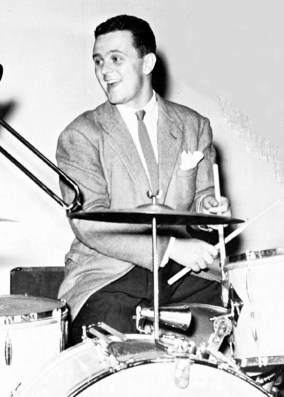
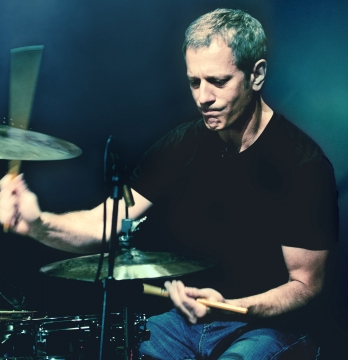
Thad Jones/Mel Lewis Newly Released ’66 Vanguard Recordings

SKF NOTE: Listening this morning for the first time to the track, Big Dipper, from the newly released Thad Jones/Mel Lewis CD, All My Yesterdays: The Debut 1966 Village Vanguard Recordings, I am reminded of how great is this big band, and how great are the individual players. And I find myself missing Mel Lewis all over again.

https://soundcloud.com/detroitfreepress/big-dipper-alternate-take

Thank you to Doug Ramsey’s blog, Rifftides, for bringing this new CD to my attention. And also, for pointing out Mark Stryker’s essay on Thad Jones and the band.

No point in saying anything more. Just listen. What a great way to start the day.

— end —

Posted in Drum/Music News | Tagged , , , , , , | 1 Comment

Enthusiastic Kids Might Actually Know Something

dave-weckl-10_large

Dave Weckl

SKF NOTE: I think his name is Chris. He was a young guy who called me from time-to-time, at Modern Drummer, full of enthusiasm about a local upstate New York drummer he said we should interview Chris was the only person in the world I heard talk about this local drummer.

This drummer’s only claim to fame was, Chris liked him and, according to Chris, this local drummer studied with Gary Chester. Oh, and the drummer consistently wowed patrons at a local club.

Long story short: It was not long before this local drummer had landed a gig touring with Simon and Garfunkel. His name was Dave Weckl.

I did, indeed, interview Dave but no one else at MD thought he warranted a feature interview at the time. So my Dave Weckl feature interview was published in a much shortened version as a profile.

For me, Chris’s enthusiasm and persistent phone calls were a good lesson. Gold is where you find it. And he was aware of Dave Weckl’s talent before lots of people – including the full Modern Drummer staff.

If Chris reads this, it would be great hearing from him.

Somewhere I have my Dave Weckl feature interview transcript. When I find it I will post it here. It might be fun to revisit what he had to say on the cusp of well-deserved fame.

— end —

Posted in SKF Blog | Tagged , , , | 6 Comments

Max Roach: What Changes is Rhythm

582003_max_roach_db_intvSKF NOTE: Here is something Max Roach told me in the early 1980s. I, of course, already had a high appreciation for drummers’ contributions to music. But Max’s words kicked my appreciation up several steps.

I don’t have Max’s exact words in front of me, but these words are very, very close to Max’s exact words:

An A major chord is played the same in jazz as it is in classical music. The makeup of chords doesn’t change from one music style to another.

What changes, what distinguishes one style of music from another, is rhythm.

— end —

Posted in SKF Blog | Tagged , , | 4 Comments

Drums? Who Cares?

scottkfish_drumsticks

Scott K Fish in the obligatory drummer with cigarette pose

SKF NOTE: I enjoy listening to people tell me about their life passions. Maybe it’s what they do for a living, or may maybe it’s what they do for a hobby. That doesn’t matter. If a person is passionate about a subject, I enjoy conversing with them about it. I learn something from them.

But I rarely find people curious about drummers and drumming. Sometimes people ask me about drummers and drumming, and when I answer them, I see the veil fall over their eyes. Or their eyes dart about, looking for someone else to talk to.

I’m not a boring person. That much I know. And for the longest time I assumed most people have no interest in drummers and drumming.

But this morning I’m thinking anew. Maybe I’m confronting this challenge: Figure out a way to frame the conversation so non-drummers will want to know more about the instrument and the people who play it.

Also, I’m thinking maybe my experience isn’t unique to drummers. Maybe piano players and guitar players, bass players and cellists — maybe their world is full of people who could not care less about their respective instruments.

— end —

Posted in SKF Blog | Tagged , | Leave a comment

Armin Steiner: Recording Motown in L.A.

SKF NOTE: My Carol Kaye transcript, and other of my backgrounder interviews, prompted questioning from some readers about West coast musicians recording early Motown records.

Several musicians and other music industry people told me some (many?) of those Motown recordings took place in Armin Steiner‘s garage studio in Los Angeles. Other musicians and music industry people have a different story.

With that in mind, here are two interview segments of Armin Steiner talking about recording Motown songs in his studio. The first and longest segment is from the transcript of an interview from the early ’80s by percussionist Mark Stevens and Armin Steiner. Mr. Stevens interviewed a few noted recording engineers and put together a Modern Drummer feature story on miking and recording drums.

The second segment is from a 2001 MIX magazine interview with Mr. Steiner by Maureen Droney.

=====

Mark Stevens: I find it very interesting, and I wondered if I could get you to talk about, some of the early stuff that you did. At that time, sometimes you knew who the [studio] musicians were and sometimes you didn’t. With Motown, you never were exactly sure who it was.

Armin Steiner: No. We pretty much had the same people playing most of the time.

MS: But the engineer at that point didn’t seem to get as much recognition.

AS: His name never was put on any of those early albums. I don’t know I was responsible for too much, actually.

It mostly started out in my garage studio — which was a wonderful room. It was all wood. Everything sounded good in that room. Maybe we all got spoiled. We built certain equalizers. This was 1964, I believe.

I think I was one of the first people to use a condensor microphone — a U-47, as a matter of fact — over a drumkit. Not close up. Maybe four feet over the drums.

At that time we were using particularly Hal Blaine and Earl Palmer. And in many cases we had two drummers: both Hal Blaine and Earl Palmer. And sometimes three basses.

In fact, a typical rhythm section consisted of Hal Blaine, Earl Palmer, Ray Pullman was playing bass, Bill Pittman was playing a Dan Electro bass. In those days that was a new instrument. That’s how they got the click. Then they would have another guy playing string bass in order to get the real low tones.

Bill Strange playing guitar, and Glen Campbell. Third guitar might be Mike Deasy.

Then they would have a percussionist in the corner. And I developed an isolation booth for the singer.

Then we would have a couple of saxes, maybe, at that time. Boy! It was a rocking rhythm section. I can remember the sound even after all these years.

This was a band that consistently played on all these records, many of which people thought had been recorded in Detroit. There was a great similarity between the room in Motown and the room out here.

We did a lot of records with The Supremes, Marvin Gaye, Martha and the Vandellas, and all the major groups in those days. The Four Tops. It was interesting because we were experimenting in those days. There no given rule.

— end —

mixonline.com
RECORDING
Armin Steiner
Armin Steiner is a self-described survivor, having achieved the kind of career longevity that, in the music business, eludes all but a select few.
5/01/2001 — Author: MAUREEN DRONEY

From that moment on, word started traveling. Motown got interested, and I was busy all the time. I had Glen Campbell, Billy Strange, Tommy Tedesco, Dennis Budamir, all these guitar players sitting there at my house. There was Ray Pohlman, one of the truly great Fender bass players and the first man to actually build a distortion device. Hal Blaine, Earl Palmer, Joe Osborne, Larry Knechtal, Bill Pittman, Mike Deasy and, of course, Carol Kaye. I’d get a call at three in the morning from Herb Alpert saying, “I’ve got to overdub a tambourine on this piece.” I’d be in my pajamas and I’d walk up there and we’d do it — that was that. I used to have The Supremes up there, Marvin Gaye — my mother used to cook for them. Stevie Wonder was in when he was 9 years old. People think I’m making this stuff up, but it’s true. As a matter of fact, I did a film session with Stevie awhile back, and he remembered both me and my studio.

Full Story

— end —

Posted in Backgrounder Interviews | Tagged , , , , , , , , | Leave a comment