Do You Know What Numbers Sound Like?

SKF NOTE: When I was in school — with a couple of exceptions — I hated math. But loved drumming. The exceptions were a couple of math teachers passionate about math. Their passion transferred to me. I enjoyed their classes and I learned math.

All those school years of dreading math class came back to me while reading yesterday about Troy Kryzalka’s Number Drummer program. His lessons look like fun. Who know how my school math might have changed if Number Drummer was around!

Mr. Kryzalka says on his web site, “Over the past 15 years, there has been many benefits to this approach, not to mention the spectacular performances that students were able to create.” I would love to learn more about the “many benefits.” Until then, be sure to visit Number Drummer online.

Holy Name students learn math to the beat of a drum
Jay Grossman9:29 p.m. EDT April 25, 2016

Number Drummer creator Troy Kryzalka has worked in education for over 15 years, and has delivered his integrated math and music learning approach to thousands of children and educators. Using movement, body percussion, and real instruments, students simultaneously performed multiple math skills at a variety of levels.

Principal DeAnn Brzezinski remarked that “it was fascinating demonstration of math and music all rolled into one spectacular show!”

Full Story

— end —

Posted in Drum/Music News | Tagged , , , , , | 2 Comments

Roberto Petaccia’s Rocking Motion Technique

roberto_petaccia

SKF NOTE: September 10, 2015 I posted my 1981 Modern Drummer obituary for a terrific guy, Roberto Petaccia. I wrote in part:

“The first time we heard from Roberto was through a letter: ‘My name is Roberto Petaccia and I am contacting you in regards to my interest in writing for your magazine.’ I called him up because he had many good ideas. We kicked around some idea and he submitted several articles, some of which have already been published in the Rock ‘n’ Jazz Clinic column. The ideas were great and the manuscripts that Roberto handed in were near impeccable, but he would always apologize for them.”

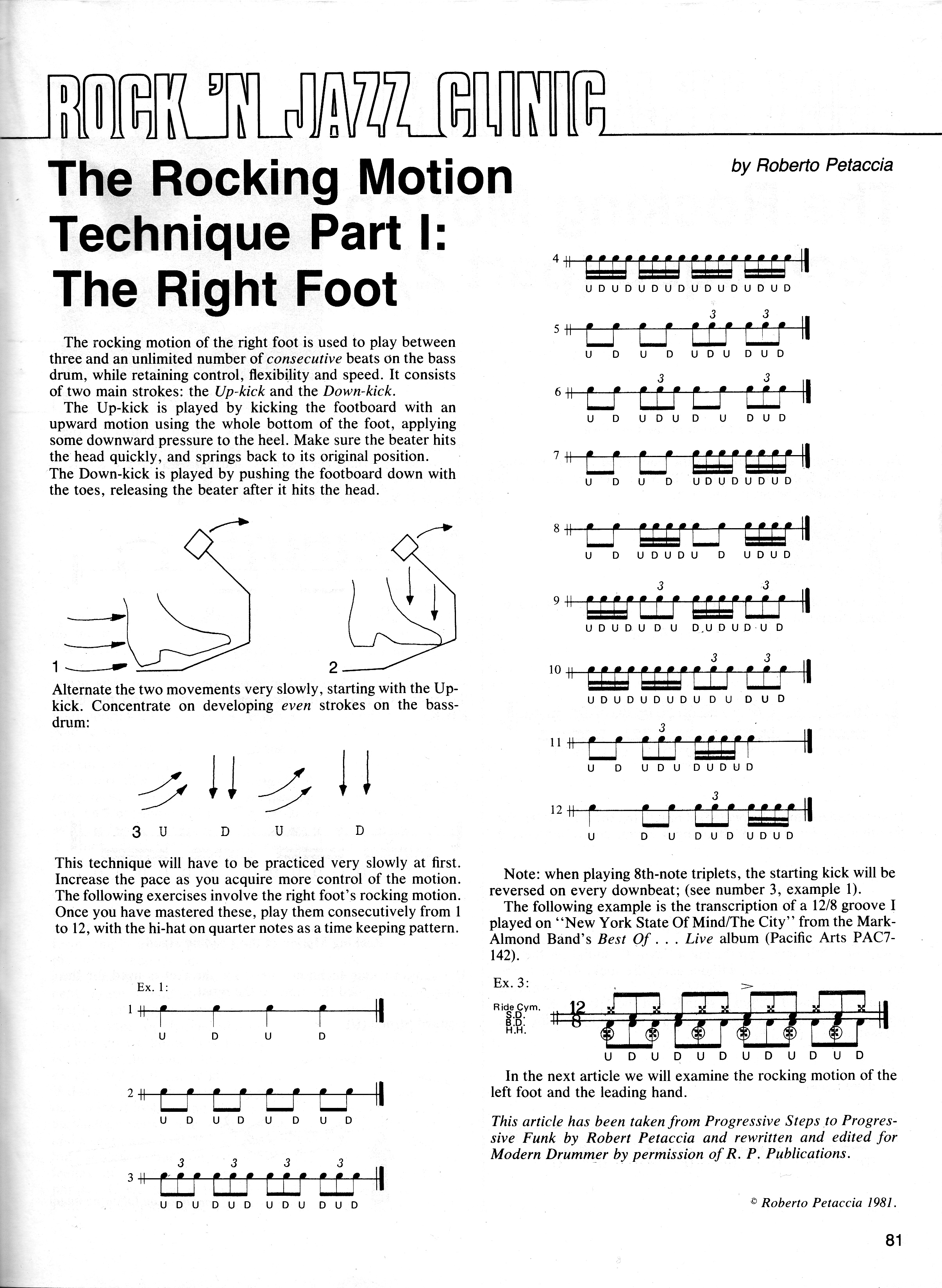
After posting Roberto’s obit I remembered his Rocking Motion technique with the bass drum pedal, and I wrote on Drummerworld, “Roberto was the first drummer, in my experience, to master the heel-toe method of playing a single bass drum pedal. By playing his bass drum pedal with a rocking motion, Roberto was able to strike his bass drum with (I think) heel first and toes second. He was able to play that at different speeds. The technique was designed to produce the same effect later used by the double bass drum beater pedals used on single bass drums.”

Roberto had a drumset assembled in his New York City apartment where he showed me his Rocking Motion technique. Roberto played very relaxed with minimal motion bass drum figures with one bass drum and pedal usually reserved for double bass drums and/or double pedals. His Rocking Motion technique was so logical and worked so well. It was a classic, “Why hasn’t someone thought of this before now?”

Here then is Roberto Petaccia’s The Rocking Motion Technique Part 1: The Right Foot as it first appeared in Modern Drummer.

roberto_petaccia_rock_motion_1

— end —

Posted in SKF Blog | Tagged , , , , , | 1 Comment

Gordon Lightfoot: ‘I Like Everything to Swing’

SKF NOTE: On April 14 I wrote about Gordon Lightfoot’s great band. Here in an April 21 newspaper story is Mr. Lightfoot himself praising his band. One other point: Gordon clearly thinks of himself as a band member. That comes through in this story and also onstage.

lightfoot_gordon_band

MUSIC SCENE
Gordon Lightfoot sings ‘the cream of the crop’
By Dustin Schoof For the Pocono Record
Posted Apr. 21, 2016 at 8:06 PM

Lightfoot promised not to shy away from playing his most popular tracks during his Stroudsburg stop. He described the atmosphere of his current show — in which he runs through about 40 songs, or what he described as “the cream of the crop” — as being rather lively.

“This really is a folk rock band,” [Lightfoot] said. “Everything I do has a momentum of its own. Some if it really is really good, solid folk rock. Everything I do has a beat to it. I like everything to swing.”

Full Story

Posted in Drum/Music News | Tagged , , , , | 1 Comment

Art Blakey’s Press Roll: ‘It’s the Way I Feel’

580603_blakey_gretsch_ad_DB

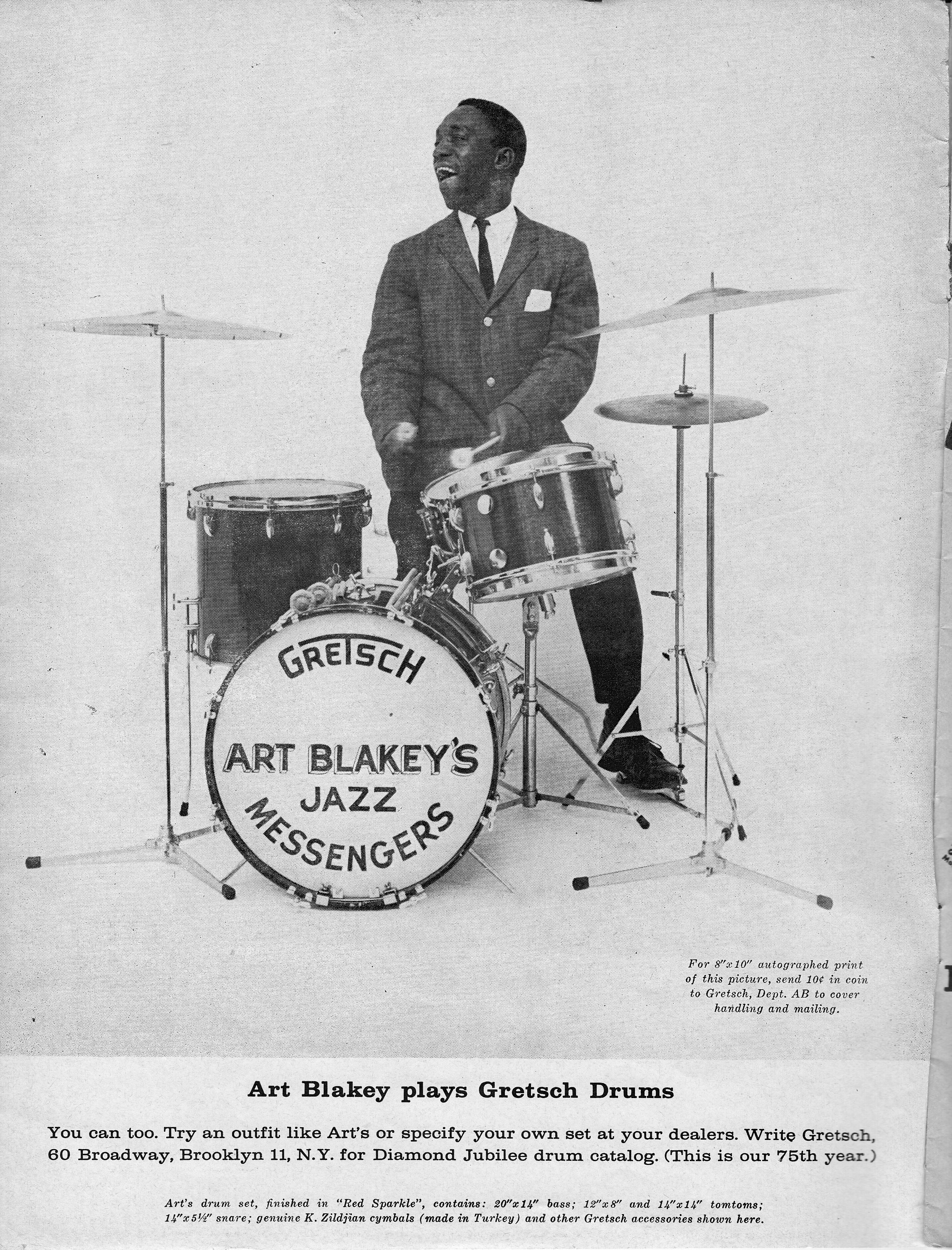
SKF NOTE:  Sometimes it’s disappointing when an interviewer misses an apparent opportunity to get a more in-depth answer. No doubt Art Blakey had one of the world’s great press rolls. Anytime a musician has a trademark style it’s always nice to have an opportunity to read or hear the musician talk about it.

Art Taylor is a fine drummer. I’m glad his book of short interviews, Notes and Tones, was published. But sometimes I wish he was better able to keep the musicians he was interviewing on topic. That can be tricky. Sometimes when a musician starts veering away from an answer it’s best for the interviewer to not interrupt, but to revisit the question when the musican finishes veering away and stops talking.

It would be interesting to know if Blakey struggled in developing his press roll or if it came easy. If he struggled, does he remember an “Ah Ha!” moment when his struggling ended and he could play his signature press roll at will? If so, can he tells us what changed, what made the difference? Stick weight? Changing the way he holds the sticks?

That said, Notes and Tones is well worth owning because it is full of gems of wisdom from great musicians. Here is one example:

Art Taylor: How did you develop your press roll?

Art Blakey: I didn’t think it was developed yet. Teachers say that the way I do it is technically wrong, but it’s the way I feel. That’s the reason I stopped playing piano. Whatever you do, nobody ought to tell you how to do it, because you have physical handicaps you know about that nobody else knows about.

notes_and_tones

Nobody teaches you how to eat. You know how to eat when you come here. So if you’re going to play the drums, nobody should teach you how because you know your own physical aptitudes, what you can do and how to do it your way.

If we get into something and it’s time to roll, I pick up the sticks, and if they’re backward, I just roll with it.

They say don’t do it that way because it’s timpani style. What style? Cats in Africa ust pick the sticks up and they’ve got it. We have a technical advantage over here where we hold the stick between the thumb and the index finger of the left hand, which is good for what we’re doing. But you don’t have to play with a certain end of the stick. If you grab it you can just do whatever happens!

Source: “Art Blakey,” Notes and Tones: Musician to Musician Interviews, by Arthur Taylor, Coward, McCann & Geoghegan 1977

Posted in SKF Blog | Tagged , , , , , , | 2 Comments

Drummer Photos: A Source of Wonder and Learning

Unknown-1SKF NOTE: Pre-internet, vinyl album liner notes and photographs were a valued source of information. That was especially true of jazz albums. Liner notes were almost always written by wonderful, authoritative people like Nat Hentoff, Leonard Feather, and Ralph J. Gleason. I write about this topic in Revisiting My Life in Music: The Rise of Writing Influences Pt. 2.

Last week I was going through a cardboard box of my CD’s, looking for specific CD’s, but also uploading forgotten CD’s into my computer. While doing this I was reminded of how fascinating some of the vinyl album and CD photos were. And of how, like great liner note writers, the work of great photographers was also such a source of wonder and learning.

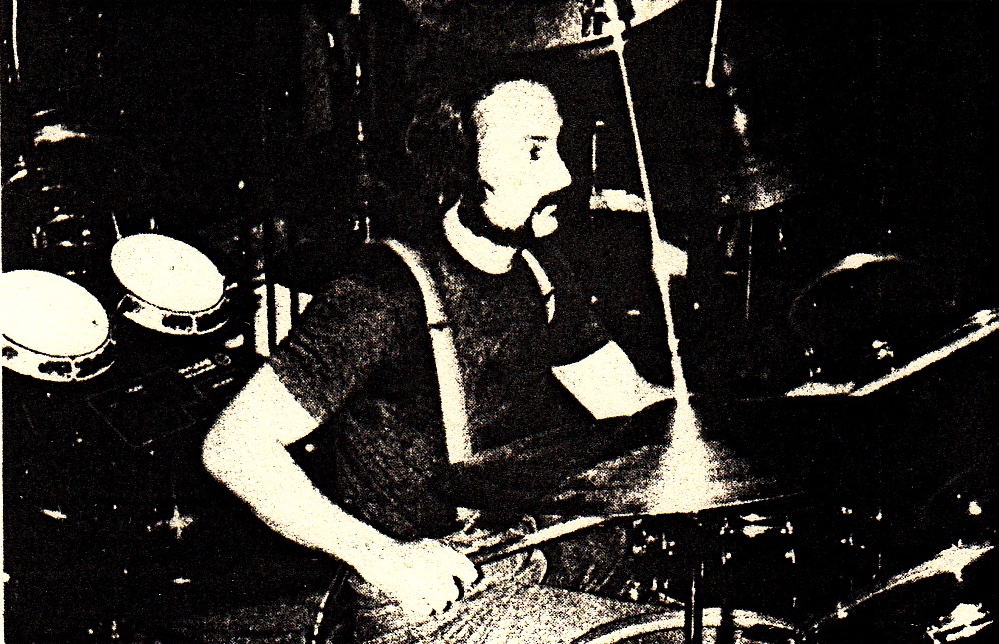
This photo from the CD booklet with Art Blakey’s The Jazz Messengers Columbia CD is a case in point. The viewer is looking at one moment in time with Mr. Blakey in the studio. All those rivets in the ride cymbal! What a great old set of Gretsch drums. Calfskin heads! Timbales??? What the heck is Blakey doing with a set of timbales? That’s not his normal setup.

Great stuff! Enjoy! And if you like drummer photos, The Great Drummer’s Group Facebook page is a great source of rare photos of great drummers.

art blakey photos

— end —

Posted in SKF Blog | Tagged , , , , , | Leave a comment