
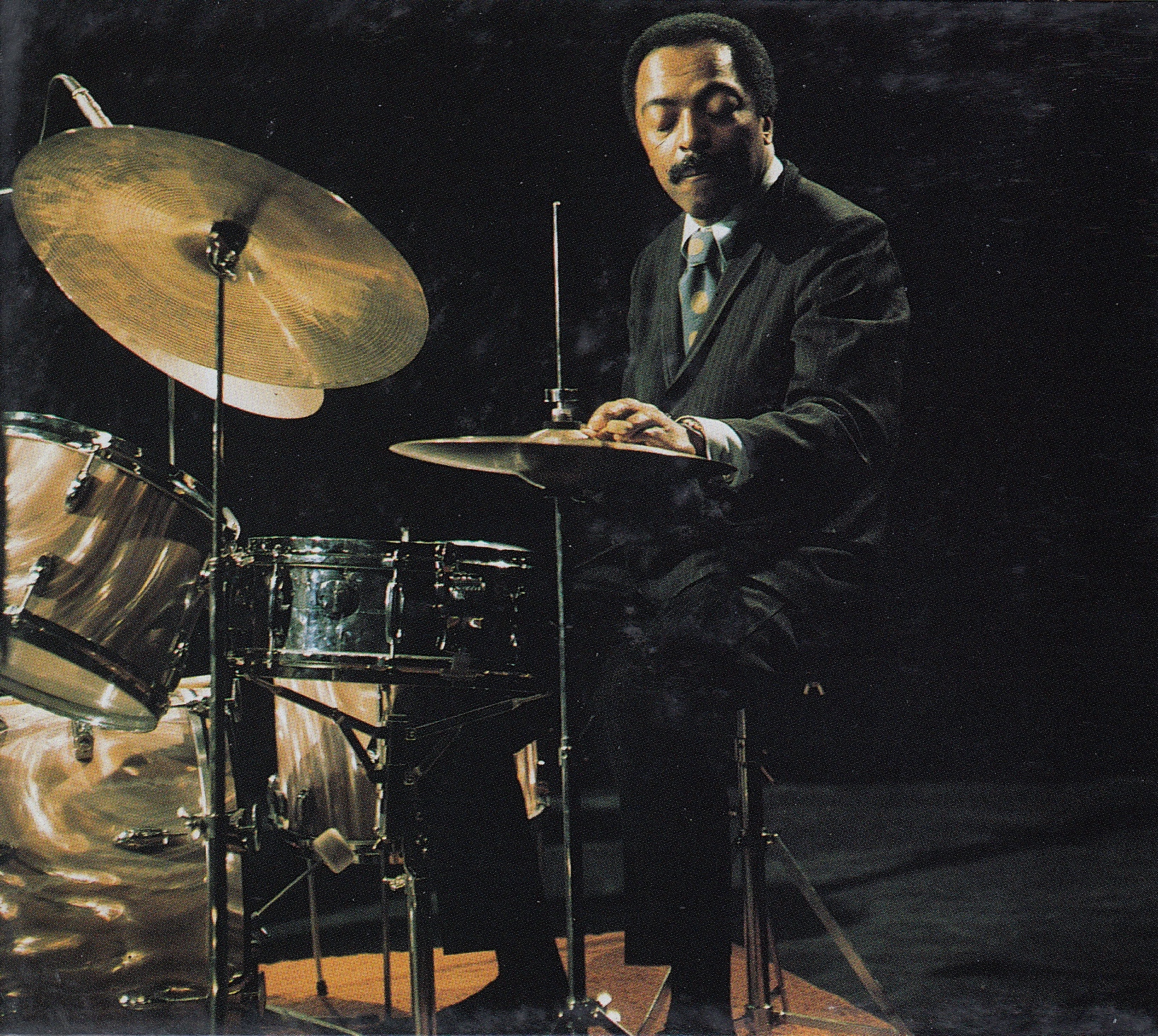
SKF NOTE: Roy Haynes on his Gretsch drumset from the CD booklet of Roy’s 1962 classic Out of the Afternoon album. Don’t own Out of the Afternoon? There’s still time!
— end —
SKF NOTE: Roy Haynes on his Gretsch drumset from the CD booklet of Roy’s 1962 classic Out of the Afternoon album. Don’t own Out of the Afternoon? There’s still time!
— end —
SKF NOTE: It was years and years before I found someone who could — and did — explain how to tune a snare drum to get the crisp sound of Joe Morello, Ed Thigpen, Buddy Rich, Elvin Jones, Max Roach — great jazz drummers I had been listening to most of my life.
One common piece of snare drum tuning advice involved muffling the drum or deadening the drum to reduce or stop it from ringing: Tape the batter head. Tape a small piece of cloth to the batter head. Put your wallet on the batter head. Use the snare drum’s internal muffler.

Advice on tensioning the snare drum heads, top and bottom, was less helpful. Usually the advice was something like, “Just tune the bottom head tighter than the batter head until you get the sound you want.” Then there was the Buddy Rich interview where Buddy said, “You don’t tune drums. You tension them.”
My snare at the time, and for a long time, was a 1972 5.5″ X 14″ Gretsch Chrome Snare with Remo Ambassador heads top and bottom.
Around 1974, living in Iowa, playing professionally, I met an “older” drummer from Springfield, MA named Bernie. I have forgotten Bernie’s last name. He was about 42-years old.
When I asked Bernie if he had figured out how to muffle a snare drum to get a crisp sound, Bernie looked at me like I was crazy.
“You shouldn’t have to use any muffling,” he said.
“No muffling???” I responded to Bernie’s reversing of everything I had been told up to that time.
“No muffling,” Bernie repeated. He then went on to explain how, when a snare drum is tuned properly, it will have an open sound because a drum is made to have an open sound. But, when tuned properly, a snare won’t have unwanted overtones or ringing.
I settled on tuning my snares this way: Mostly I used a white coated Ambassador batter head and a clear Ambassador snare head. Sometimes I used Remo Diplomat heads, but not often.
My Gretsch snare had 8 lugs. With snares removed, lugs clean and slightly lubricated, I first hand tightened the bottom lugs until I could no longer tighten them with my fingers.
Then, using the snare throw-off as a visual for a 12 o’clock position, I used my Gretsch drum key to tighten each lug one full turn. And I tightened the lugs diagonally opposite each other. So, if I started with the 11 o’clock position lug, I next tightened the 5 o’clock position lug.
Usually I would need to hand tighten some lugs after after tightening some lugs with the drum key.
Using that system I would end with lugs top and bottom tightened with my drum key two full turns. Working diagonally opposite again, I tapped the drum head, top and bottom, about an inch or less out from each lug. My goal was a uniform tone. If the sound at one lug was noticeably different from the other lugs, I would tighten o loosen that lug accordingly.
After re-attaching the snares to the throw-off switch I fine-tuned the snare. If memory serves, I usually tightened the snare head no more than a half-turn on each lug.
And that system gave me that crisp snare sound evading me for a decade.
— end —
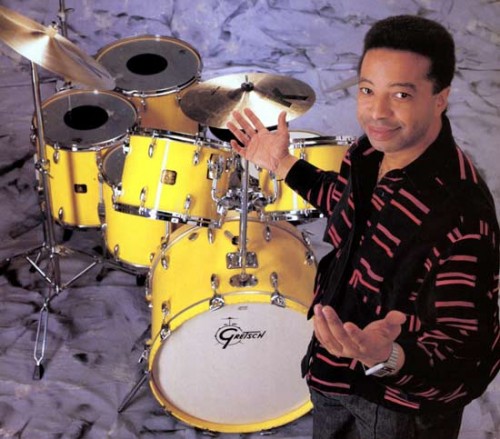
Tony Williams
SKF NOTE: Tony Williams, Ron Carter, and Hank Jones (aka The Great Jazz Trio) At The Village Vanguard. Mr. Jones and Mr. Carter are trading fours with Tony Williams on 12+12, the last track on the album. I’m listening intently to the whole trio, but on the last beat of Tony’s four bar drum break, driving alone in my car, I smile.
What did Tony play on that last beat? Nothing. He left a measure of space. Silence.
It took me a second before realizing I was smiling at Tony’s not playing. Well, actually Tony was playing. No spaces, no music. Silence is the great factor separating music from noise.
Drummers marvel at other drummers knack for playing quiet, for being supportive, for staying out of the way. But I don’t remember many compliments paid to drummers for knowing when to shut up.
Thanks for nothing, Tony. You made me smile.
— end —
SKF NOTE: Rita Moreno’s words of wisdom apply also to musicians.
 Rita Moreno sends off grads at Berklee commencement
By June Wulff GLOBE CORRESPONDENT MAY 07, 2016
Q. With your seven decades in show business, young performers should hang on your every word. When you give a speech to graduates and aspiring performers, what advice do you give them?
A. The most important [piece of advice] is to get yourself educated and be tough enough to get knocked down, brush yourself off, and keep moving. The tough thing for people in the arts is that you have to hang on to your sensitivity and tender side. Every job is hard to get, but in our profession, there’s a preponderance of rejection.
“You don’t get angry, you don’t get bitter, you don’t get feminist about the thing. You don’t try to make a statement for women. You just get so damn good that they’ll forget about all that crap.”

Source: Emily Remler, Life After Wes, by Julie Coryell, Down Beat May 1985.
Photo Credit

Life Beyond the Cymbals
A Blog about Music and Popular Culture
Online Drum Tracks | Drum Recording | Remote Session Drumming | Pro Session Drummer
Life Beyond the Cymbals
Writing About and Reviewing Classical Music and Jazz
Life Beyond the Cymbals
A Drummer's Look at Drums and Drumming


You must be logged in to post a comment.