Don Lamond: ‘I Played Dave Tough’s Drums for Three Months’

tough_dave

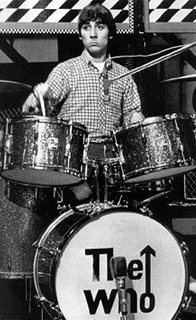
Dave Tough

SKF NOTE: If Don Lamond played drums on Bobby Darin’s hit song, Beyond the Sea, and never recorded again — I would still think of Mr. Lamond’s drum sound and drum fills on Beyond the Sea as essential parts of drum history.

Lamond is also unique as the drummer hired to replace Dave Tough with Woody Herman‘s big band, staying with the Herman band most of 1945-1949. For those of us who never heard Dave Tough play in concert, who never knew Tough when he was alive, Tough’s playing has always been based in part on hearsay. Imagine if Tough lived long enough and remained active as television grew popular, and music recording capabilities improved. Or think of it this way: what would we know of Tough’s contemporaries — Buddy Rich, Papa Jo Jones, Gene Krupa, Louis Bellson — if they had died in 1948?

The musicians who did hear Dave Tough play, who did know Dave Tough as a human being, can never pass on in words to those of us who missed it, what it felt like or what it sounded like, listening to Dave Tough on the drums.

Still, when I find musicians, especially drummers, offering one more firsthand piece of the Dave Tough tapestry — I like to make note of it. So, thank you Don Lamond and interviewer Gabe Villani for this information.

=====
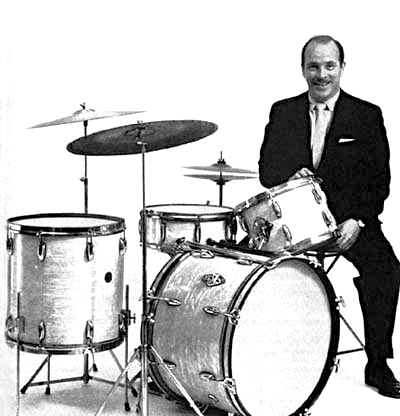
lamond_don

Don Lamond

“Dave Tough was the greatest. I replaced Dave with [Woody Herman’s] First Herd. I played on [Tough’s] drums for three months. Dave was an idol of mine.

“I was raised to believe in swinging the band, not soloing. Dave Tough thought the same. Dave tuned his drums differently than anyone else I’ve ever known. They were comfortable to play on. The sound of his cymbals and the tension on his bass drum were unique. He used a lot of tape on the heads. He was a tape freak.

“Dave used three cymbals, a crash on the left that you could use anywhere and hi-hats that were beautifully matched. Dave didn’t drop bombs when he played. He just came at you like a dynamo. When he was right it made you scream. His bass drum was soft. In those days there were no electric basses, so the bass notes sounded as if they were coming out of the bass drum. Tough was fantastic. I was told that when he joined the Benny Goodman Orchestra, the musicians applauded him.

“I’ve never had a hard bass drum. I was influenced by Dave Tough. From his playing on drums, I realized how well soft drums blended with the band. I get the heads at the same tension, and then back off a little on the batter head. That goes for all the drums. I also use newspaper inside the bass drum.”

Source: Reflections: Don Lamond, by Gabe Villani, Modern Drummer, August/September 1979
Don Lamond Photo Credit

—end-–

Posted in SKF Blog | Tagged , , , , , , | Comments Off on Don Lamond: ‘I Played Dave Tough’s Drums for Three Months’

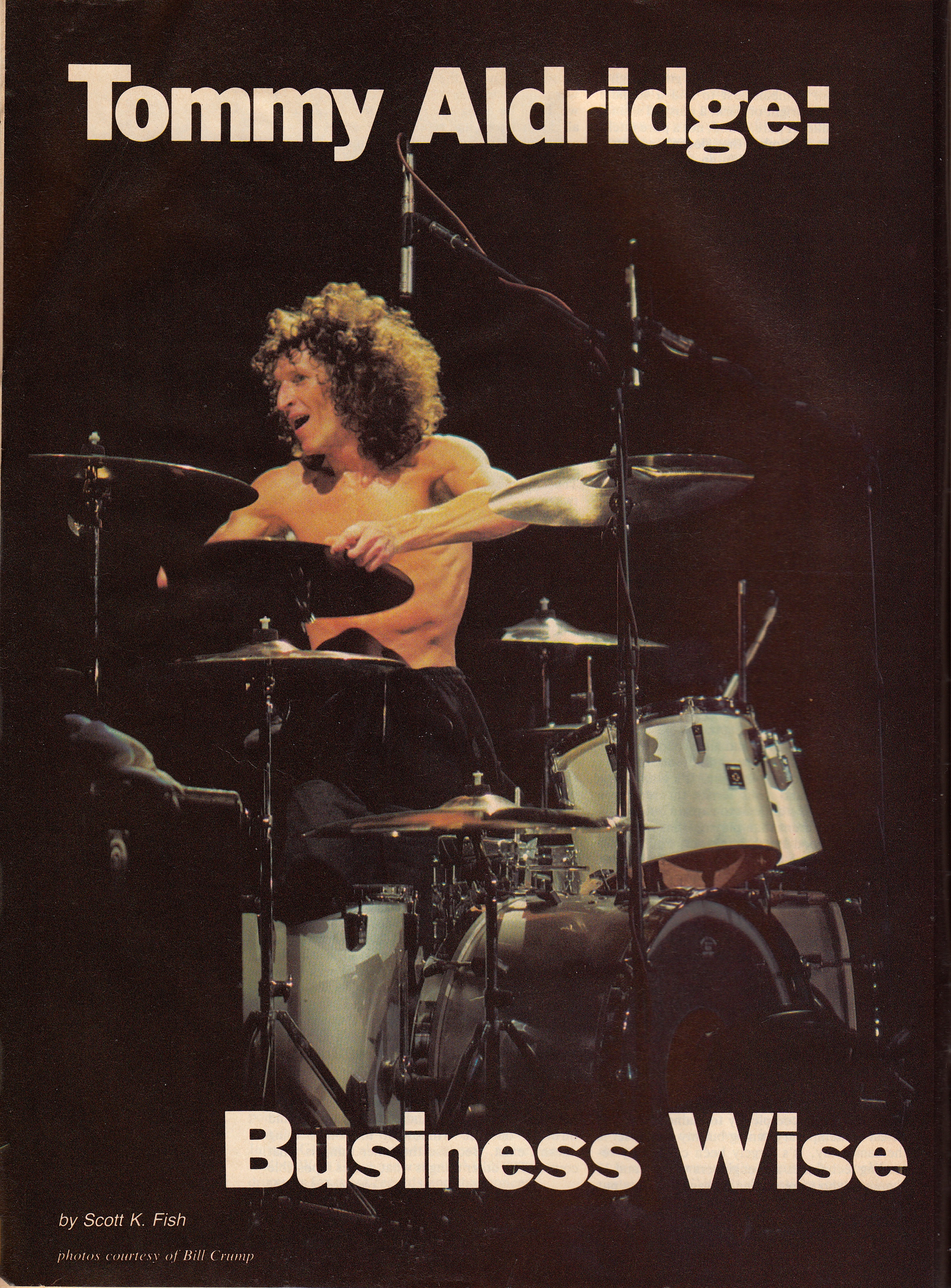
Tommy Aldridge: Modern Drummer Interview 1981

SKF NOTE: In my introduction to Tommy Aldridge’s October 1981 Modern Drummer interview I wrote, “Not a week would go by without [reader] letters asking, ‘When are you guys going to interview Tommy Aldridge?'” I connected with Tommy by phone for this interview, but I don’t remember the details of our meeting.

After Tommy’s phone interview I did meet him in person in May 1981 at The Palladium in New York City during Ozzy Osbourne’s Blizzard of Ozz Tour. Tommy Aldridge was a true professional, a gentleman, and interesting to interview.

[SKF NOTE: 6/17/17 – Tommy Aldridge’s full interview is now available on MD‘s Archive Page.]

810ct_md_tommyaldridge_0002

810ct_md_tommyaldridge_pg_2

— end —

Posted in SKF Blog | Tagged , , , , , , , , | 2 Comments

Ferguson: Shelly Manne Always Played Music, Not Just The Drums

SKF NOTE: Here’s an insightful tribute letter to Shelly Manne from drummer Sherman Ferguson. Mr. Ferguson’s letter first appeared under the headline, Shelly Manne, in 1985 in Modern Drummer. It is a keeper letter, in my opinion.

Mr. Manne was 64-years old when he died. Mr. Ferguson, I discovered researching this letter, died in 2001 at age 61. According to his obituary, “Sherman Ferguson, a jazz drummer and a member of the faculty in the UCLA Jazz Studies Program…joined the UCLA faculty as a lecturer in January 2001 and taught a jazz ensemble class and private drum lessons.”

shermanFerguson1

Sherman Ferguson

=====

Shelly Manne

I have had the pleasure of performing at a few jazz festivals that also featured…the late Shelly Manne. Shelly’s attitude and playing, and…not least of all his spirit, were always of the highest level. He always had a smile and a good word for all the other musicians, especially the other drummers like myself — always an encouraging word. He generally had a joke or quip…to “crack up” the other “cats.” He was the perfect example of what being a great musician/human being was all about.

[Shelly] made everybody play better, no matter which instrument or group you played in. But the drummers always played better, not out of “competition,” but because Shelly set manne_gomez_evanssuch high musical standards. I know I always played better, and sitting or standing in the wings (as you always should when in the presence of really great musicians) and checking the other groups, I could see and hear the other drummers playing much better than usual.

Shelly always played music, not just the drums. Not only was Shelly a wonderful drummer, he was a marvelous and versatile musician.

I was pleased to be present at the tribute that the city of Los Angeles (along with a wonderful organization called Musician’s Wives) gave in Shelly’s honor on September 9, 1984 — just two weeks before his untimely death. Louis Bellson, Carl Barnett and I played for Shelly, along with other wonderful musicians. Ed Shaughnessy, Armand Zildjian and Leonard Feather (the noted jazz critic/historian) all made very eloquent speeches. It was a great day! I said to a number of the musicians that it was great that Shelly was “given the roses when he could still smell them.”

I’m sorry this letter could not be in your offices in time to be included in your Shelly Manne Tribute, but I would like very much for the “drum world,” and anyone else who is interested, to know of the love I felt, and will always feel, for Mr. Shelly Manne. Thanks, Shelly!

Sherman Ferguson
Los Angeles, CA

Source: Reader’s Platform, Modern Drummer, March 1985
Sherman Ferguson Photo Credit 

=====

SKF NOTE: August 14, 2016 — I found this typewritten letter to Modern Drummer from Sherman Ferguson last night in a box of my drum memorabilia. The red ink Reader’s Platform is in MD founder/publisher Ron Spagnardi’s handwriting. And I’m guessing the black ink 6/8/81 at the top of the page — which is my handwriting — means Ron approved this letter for publication, and I scheduled the letter for the June 8, 1981 MD.

That’s one indicator of the rapidity of online publishing. In 1981, June was the soonest MD could publish Sherman Ferguson’s April letter.

811104_shermanferguson_md_ltr

Posted in SKF Blog | Tagged , , , , | 2 Comments

Elvin Jones: Developing Independent Coordination?

elvin andrew hill judgement cdSKF NOTE: Re-listening to familiar music CD’s or re-reading old books and magazines for the first time in a long time can reveal surprises. For example, the March 1985 Modern Drummer “Ask A Pro” section has an Elvin Jones gem.

Pre-internet, MD’s “Ask A Pro” offered readers a way to ask questions of their favorite professional drummers. In March 1985, MD reader Mike Pandino of Miami, FL had a question for Elvin Jones.

Elvin still had almost 20 productive years ahead of him in 1985. With Elvin gone 12-years, his words of drumming wisdom jump off the 31-year old MD page, like a diamond half buried on a sandy beach.

Mike Pandino: What suggestions can you give for developing independent coordination?

Elvin Jones: First of all, a person has to realize that as soon as you say “independence,” you’ve lost the concept of coordination. There really is no such thing as independence as far as the body is concerned. Coordination is a natural part of the body’s function. When you walk, that’s coordination. You could say that it’s independent because the feet do not come down together at the same time, but it’s all coordinated. It’s all part of the same thing just like the drumset is all one thing.

To learn coordination effectively takes a great deal of practice. You need to start by doing things that are very simple — even ridiculously simple. That helps you to understand what you are doing, because the simple things develop into the more complex things. There are any number of books that address this problem. The main thing you have to do is start simply and put in a lot of time.

Not knowing you personally, it’s difficult to advise you except in general terms. A teacher/student relationship is more appropriate for addresssing topics such as this. But there’s no secret about the theory and philosophy.

—end—

Posted in Drum/Music News | Tagged , , , , , | 2 Comments

Jimmy Webb: Retiring Ringo’s ‘Sgt. Pepper’ Drumset

SKF NOTE: This story is from the full typed transcript of my interview with Jimmy Webb somewhere between 1980-83. I edited the interview for a short piece in Mix magazine, which the magazine editors, unfortunately, edited again, changing the entire tone of the story.

Reading the transcript last night I came upon Jimmy Webb’s story about his part in causing Ringo to retire the drumset Ringo used on the Beatles’ Sgt. Pepper’s Lonely Hearts Club Band album.

Scott K Fish: You got to meet the Beatles when you were in England, didn’t you?

Jimmy Webb: Yeah. I met them when they were working on The White Album at Trident [Studios]. I’ve run into them occasionally for years. Off and on. Odd ones of them. I spent more time with Ringo than anybody else because of Harry [Nilsson]. Ringo played on my album, Land’s End.

I remember one time in the studio I was real excited because Ringo brought in the drumset he’d played Sgt. Pepper on. His old drumset was there.

We had an engineer — I won’t mention his name — who was having some trouble with his hearing. [Let’s] just put it that way. He had Ringo tuning his drums, I think, for two days. [Ringo] just kept hitting the drums and hitting the drums. He just seemed to get tireder and more frustrated with the fact that he couldn’t play. We weren’t playing anything! [Ringo] just kept hitting these drums.

Finally [Ringo] said, “Well, you get the assistant engineer to hit the drums, because I’m not going to hit the drums anymore.”

So then the assistant engineer went out and started hitting the drums. He hit the drums for a couple of days. This is a real strange creative process we were involved in. Then, I think, the third day or something we finally got around to playing.

Ringo was playing great. He was playing wonderful. He was playing with him and Nigel Olsson. And it sounded really great. [Yet] the engineer/producer kept complaining about the drum sound.

I think finally we got a take.

But I heard later from Harry Nilsson that Ringo was so frustrated by this that he took these great drums that he had played all these records on — and he put them in the back of a garage somewhere — and he didn’t play for, like, a year. I’ve always felt really terrible about that. That I was involved in that much frustration for the guy [Ringo] that he would actually retire a drumset. Even temporarily.

— end —

Posted in SKF Blog | Tagged , , , , | 1 Comment