SKF NOTE: More words for drummers to live by from drum pioneer Bill Bruford.
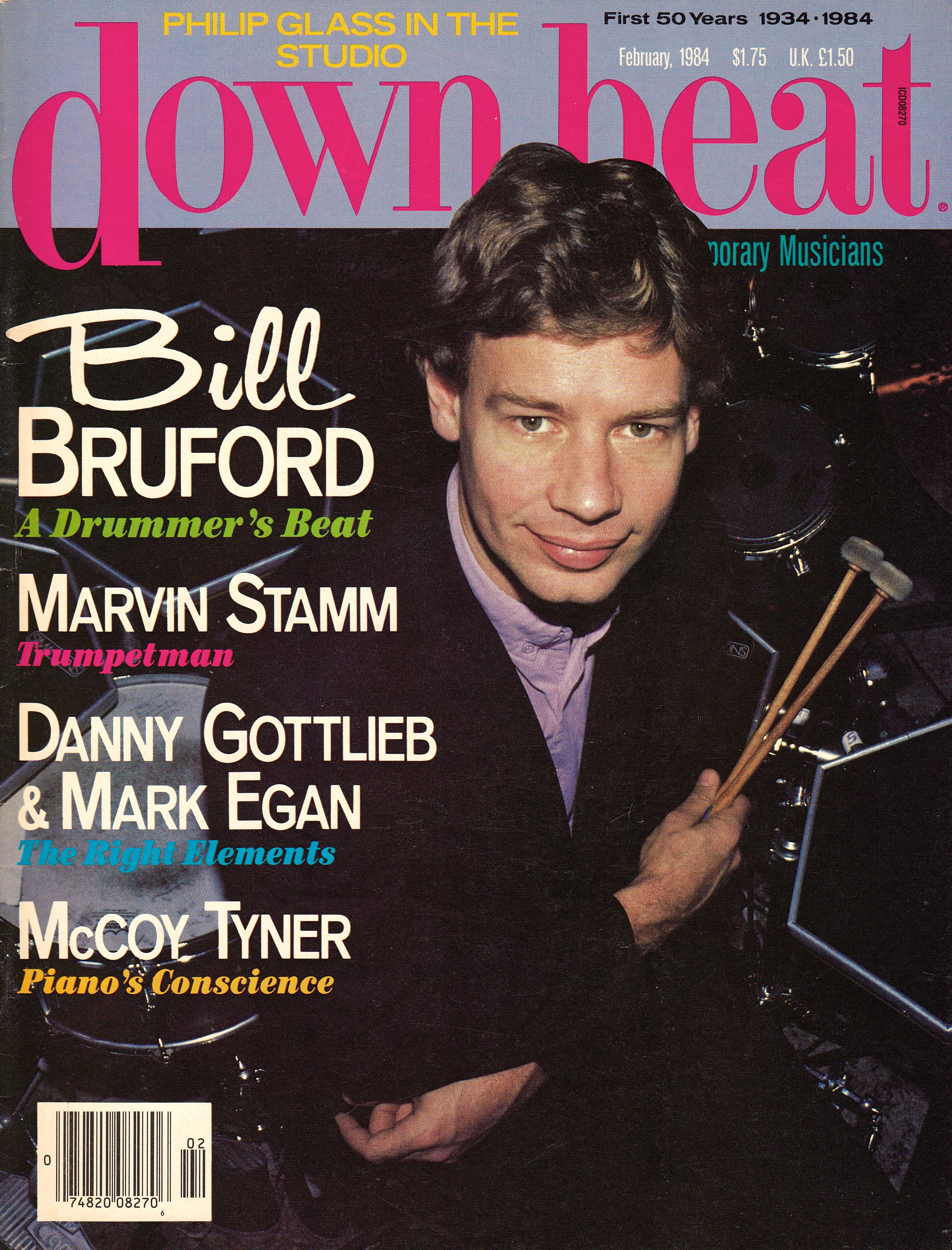
Art Lange: You’ve stated elsewhere that [Jamie] Muir influenced you a lot. How, specifically?
Bill Bruford: Specifically that drumming wasn’t all about thumbing through glossy magazines and buying cymbals and looking at shiny drums.
I grew up with him, in that I was playing a real musical instrument, and that it was a good idea to try to hear the drumming from the other musician’s point of view.
Drummers are a very small narcissistic bunch, and they often are only interested in drums, and they can only hear music up until their ride cymbal, and then after that they’re not interested, until “Here comes my fill” and then rrrrrrr and then this boring stuff goes on until the next fill. They wait unti these drum events occur.
Well, I grew out of that around that time, and I was no longer interested in all things wonderful about drumming — the speed and the flash and all those things are no longer of so much importance to me. Jamie Muir rubbing two pieces of polystyrene foam together which produced a squeaking sound that was more suitable for the tune, well that was fine, we would do that then.
And he was making me do all kinds of things that were heretical on the drum kit, you know — being very simple and doing silly things with it and playing it in a different way, treating sounds and putting chains on it and making industrial drum kits and lots of other things like that.
And he was seeing things much more conceptually than drumming; we weren’t interested in technique. Texture and sound were much more important, yes.
Source: Bill Bruford: A Drummer’s Beat, by Art Lange & Charles Doherty, Down Beat, February 1984
SKF NOTE: This exchange with Max Roach took place on July 15, 1981 at his home in Connecticut. The opportunity to meet Max Roach and interview him for a Modern Drummer cover story was a dream come true. Max had recently released his Chattahoochee Red album. I especially liked Max’s mixed media use of Martin Luther King’s “I Have a Dream” speech with a new Max Roach drumset solo, The Dream / It’s Time.
But I missed the Max Roach drum sound I fell in love with many years earlier. On Chattahoochee Red, Max is playing Ludwig drums with thicker drumheads –Ludwig Silver Dot drum heads, I believe. Our interview gave me a chance to ask Max about his new sound and many other questions.
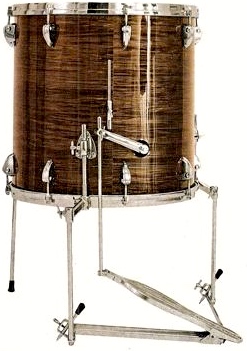
Max’s drumset at the time of this interview? “I’m playing a 22″ bass drum, 12″ and 13″ mounted toms, a 16″ floor tom, and a 14” [floor tom] which is a tuneable floor tom with a Meazzi footpedal. That’s alot of fun,” Max said.
Also, I wanted to solve the Rise of the 18″ Bass Drum Legend once and for all. Max Roach was a perfect drummer to ask.
Scott K Fish: Back in the ’50s and ’60s jazz drummers were primarily using the smaller size drums: 18″ bass, 12″ mounted tom, and 14″ floor tom. I’ve heard that one of the main reasons drummers used that size bass drum was because they were easier to transport than larger drums.
Meazzi FloorPedal
Max Roach: Exactly. It made it easier to get from town to town. Pack up your gear, put it in your car — your [station] wagon, and off you go. That was one of the main reasons, I think. Plus the bass drum had begun to become less and less an integral part of the whole musical set-up.
It’s coming back now. It’s different now. Because the bass drum at that time would stamp out what was happening with the [acoustic] bass. Even the pianists would leave that part. They would voice their chords and the bottom of the piano would be in thirds and sevenths instead of tonics and fifths. They left [tonics and fifths] for the [acoustic] bass.
So your bass drum would only be used for accents. And support. So the small drum was great. Plus, you didn’t have all the electronics around you, so you didn’t need that power there.
There were many reasons [why ’50s and ’60s jazz drummers used smaller size drums.] But today you do need that power with the electronic scene.
SKF: The bigger drums?
MR: Yeah. You need that power. When you go into a studio today, or even a concert hall, sometimes in a concert hall I’ll have at least five microphones on the [drum]set: One for the foot cymbal and snare; bass drum is two; two hanging overhead will cover the top area, and one on the side that will capture the tom-toms. At least five [microphones]. You could do with even more.
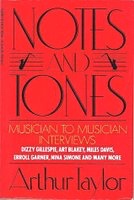
Art Taylor: How important do you feel technique is for playing the drums?
Kenny Clarke: I think any musician needs just enough technique to express himself; I don’t think he should go beyond that. It becomes meaningless if it goes beyond his feelings. It’s always good to have a little technique to spare, but I don’t think you should become wrapped up in technical things as far as music is concerned, because music comes from the heart! It has nothing to do with technique at all as we know it.
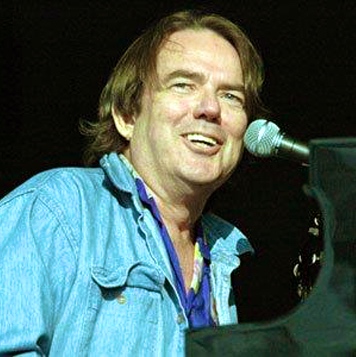
SKF NOTE: This story is from the full typed transcript of my interview with Jimmy Webb somewhere between 1980-83. I edited the interview for a short piece in Mix magazine, which the magazine editors, unfortunately, edited again, changing the entire tone of the story.
I close out this post with one favorite Jimmy Webb song, sung by Glen Campbell.
Scott K Fish: Was your [childhood] home life involved in alot of music?
Jimmy Webb: A very strong religious background, church background. My father was a Baptist minister for 22 years until my mother died in 1964. She always wanted me to accompany my father. We would go out for revival meetings and things like that.
So she started me on piano when I was about 6 years old — and it really didn’t take at first. But when I was 12 or 13 I started getting really interested in the piano.
I think that something interesting about that is that you will hear people say — and I’ve had teachers tell me about my own kids — “Well, I don’t think this kid has an affinity for music. I don’t think that he has his father’s gift. (laughs) All that stuff.
But I didn’t have any kind of a gift. I wasn’t even slightly interested in playing the piano and certainly there were no outward signs of any ability at all. Until I was 12. And then it just seemed, like, somewhere it had stuck in there. All that information was actually still there, and it came out seemingly all at once.
SKF NOTE: All of us have pivotal moments in our lives. We gain new knowledge from reading a book, listening to music, studying a new subject, visiting a place for the first time, or meeting someone. Pivotal moments change everything for us. Our lives can be defined as before-and-after the pivotal moments.
One major pivotal moment in my life took place in 1977 when I interviewed drummer Mel Lewis. I was 26- or 27-years old, still feeling that whatever other jobs I had to work to earn a living, my goal was to one day make my living solely as a professional drummer.
By 1977 I had played in a few bands. Through performances, teaching, and freelance writing, I was earning enough — barely — to live. I loved the Thad Jones/Mel Lewis Orchestra. I owned and listened to their albums over-and-over, especially Live at the Village Vanguard and Consummation. Mel plays and sounds great. And I loved studying the musical conversations of the Jones/Lewis rhythm section of Mel Lewis, Richard Davis, and Roland Hanna.
The Jones/Lewis Orchestra was loved by jazz critics and fans. They released classic jazz albums nominated for Grammy Awards. Mel was endorsed by Gretsch Drums and Zildjian Cymbals. And Mel could play every style of music. He excelled at reading and interpreting drum charts.
In short, Mel Lewis 1977 was the model of a professional drummer. Mel Lewis had very successfully traveled the musical road to which I, walking several miles behind him, had dedicated my life.
We met in Mel’s New York City apartment. I had driven into the city from Long Island, parked as close as I could to Mel’s address, and walked the rest of the way. I stepped into Mel’s apartment building entryway where I was supposed to ring the buzzer to Mel’s apartment. Scanning the rows of doorbell buttons I didn’t see the last name Lewis.
“Who are you looking for?” asked the doorman, my puzzled expression a dead giveaway.
“Mel Lewis,” I said, “I’m here to interview him for Modern Drummer magazine.”
“Press the button for Sokoloff,” said the doorman. Mel’s real last name was Sokoloff? Already I was learning something new.
When I arrived at Mel’s apartment, Mel opened the door and invited me in. He was 48-49 years old. A gracious host and a natural born talker with great stories to tell, our interview went on for hours.
My pivotal moment took place near the end of the interview. Mel and I were talking about the Jones/Lewis Orchestra and Mel said, “We haven’t made a profit with that band in 13 years.”
We talked about reasons why the Jones/Lewis Orchestra hadn’t made a profit in 13 years and then the interview was over. Mel said he wanted to get out of his apartment and stretch his legs. He offered to walk me to my car. And when we arrived at where I had parked my car, my car wasn’t there. I didn’t know what happened to it, but I didn’t want Mel to think I was unknowingly stupid enough to park my car in a place where it would be towed.
My car was towed. Riding the Long Island Railroad home, I was thinking about what Mel said: “We haven’t made a profit with that band in 13 years.” That was on my mind all night, and all the next day riding the LIRR back into NYC to pay the Transit Authority $100 to get back my car, my 1972 Chevy Vega that probably wasn’t worth $100.
Mel’s matter-of-fact, “We haven’t made a profit with that band in 13 years,” was like Mel telling me everything I believed about what it takes to be a successful drummer was wrong. All of it. And I didn’t have a backup plan.
Depressing? You bet. Soon I stopped gigging, sold or gave away my drums and cymbals and did the necessary work of getting my life in balance. Ed Soph was right when he said of all of us who identify ourselves first as drummers: “You’re not a drummer. You’re a human being” who happens to play drums.
Within a few years I was focused on studying and writing about drummers and drumming. I only stopped playing drums in public, not at home. Eventually I started writing songs — lyrics and music — on piano and guitar.
But my heart remains with drumming.
I learned much later that Mel Lewis shared a birthday with the man responsible for introducing me to drums, my Uncle Bob Fish. A few years ago, when I was selling my house I decided to get rid of my LP collection — except for my autographed copy of Mel Lewis & Friends.
And as I write, on the window sill in front of my desk I keep a pair of Mel Lewis signature Slingerland drumsticks. A gift from a pivotal person in my life.
In closing here’s a lifelong favorite Mel Lewis track. This is a stellar performance.

 Scott K Fish
You must be logged in to post a comment.