Dave Weckl Newly Released Interview 1983 Pt. 2

weckl_dave

SKF NOTEThis is the second installment of the complete transcript of my 1983 interview with Dave Weckl for Modern DrummerMD published a much shorter version of this interview in April 1984 as an Up and Coming profile of Dave Weckl, which still holds up well. Here’s the back story.

SKF: Do you remember the first time you heard Buddy?

DW: I don’t remember, to be quite honest with you. It might’ve been the West Side Story medley. But, I think I was seeing him on The Tonight Show before. I don’t really remember that transition, where I went from the Jack Sperling era into that. But, I remember The Roar of ’74 album with the chart Time Check on it. That was always neat to play.

SKF: So you first heard Buddy in his later recordings rather than the recordings he made in the ‘30s, ‘40s and ‘50s.

DW: Yeah. It was mostly the bands he had in the ‘60s. At the same time I was into Buddy, I was also listening to Peter Erskine and Billy Cobham. Who else was on the scene at that time?

SKF: Jack DeJohnette?

DW: I didn’t get into Jack until much later. Gadd, too. I started listening to Steve much later. The first time I heard [Steve Gadd] was on Chick Corea’s Humpty Dumpty track. I liked to freak out when I heard that. But, I was, like, 17 years old when I heard that.

The only thing about age that I kind of regret is that there was so much happening. Like, I would have loved to have been around at the time that Steve was just coming up, to see him playing with Stuff. I believe he first came on the scene with [Chuck] Mangione in Rochester, [NY]. Once he started hitting it — forget it. He was on everything.

SKF: Did you graduate from the University of Bridgeport?

DW: No. After my first semester of full-time studies I went part-time, because I didn’t have time to practice as much as I wanted to. I had started working quite a bit. My first summer there was great. I was at a point of practicing 10 to 15 hours a day. I was away from home. I didn’t really have anything to do. I didn’t really know anybody yet.

I just split up the day. I’d get up early and practice for 3 or 4 hours on the drumset. I had it all split up as to what I wanted to do. This was during the time my friend was in Maynard’s [Ferguson] band. I really wanted to get on Maynard’s band. So I spent a lot of time learning Maynard’s charts and listening to that type of thing, and really concentrating on all those aspects.

Then there would always be the technical and reading end of it that I’d want to work on.

Studying time is always important to me. I started playing with a click track because I started listening to myself on tape and saying, “Wait a minute.” It felt great while I was doing it, but when I listened back to it it was all this nervous young energy. I wasn’t really speeding up, but my playing always had so much of an edge. It just sounded frantic. And I was always in the habit of playing a lot. I’d always tend to overplay, and that could always push it an edge.

So I started working with a click track a lot, really working on all the subdivisions, trying to make sure that everything was perfect.

That was one aspect of my practice routine. Then I’d just sit down and play and try to loosen up. I’d still use a click track, but I’d play really loose around it and incorporate the jazz end of it. That’s when the DeJohnette thing came into it.

I started listening to [Jack DeJohnette] and I could hear where he had come from. Back in the early ‘70s I did some research on Jack too and found a couple of albums on the old CTI label. They record some concerts at the Hollywood Bowl, and Jack did those 3 albums.

If you listen to those things — I don’t want to say [Jack] sounds like someone else — but he did sound like somebody else. And it was completely different. It just didn’t sound like Jack sounds now. He had low-tuned drums. Basically a low-tuned snare drum.

SKF: I believe [Jack] used to us single-headed drums quite often in those days. [SKF NOTE: As of this writing, 33 years since this interview, I don’t know how often Jack used single-head drums. My statement here, well-intentioned, is almost certainly based on a Sonor Drum endorsement ad in which Jack is playing single-head drums, and also, Jack’s drum sound on certain albums.]

DW: I don’t know if he was using them on that particular thing. But that album set me back for a minute. I loved it. It was great. It really showed me where he came from.

It seems like he just all of a sudden stopped and said, “Well, wait a minute. I’m just not going to play that shit anymore. I’m not going to play that way with that type of feel.” And he, like, all of a sudden loosened up, changed the tuning of his drums — he did everything. It seems like he went through a period of time where he was playing different. Because [Jack] was with Miles [Davis] before that — and they were out there, man. They were really taking it out.

Then the CTI things were so straight ahead. It just didn’t sound like Jack at all.

she_was_too_good

SKF: I’ve thought about that too. Jack and Steve Gadd seemed to come on the scene, really popular, at about the same time. For a while they were both doing a lot of studio dates. Then Jack seemed to pull away from that scene.

DW: Yeah. There’s a Chet Baker album called, She Was Too Good To Me, on CTI records. Jack and Steve are both on it. And in some of it, I can’t tell them apart.

SKF: When did you first hear Jack?

DW: A couple of friends turned me on to him. I think they were Jack’s own albums with the New Directions band. It was completely different than what I was used to hearing.

SKF: Have you seen [Jack] perform?

DW: Yeah. He’s something else. He’ll scare you to death. He was something I really enjoyed.

SKF: What was the band you were in called Nite Sprite?

DW: Nite Sprite is actually still going on. That was pretty important to me in terms of my progression. That band started happening late in ’79 in Connecticut. The bass player, Paul, was going to school with me up in Bridgeport. Fred, the sax player, was going to school up there too. Paul got guys from up there and guys from down this way — and formed the whole thing.

Actually, it was together already, and they got us as new members in the band. That was a whole different thing for me because I never really listened to Weather Report before that. When we first started, [Nite Sprite] was very fusion oriented. We did a lot of funk, fusion things.

SKF: Was it a copy band?

DW: Actually, no. There were a lot of original tunes happening that the keyboard and guitar players wrote. It was fusion oriented, but it was good. That turned me on to a whole different thing by listening to Weather Report’s tunes. We did a lot of their stuff. Black Market. Birdland.

[Nite Sprite] was good for me. It taught me how to play. That was a good outlet for me to hear myself back in situations where what I was playing didn’t fit in. It wasn’t working. It made me play simpler. I went through a transition period of hardly playing anything. I couldn’t stand to hear myself. That’s what it got down to.

I think that’s true with everybody, though. I don’t think anybody is really ever happy with what they do. I guess it gets to a point where you are [happy].

SKF: You must have taped yourself a lot.

DW: A lot. That’s the best way to learn. And you have got to be objective about it too. You’ve got to sit there and listen, and not say, “Oh wow. That lick was neat.” Instead, you should say, “Well, how does it feel? Does it feel good? How am I locking up with the bass player? Is that really the right groove to play during that section?

But that’s what [Nite Sprite] gave me the chance to do. Man, I took those tapes and analyzed them to death.

I was with the band for 3-and-a-half years. We were playing at some jazz clubs downtown — which actually leads up to the band I’m working with now. We’re playing at Seventh Avenue South in New York City. Also, at Mikell’s, and The Other End. We were playing there for a couple of years.

Now, I’ve been in contact with Peter Erskine for years. Ever since I came up here to school I just started calling him when he lived in California — just because I loved the way he played.

SKF: Was he at the Kenton Clinics you went to?

DW: No. I went there after he left [Kenton’s band]. But a friend of mine that I went to the clinics with was pretty close to Peter. He was always writing to him and saying how he was such a nice guy. Peter always returned his letters.

So I just started calling and [Peter would] always talk to me. I didn’t want to sound like some dumb little school kid.

SKF: What kind of questions did you ask him?

Peter-Erskine
Peter Erskine

DW: I just wanted to know what he was doing; if he was planning on moving to New York, or when Weather Report was going to be in town. Then, of course, [I asked] the stupid questions about snare drum tuning and that type of thing. I didn’t really like to ask too many questions like that. It was just basically to tell him that I really loved the way he played, and I just wanted to see what he was doing.

That was kind of neat. We were in touch for a couple of years and then [Peter] came to New York, and he started playing up here a lot. It was funny. I was in Seventh Avenue South seeing him play with somebody. I don’t even remember who it was. It might have been Steps [Ahead] before he was really a part of it. He was just, like, in town.

It was a night after a recording, and I was there. Peter had broken a snare drum head and he didn’t have one. But, for some strange reason, I had an extra snare drum head in the car. It was a new head. I brought it in and gave it to him. It was great because he didn’t have another head, and he didn’t have another drum.

It was fun to be able to do that. You don’t have to put that in the article. It don’t mean [anything]. But it was nice.

To make a long story short, [Peter Erskine] came to hear me play at Seventh Avenue [South] with Nite Sprite. We hung out and talked, and he really enjoyed the show. I sort of lost contact with him after that for a while. [Then] I just called him up one day and we were talking about everything from telephone bills to the music business.

[Peter] asked me if I was interested in playing with this band called French Toast. Steve Ferrone usually did the gig, until he started getting real busy and was always out of town. The band wanted to work more, but Steve wasn’t around that much. I guess they had called Peter to do the gig, and he did it a couple of times. But he told me he didn’t want to do it because it was too loud.

French Toast consists of Anthony Jackson on bass, Michel Camilo plays keyboards, and there’s two percussionists: Sammy Figueroa and Gordon Gottlieb. There’s three horns: Lew Soloff, Jerry Dodgion, and Peter Gordon — who’s the leader and French horn player.

Sammy Figueroa

So I said, “Yeah, great.” I’d been following Anthony for a while too, and he was incredible. I’d always wanted to play with somebody of that caliber.

camilo_michel
Michel Camilo

I got to sit with the charts for about three days, off-and-on. It was great. I got to do the gig — and that was some experience. The music is basically a lot of Latin stuff, funk stuff. It’s a very diversified book. A lot of straight ahead things — enough to balance it out. It’s really a lot of fun to play because everybody’s part is really very important.

It’s a great outlet. It’s almost the type of thing where you can get away with playing a lot if you fit it in the right place. It’s not really about that, either. Mainly it’s just so musically incredible. It’s just so much fun to play with. Michel was originally a percussionist from Santo Domingo. He’s a drummer’s keyboard player, he plays so percussive. All three of us basically have the same ideas and concepts about phrasing. We get into some things where we just take it so far out.

SKF: Throughout your life have you had trouble finding good bass players?

DW: It was always a problem. The most important thing that I look for in a bass player is where the time sits and how it feels. That’s something that the drummer and bass player have to lock into immediately. And you have to either have the same ideas and concepts, or at least be able to go with one another.

I run into a lot of bass players who overplay, that don’t sit enough in the groove. If they overplayed and still kept good time — it might be cool. But a lot of guys tend to want to play a lot of notes. And then their time isn’t really happening. It’s so hard because that just limits the drummer. You have to just basically play quarter notes when somebody else is playing a lot of notes. Somebody has to balance it out. Everybody can’t be playing every 16th note in every measure.

Anthony Jackson has taught me so much of what the groove is about. I’ve never played with anyone like him. He’s amazing. The grooves are so fast, and he has a tendency to play a lot of notes sometimes. But there is never a question as to where the time is. And it always fits. Boy, it’s unbelievable.

Anthony Jackson

SKF: When you listen to records are you conscious of what the bass players are doing? Do you have favorite bass players?

DW: Oh, yeah. For different styles, of course.

I had the opportunity to play with Eddie Gomez also up in Waterbury, CT. Sonny Costanzo, a trombone player I worked with a lot, was responsible for getting Eddie up there. I did tours in Europe with Sonny’s big band. Sonny had a Monday night jazz thing happening there and he’d get all kinds of guest artists. He had George Coleman.

This particular time he had Eddie Gomez. That was one of my first big goals. Ever since I’d been listening to Eddie I would have just loved to play with Eddie. He just makes it sing. The time is incredible. It always swings. It always feels great. He’s just a pleasure and a joy to play with and listen to.

SKF: How about rock bass players?

DW: That’s a good question. I guess I’d have to say Tony Levin. He’s been around for a long time and I’ve always admired the stuff that he does. I didn’t really get into listening to bass players until Eddie — and then when the funk started happening with the thumb thing on bass. I started listening to bass players later, and then went back and started listening to Chuck Rainey things. I enjoy listening to Marcus Miller. He’s somebody I’d love to play with.

SKF: When did it first dawn on you that there was a musical relationship between the drummer and the bass player?

DW: Well, I always listened to a lot of records. What taught me more about that relationship than anything, was playing with bass players who didn’t understand [that relationship].

You have to work together. A lot of that is really inner feeling. You hear that [expression], “Well, does he have it?” Is it really an inborn sense? Some people have it better than others. I don’t know if I want to say I believe that. But the more I play and see different things, the more I realize that it is an art. No matter who it is, that one person is the artist of his own thing. Nobody else can do it the same way.

I don’t think you can actually teach someone how to interpret a chart. I guess you can, but…. It’s an inner thing to have a piece of paper thrown in front of you and make music come out of it. That’s the artist’s interpretation.

SKF: I’ve noticed that the main focus of music education is on how to play your instrument. But once a person has accomplished that — then what? How do you go about selling yourself and your talent?

DW: That’s a hard thing. That’s something that was going through my head as little as 6 months ago: What do I do? How do I go about meeting these people without sounding like some little kid who’s just saying that he wants to play? It’s such a touch situation when you’re trying to get to know somebody — because they’re just people too. You tend to look at these guys and say, “Wow,” because I know I most certainly did when I first came to New York. I went to all the clubs and saw all these great players playing. You put them on a pedestal and look up to them. They are great, but they are people too.

I just started approaching it [by] remembering that they were just people. I thought I’d just show my face, let them know who I was, and not push the music thing too much. How many times does somebody hear, “Hey, I’m a drummer too. Wow, you sound great. If you ever need a sub — here’s my phone number.”?

SKF: You wouldn’t do that?

End of part 2. Continued on Part 3

Posted in SKF Blog | Tagged , , , , , , , , | Leave a comment

Dave Weckl Newly Released Interview 1983 Pt. 1

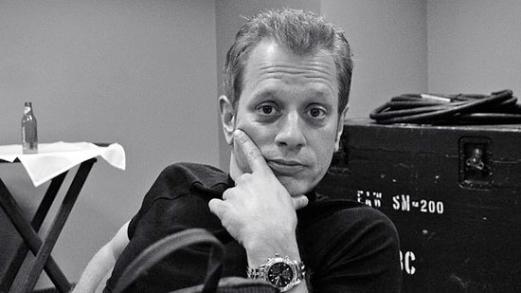
Dave Weckl 1983 Photo by John Lee

SKF NOTE: This is the first installment of the complete transcript of my 1983 interview with Dave Weckl for Modern Drummer. MD published a much shorter version of this interview in April 1984 as an Up and Coming profile of Dave Weckl, which still holds up well. Here’s the back story.

Dave Weckl was age 23 when we met for this interview. He was living in Bridgeport, CT getting ready to go on tour with Simon and Garfunkel  — arguably the first major gig that put Weckl on the map. As of this writing, Weckl is age 56, making this a full-length discussion with one of today’s major drummers more than half a lifetime ago.

Perhaps all the Weckl points of interest here have already been covered in subsequent interviews with other music writers. Perhaps not.

Thanks to the internet I am able, for the first time, to include in this interview linked references to people and music Dave Weckl mentions.

=====

Scott K Fish: What brought you from St. Louis to Connecticut?

Dave Weckl: I was in St. Louis playing in show bands, Top 40 bands, working 6 nights a week since I was, like, 16.

SKF: How old are you now?

DW: Twenty-three. My best friend, keyboard player — a friend of mine — we were always in a band together. He left on the road to go with Maynard Ferguson. He was, like, 19. So when he split there was, like, nothing else left in town for me to do.

SKF: There was nothing happening?

DW: I was 18 at the time. There was, like, nothing happening at all. No.

I had to do something, so I wanted to go to school somewhere. I was checking out a lot of places: Berklee, Arizona State, different places on the West Coast. But, I mainly wanted to get where some action was. Either New York or the West Coast — or somewhere close to that.

But I mainly wanted to get to where some action was, either New York or the West coast, or somewhere close to that. But, I wanted to go somewhere where there was some connections happening, where I knew some people.

neil_slater_07
Neil Slater

So, Bridgeport University. I went up there because of Neil Slater, basically. He was a jazz director up at Bridgeport when I first went up there. I had talked to him and I had sent him a demo tape and everything. [Neil] said, “If you can read as good as you can play, you can have the spot in the band. And I’ll help you try and find some work.” Which he did! He was great. He helped me out alot when I first go there. He got me into Sal Salvador’s band right away.

SKF: Joe Morello’s old chair.

DW: Right. Exactly. I got to meet Joe [Morello] because of that — which was great.

So, Neil got me into that thing and whatever else he could do for me.

But that was one of the reasons for that choice [attending Bridgeport U.]. Another one was because Ed Soph was teaching there.

SKF: Did you know Ed or did you know his playing?

DW: I knew Ed’s playing. I’d been following it for a while.

SKF: With Woody Herman?

DW: Woody Herman….

SKF: Clark Terry?

DW: Clark Terry. Right. So I was really interested in studying with [Ed Soph]. It turned out when I got there, that Randy Jones was actually teaching — which turned out to be real nice too. Randy is great. He’s not the book type teacher like Ed is — to a point. [Randy] was real good for my head. He’d tell me things.

If I had some problems about, thinking, like, “Why isn’t this swinging the way it’s supposed to?” Or if I had problems with other members of a band. Or something in trying to figure out a time problem or something. Or why it wasn’t happening. And [Randy would] always have something to say that was real good. We’d just sit there and talk for a long time, and he’d show me a lot of nice things about straight-ahead playing which were good. Because he’s really into that.

SKF: When you came to Bridgeport were you already well-rounded in all styles of music?

DW: Yeah. I had started learning about all kinds of different styles real early — when I was about 13 or 14. I started studying in St. Louis and I had a few teachers there. Bob Matheny and Joe Buerger were really the two who were responsible for the foundation of where I was going. They were two local teachers our of St. Louis who taught me how to read, taught me all the basic styles, and everything.

From that, I just took it upon myself to, like, do a whole lot of listening, and a lot of copying from records.

That’s how I started when I was real young. I started playing when I was 8. And that’s all I did was play records and play to rock n’ roll records like The Monkees. My dad got me into the straight-ahead thing. He’s a piano player. He was always turning me onto Pete Fountain. And Jack Sperling was the drummer with Pete Fountain. Jack was my number one influence — when I was first starting — for straight-ahead. I listened to him, and then, of course, came Buddy [Rich].

SKF: Sperling’s great.

DW: Sperling is dynamite. Really, I’ve always loved the way he played.

SKF: Did [Jack Sperling] ever inspire you to want to study double-bass drums?

DW: No. I attempted that once. I sat down and was messing around with it. But I said I’ve just got so much stuff to do with one bass drum in trying to figure out actual foot coordination with the hi-hat and stuff, and in actual technique, just to play one [bass] drum. And I like to use the hi-hat too much.

I like to do different things with the bass drum and hi-hat. Different interacting rhythms with everything combined.

I’m getting into, like, doing…. If I want the double-bass drum sound, to [use] the floor tom and the bass drum — which is a lot of the things that Gary [Chester] is teachning now. That works out neat because you can get that sound happening, and if you work up real fast singles between the floor tom and the bass drum, you’ve still got the other foot free to do stuff with the hi-hat. I’ve never had a time where I had to sit down and say, “Wow. I really want that other bass drum.”

[B]ecause most of the time the only time you can really use the double-bass drums is for a flashy fill, or a freight train type of effect at the end of a tune, or a shuffle-type thing — which is neat to do.

SKF: When Louis Bellson reads this he’s going to be crushed.

DW: (Laughs). Don’t get me wrong, man. I love Louis too.

SKF: Would you say you were a “natural” drummer? Did drumming come easy to you?

DW: At first, yeah, it did. Yeah. Before I started playing drums I actually wanted to play guitar. When I was 7 my dad bought me this little guitar and I started taking lessons right away. I said, “Nah. This ain’t it.” I couldn’t stand to practice. I couldn’t stand to go to the lessons. I wasn’t into it. So, enough of that. But I was always into the musical end of it.

So not too long after that I started putting boxes on the bed and grabbing my mom’s tin pans, or her pot covers, from under the sink. I’d sit in the room for hours just playing along with the records, beating on boxes and stuff.

My dad got me a drumset. A little cheap, snare drum, bass drum, one tom, one cymbal. I don’t even know if there was a hi-hat on it. I don’t even remember.

And I just started playing to these records, and it was sort of easy for me to pick up and copy these things. Even when I was 8 years old. It was easy to do that. It came easy to me and I loved the challenge to try to figure the stuff out. I was always really into that.

There came a time where it became frustrating — when I was about 12 or 13. I was at that point where I was sort of in a rut, practicing the same things, not really advancing. This was right before the period of time when I got thrown into a situation where I had to get it together.

I was 14 and I was in 8th grade. The teacher at my school, my high school, Al McEwen (sp?) — who has died since…. It was a real drag. But this guy was great. He really loved kids. He loved to like, really…. If he saw a talent, man, he went after it and really, like, tried to push it.

So I was 14. I wasn’t even in high school yet and [Al McEwen] asked me to come down and audition for the high school jazz band. There was a [high school] junior playing drums at the time. I didn’t know how to read a chart from nothing! I’d been reading, like, little snare drum things since I was in 4th grade. But to sit down and actually read a chart, and play with a big band? Forget it.

I did a god job of faking it, I guess. That’s what worked. Because [Mr. McEwen] said, “Yeah. I want you to do it.” So I said, “Man, I’d better learn how to read. And fast!”

SKF: Do you remember what the chart was?

DW: I think the first chart he ever put in front of me was Basie Straight Ahead. In fact, later on we actually went into a studio and recorded it on an album after we knew the charts. I still have it. It’s quite funny to listen back to it and hear that. But it actually wasn’t bad. For 14 it was kind of neat.

So, Al McEwen got me into that, and I was really nervous because I didn’t know how to read or anything. That’s when I started taking lessons, basically. I was taking lessons already. I’d started when I was 13, when my dad bought me my new set of my new Gretsch drums. Gold sparkle. I still have them. I use them as a practice set.

When I got into this band, my teacher was Bob Matheny, and he was responsible for getting me into the Roy Burns Big, Band, and Beautiful package. That’s really an excellent device for learning how to read charts. Roy plays good on the album. It’s good to listen to what he’s doing if you’ve never played big band material before. It was a great learning device. I don’t know if you can still get it anywhere. It’s a little dated in terms of the style of things that are going on. But it’s still real good.

SKF: Did you copy the fills Roy played?

DW: At first, yes, to understand what was going on. I wanted to see where [Roy] was coming from style-wise. Roy and Jim Petercsak — who taught me everything I know about my left-hand finger control — collaborated with Roy on that, and wrote out a lot of the fills Roy played. That was great. I spent a lot of time with that. That really got me started.

I was fortunate enough after that to always have an outlet to read. All through high school. In that period too we always use to do little kicks bands, very early, when I was still in St. Louis. He would just throw charts at us and we’d play. So it was a great learning thing happening.

A lot of my friends that play, and people who always come up to me and ask me, “How do you interpret that?” “How can you read that so well for the first time?” I ask them, “How much reading experience have you had? Did you ever get to go out and play with a big band or read some charts?” They’ll say, “Well, no. Nobody ever does that around here.”

That’s a drag.

I was lucky that I always had that outlet to be able to read. Once I started doing it I loved it. I didn’t even want to play in a band unless there was a chart. It’s not that I don’t like to rely on my ears — because that’s a lot of it too. But, that was important because when I got to college, I was already reading.

I went to the Stan Kenton Clinic for two years in a row. That’s where I met Neil Slater first. I went there when I was 15. I’d won a jazz scholarship to Drury College for playing the West Side Story solo by Buddy Rich. That was one of the tunes in the repertoire of the show that the band did. We always went to those contests. And I was really into Buddy [Rich] for years. I loved him.

My parents had an old stereo [turntable] that slowed down to 16 RPM. I’d play Buddy’s records at that speed and his snare drum would sound like a 20” concert parade drum. But you could hear every stroke he was playing. I never knew how he was sticking anything, but I figured out a few things. Technique was real important to me when I was young.

SKF: Do you remember the first time you heard Buddy?

End of part 1. Continued on Part 2

Dave Weckl Photo by John Lee

Posted in SKF Blog | Tagged , , , , , , | Leave a comment

Tony Williams 1987 Clinic Videos

SKF NOTE: Excellent series of 1987 Tony Williams drum clinic video/audio clips over at drummer Jon McCaslin’s blog: Four On The Floor. Thank you, Jon.

end

Posted in Drum/Music News, SKF Blog | Tagged , , , , , | Leave a comment

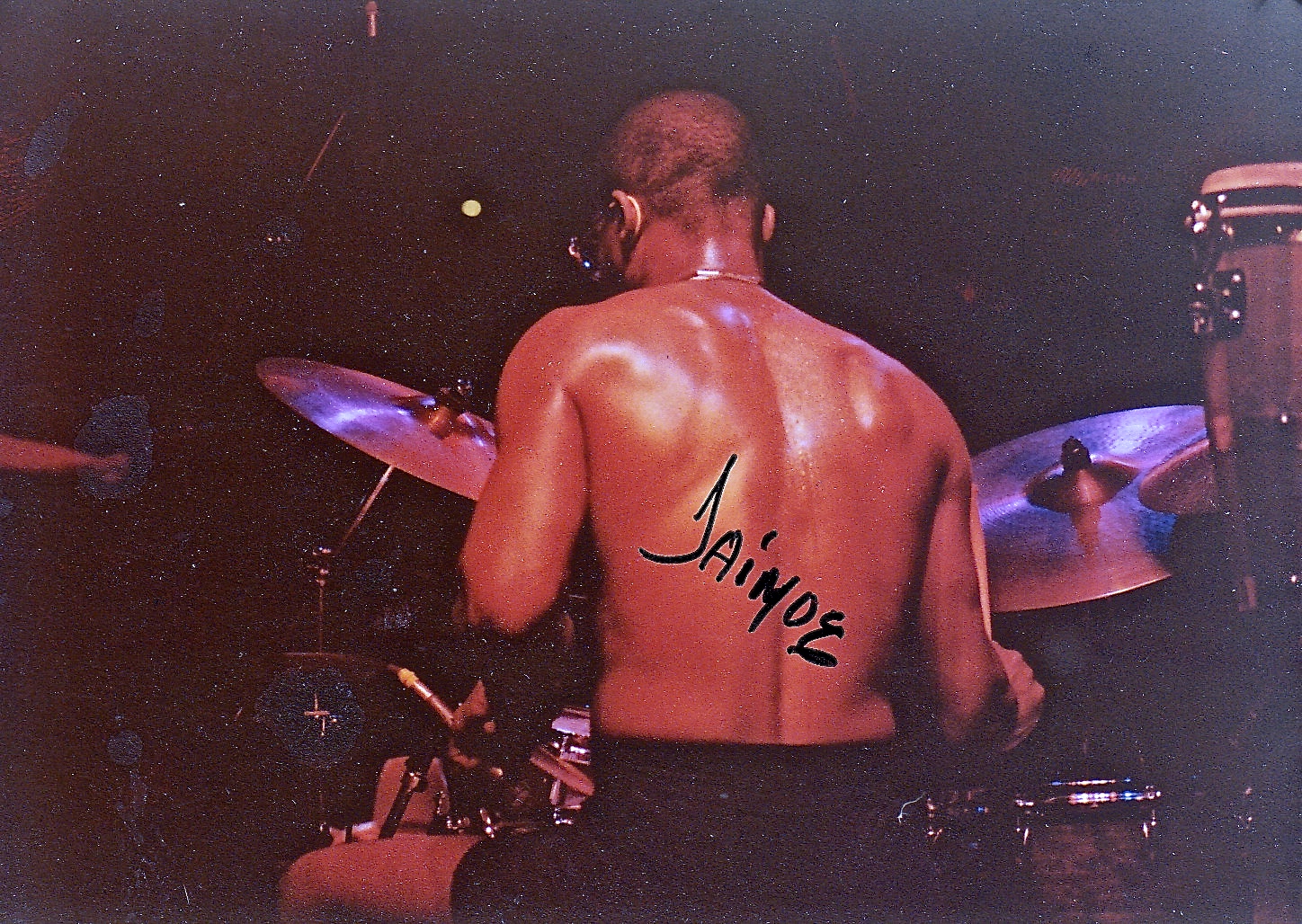
Jaimoe’s Unique ‘Fish Sticks’ Photo

SKF NOTE: From my private Fish Sticks stash. Jaimoe sent me this signed snapshot mid-1980s (?). A view of Jaimoe in action with the Allman Brothers few people see.

1980s_jaimoe_photo

end

Posted in SKF Blog | Tagged , , , | Leave a comment

Frankie Dunlop: Recording a Garbage Can Lid with Mingus

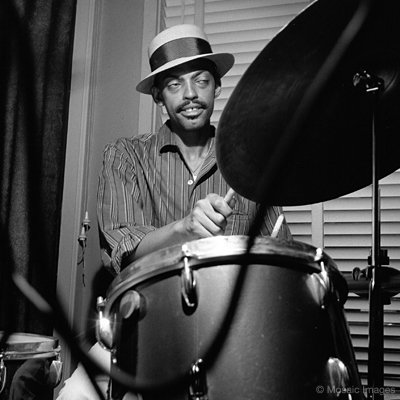
Frankie Dunlop

Frankie Dunlop

SKF NOTE: A segment from the full transcript of my Frankie Dunlop interviews. The back story on the interview is posted here.

In researching for my meeting with Frankie Dunlop — pre-internet — I found Frankie listed as playing percussion on Charles Mingus‘s Tijuana Moods album. However, Frankie told me, “I did play drums [on Tijuana Moods]. It was me and Dannie Richmond. I played on several takes on that particular album where I played a tambourine or I was shaking something.

“Dannie Richmond did play drums on most of the tunes. I played a few, but they listed me on the album jacket as a percussionist because that’s what I mostly played. If I heard the record I’m sure I could tell you what tracks I played on…,” Frankie said.

The original album title on the 1957 Bethlehem release is A Modern Jazz Symposium of Music and Poetry. The recording session Frankie describes here as Tales of the City is actually the album’s opening song titled, Scenes in the City. The 1983 Italian reissue of this album is titled Scenes in the City.

Frankie said the narration on Scenes in the City is written by poet Langston Hughes. According to Nat Hentoff‘s liner notes, “The narration was conceived and written by actor Lonnie Elders [sic]. Langston Hughes helped him put it into shape.”

I’m unable to find Frankie Dunlop credited anywhere as being on this Mingus album. I did listen to Scenes in the City — which I am including here — and I did hear a garbage can lid just as Frankie describes it. Perhaps this conversation will add a missing piece to jazz history and to Frankie Dunlop’s discography.

Charles MingusScott K Fish: Was [Charles] Mingus a good person to work for?

Frankie Dunlop: His music was accurate. Yeah. He was okay to work for. You had to get use to his method. See, he might jump up — not that he was really angry with you — but he’d holler over at you the things that he’d want. Mentally, if you’re not geared to receive that type of an approach, you might take offense — which most musicians did.

That’s why I give Dannie Richmond so much credit. Because Dannie Richmond stayed there so long. And Mingus would holler at that man: DANNIE! DANNIE! USE BRUSHES! MAN, DON’T USE THE STICKS. DANNIE! KEEP THE CYMBAL LIKE IT IS. DANNIE! WHAT YOU DOIN’, DANNIE?

SKF: Taking Dannie’s place was filling a tough spot.

FD: I filled a very tough spot.

I did another record date with Mingus that was on Bethlehem Records. That particular record will be a collector’s item — I don’t give a damn how long the world stands here. You can dig this particular record by Mingus up 50 years from now and it’ll be a collector’s item.

It’s called Tales of the City. The original lyrics were written by Langston Hughes, and I was playing a garbage can top.

Tales of the City is the story of a musician who’s come into New York. He’s a jazz musician and he wants exposure.

Mingus’s mind was just like [Thelonious] Monk’s. So far advanced.

Modern Jazz Symposium on Music & Poetry LP coverI forget the name of the guy who narrated Langston Hughes’ lyrics on the record date. [SKF NOTE: The narrator on the album cover is listed as Mel Stewart.] There were two versions of Tales of the City. I don’t know if I’m on the Bethlehem record.

Tales of the City starts off with a jazz musician’s monologue: “I’m a jazz musician. I’m in this big City of New York.”

And this music is building behind the monologue in 6/8 times.

He [the narrator] says, “Oh, I’d just like to get down there so I could dig the cats that’s down on 52nd Street. But man, I don’t have a job. I don’t even have subway fare.”

So the musician bumps into some guy and says, “Hey, Bozo. Can you let me hold a dime? I’m goin’ downtown. I got my horn. I wish they’d let me sit in.”

So it’s this thing where a guy lends this musician a horn. He comes downtown and he’s going into 52nd Street — or whatever — saying, “I want to hear some jazz. I hope I get a chance. I love jazz.”

And when [the musician] was getting on the subway, Mingus had 8 bars of music that sounded just like a subway.

“Okay. Let me see if I can find… there’s a nickle. Hey! I got a dime. Let me put it in here. There we go. I’m goin’ to be downtown hearin’ them cats play that jazz. My love! I got my horn.”

And then you hear the music.

“Here comes the subway.”

And as the subway approaches the music gets louder and faster — and it stops. He [the musician] says, “Okay. Hold the door, man. Okay.”

Dannie Richmond

Dannie Richmond

Then he’s on the subway and the music starts to build slowly. And it gets faster and louder as the subway leaves the platform.

“52nd Street. Okay. Hey, man, you got my coat caught in the door. Hey, conductor! Open!”

[Conductor says,] “I’m sorry.”

[Musician says,] “Okay.”

[The musician] comes up [from the subway station] and he goes into the jazz club.

Now, Mingus has got the music in a slow swing tune. Then you hear all this monologue [and find out] the musician don’t get the chance to sit in. All this is in Mingus’s music. This is all on the album.

In his monologue, the guy [musician] says, “Oh, man. Went down there and the man…. Ah, I didn’t get a chance to play. I gotta get back on this sub and go uptown. Hey, I’m busted. I can’t pay. I’m gonna see that landlady and she’s goin’ to be askin’ me for my rent.”

Then the subway music comes again.

“Okay. Here comes that sub.” He puts his dime in and gets on. He’s going back uptown. Then he goes upstairs to his place.

Now, where my part was, I had the garbage can and Mingus was there to watch me. And when the [narrator] gets to the part where the [musician] says, “Oh” — and the band plays a descending line and stops. “Phew. Here I am back. I don’t know. I thought I might get a chance to play ’cause I love jazz.

“I got to hear Bud.”

And you hear some fast bebop piano.

“And man, and Max….”

Then you hear some drums.

“And man, I heard Dizzy play.”

Some upstairs trumpet playing.

“And, shoot, I didn’t get a chance to play.”

Mingus slides down on his bass. All this is on the record. The guy [musician] walks upstairs [and] the music imitates that. And he says, “Oh, there’s my room.” There’s a knock at his door. “Hey, who is that?”

“This is your landlady. You owe me rent.”

“I told you I don’t have it. I was downtown tryin’ to get a gig.”

“Well, look. If you don’t get any money you’re going to get evicted. I’m goin’ to throw you out if you don’t pay.”

Then [the musician] hears some noise in the alley. He yells down, “Who is that?”

“It’s the garbage man.”

Mingus yells out, “OKAY? FRANKIE.”

I threw the garbage can top down. Mingus said, “Wait a minute. Cut! Cut! Hey, Frank. You didn’t throw the can down on time. You’re behind. Hey, take that take over.”

Here I am at my first record date in New York, throwing a garbage can lid in the RCA Victor recording studios. Dannie Richmond was playing the drums. He was playing all the intricate stuff. But my thing was, when the [musician’s] yelling down to the garbage man, “Man, stop rattling that stuff. I’m tryin’ to sleep!” — that’s when I was supposed to slam the lid down. And I missed it.

Mingus says, “No. You’re supposed to wait, Frank, until [the musician] says [the word] ‘sleep.’

The A&R man is sitting in there looking at Mingus, thinking, “What in the hell are we doing? Who is this cat? What kind of record date is this?”

That was in 1958 or ’57, really. It’s been reissued. I don’t know. You might hear a garbage can or you might not. I heard it when they played the record on WBGO. But there were two recordings.

Charles Mingus Photo Credit
Dannie Richmond Photo Credit

end

Posted in SKF Blog | Tagged , , , , | Leave a comment