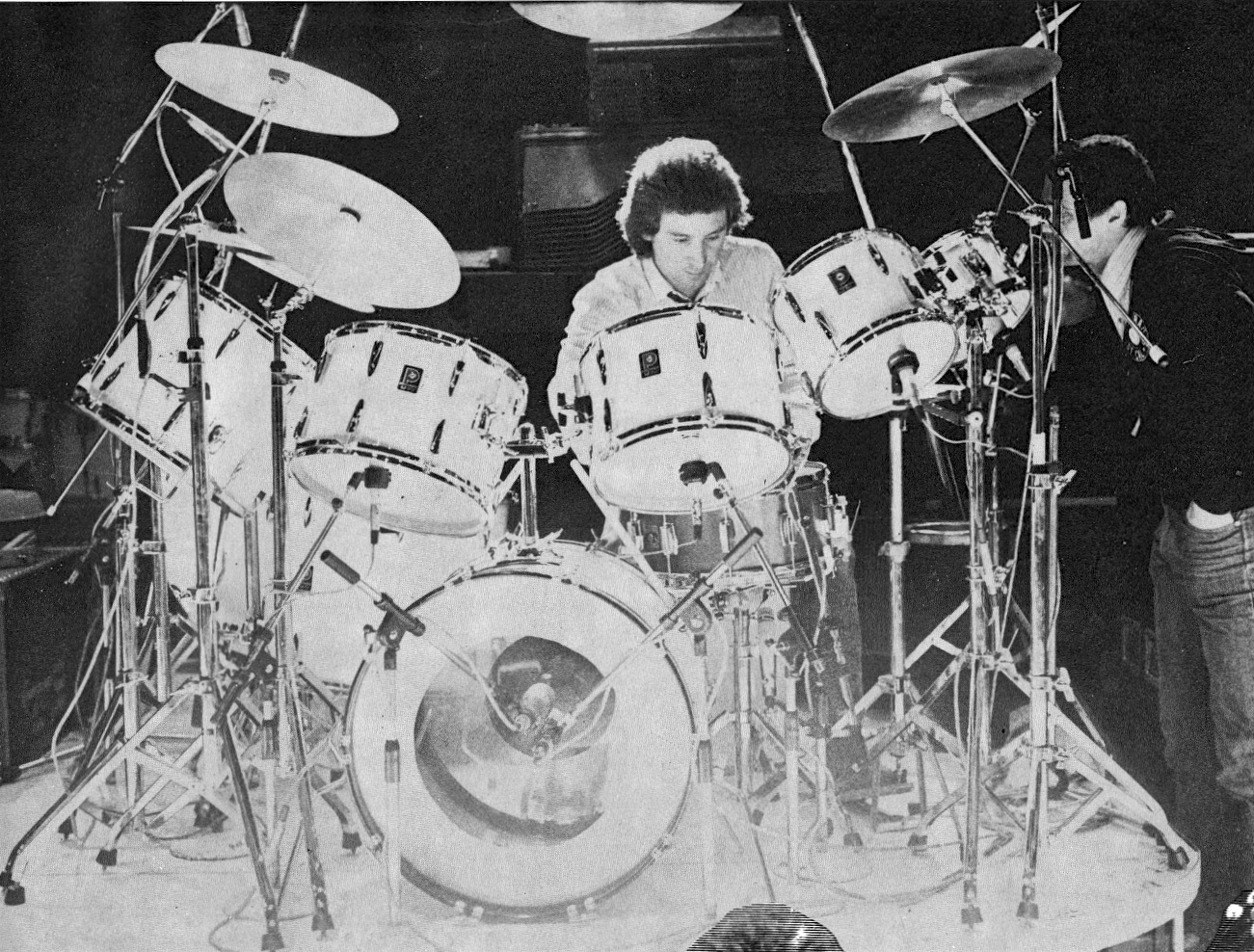
SKF NOTE: Photos copied from the official program of The Who‘s 1982 tour. I saw The Who in concert three times. Twice with Keith Moon on drums and once, on this 1982 tour, with Kenney Jones on drums.
Moon was so unique. In his absence, The Who lost its looseness and some of the band’s edge. But Kenney Jones played very, very well with The Who. Years before, I liked Jones’s drumming with the Small Faces.
In The Who 1982 official program these photos of Kenney aren’t what I’d call top-rate. I like them mostly for the view they give drummers of Kenney’s drum set-up.
SKF NOTE: Thank you Fox 5 in New York for this uplifting story on Roy Haynes. Also, thank you Shawn Martin from The Great Drummers Facebook page for bringing this video to my attention. A one-of-a-kind man and drummer. It’s great to see Roy Haynes so healthy at age 93. And on a side note — it’s remarkable how much Roy resembles Papa Jo Jones.
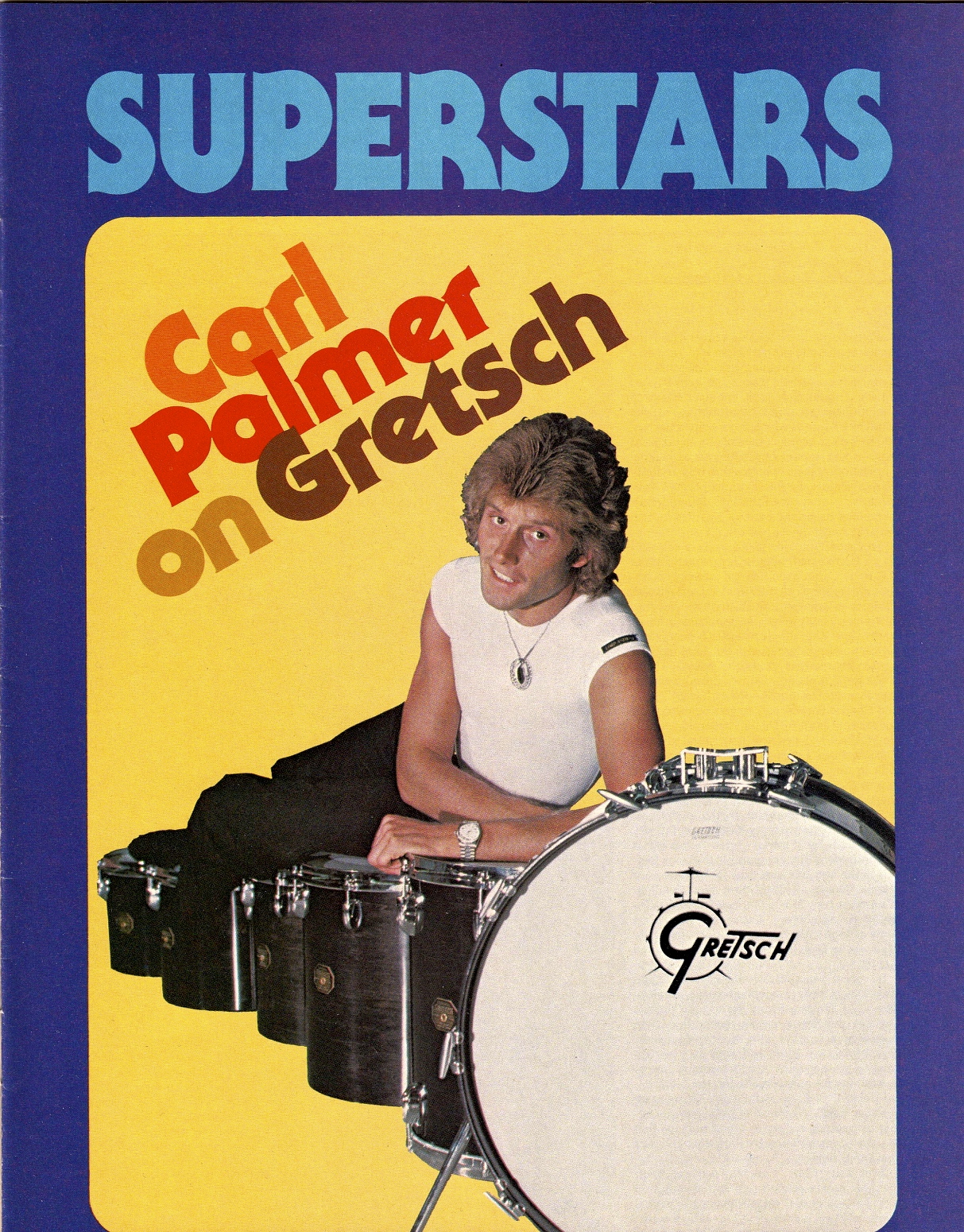
SKF NOTE: World class drums (Gretsch) and a world class drummer (Carl Palmer). The first time I saw this magazine ad (1979) I was puzzled. Gretsch set the advertising photo bar very, very high with the company’s 1960s black-and-white ads with Chuck Stewart photos of all the great Gretsch jazz pioneers, i.e. Max Roach, Art Blakey, Mel Lewis, Philly Joe Jones, Elvin Jones, Don Lamond.
Thirty-nine years after this ad was published I still can’t figure out why this passed muster at Gretsch. I doubt Carl Palmer had to sign off on the ad, but if he did? Yikes. This was a transition period for this class American drum company. This Carl Palmer ad, so uncharacteristic of Gretsch ads, probably reflects the company’s identity crisis at the time.
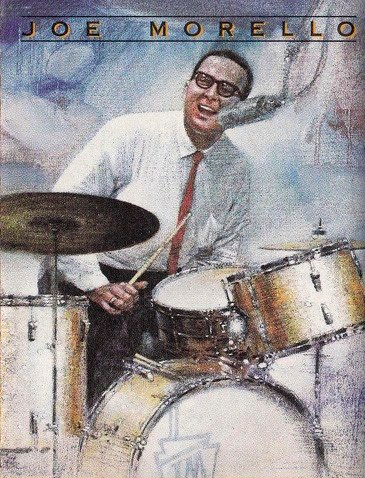
SKF NOTE: This morning, while reading through the transcript of my March 7, 1978 talk with Joe Morello, I came across this exchange with Joe about teaching drum students. (Or, as Joe calls them, “kids.”) He was very open to helping drummers successfully navigate whichever avenue or road they wanted to travel.
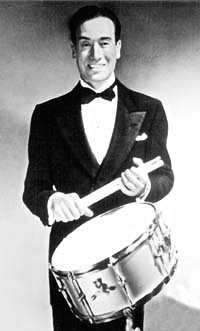
This part of the conversation ends with Joe trying to explain Billy Gladstone‘s way of playing. Joe calls Gladstone “the greatest technician of them all.”
=====
Joe Morello: I think of it like different avenues, different roads.
Okay. When you start off you’ve got to learn how to play. Somebody has got to say, “This is your right hand, and this is how you hold the stick. Here’s the reason why you hold it this way.
If you want to play this way [matched grip], here’s the reason why it can be done.
It’s all the same.
Work on that and develop a certain control. And once the kid has a little control, then you can say, “Okay, now which way do you want to go?” Here’s this way, or try that.
Teach them rudimental things and say, “Here’s how to apply it to the [drum] set.
If you want to be a rock drummer — go that way. I don’t want to make you into something you don’t want to be.
[If a kid asks,] “Am I holding the stick right?” Well, how does it feel to you? Is it comfortable? Then hold it that way.
Scott K Fish: You won’t insist that a kid hold his stick a certain way?
JM: Nah. If it’s natural for him, why try to change somebody over? I mean, I can show him what I do, and if the kid….
Some of the teachers teach this stiff wrist motion. They squeeze very tight here [between thumbs and index fingers] and they call it fulcrum. My answer is, “Fulcrum all!” They’ve got these bulging muscles here [fulcrum areas]. I don’t have any [bulging muscles] there at all. I don’t have any callouses. I must be doing something wrong.
Then after about three or four years of squeezing hard, and using all stiff wrist motion, they tell the kid to loosen up.
But all of this fingers and wrists! It’s a combination of everything.
Billy Gladstone, I think, was the greatest technician of them all — that I’ve seen in my life — and I took a few lessons. He didn’t even want to even teach me. And he was, uh, a “legitimate” drummer. But the guy had this method — everything was so loose.
He’d take the sticks and he’d go like this [plays fast single stroke roll], and he’d get this finger thing, kind of. But he’d get… like a doorbell almost.
“Jeez,” I’d say, “I want to learn that. How do you do it? Everything is so loose.” It was just so natural, you know? [Gladstone] said it’s like when you walk. If you had to figure out every muscle — you couldn’t even move.
SKF NOTE: This excerpt is from my August 5, 1983 interview with Dave Weckl. Dave talks about learning different styles of drumming, starting when he was a kid, through St. Louis drum teachers, and by playing along with records. His father, a piano player, introduced Dave to Pete Fountain‘s records with Jack Sperling on drums. “Jack was my number one influence when I was first starting,” said Weckl.
Dave Weckl is 23-years old here. He was living in Bridgeport, CT getting ready to go on tour with Simon and Garfunkel — arguably the first major gig that put Weckl on the map.



 Scott K Fish
You must be logged in to post a comment.