SKF – Stay Positive, America

Stay positive, America
Staff, Piscataquis Observer • March 13, 2020
By Scott K. Fish

Sometimes, when six-year old Grafton was younger, we’d step out of the house to explore or to drive somewhere. Later, I’d notice he had his shoes or boots on the wrong feet. Walking the grocery store aisles, for example, I would see Grafton’s boots and do a double-take.

“You’re shoes are on the wrong feet,” I’d laugh. Grafton would look at me as if to say, “What do you mean ‘wrong feet’? These are the only feet I have.”

“Aren’t you uncomfortable?” I’d ask. Grafton shrugged. I’d reposition his boots and off we’d go.

This past week especially I feel as if much of America, overreacting to non-stop worst case scenario coronavirus news, is effectively moving through each day with their shoes on the wrong feet.

My bank President/CEO sent me an email on Wednesday. Presumably the email went to all the bank customers. We’re here to help, said the bank Top Dog. “We recognize there is uncertainty related to the spread of the virus and that some of our clients may face financial challenges as a result of illness and/or business interruption.”

“We’re working with our cleaning professionals to coordinate more extensive and frequent cleanings of our branches and ATMs. We’ve made hand sanitizer readily available and are reinforcing best practices recommended by the CDC,” said the bank executive, concluding his email with tips on coronavirus and “fraudsters,” and assurances the bank was staying on top of coronavirus health developments.

I have a flight scheduled later this month. The airline Senior Vice President & Chief Marketing Officer included me in his March 9 “valued customers” email.

“We want you to feel confident when traveling with [our] Airlines. As a result, we have enhanced some of our cleaning procedures in the interest of our Customers’ and Employees’ health and safety,” wrote the Airline executive, following with details of aircraft cleaning.

I learned the airline “spend[s] between 6-7 hours cleaning each aircraft every night, and, as of March 4, 2020, we have enhanced our overnight cleaning procedures.” The exec tells me what grade disinfectant they use and where, which, he further assures, “goes beyond the standard CDC guidelines.”

If the added airline info on aircraft air filter types doesn’t give me enough confidence, I’m offered a link to “our blog for a detailed overview, along with a video and photos of the process.”

Yesterday I received yet another email, this time from Merrill Auditorium that the Sunday, March 15, Portland Symphony Orchestra celebration of Maine’s bicentennial is cancelled, and, said the Auditorium folks, here’s what you can do to make good on the concert tickets you bought.

The same type of message also arrived last night, instructing me on what to do with my tickets for Portland Ovations’s cancelled Blue Man Group performance in April.

I drove to the local Hannaford for some milk and soup. Then I worked my way to the aisle with kids’ books displayed. The same aisle also has paper products i.e. tissues, napkins, paper towels, toilet paper. Except the toilet paper shelves — all of them — were empty. It looked like a scene from a Venezuelan food store.

A stock clerk with a wheeled hand truck topped with cardboard boxes of toilet paper had placed three packages on the empty shelves. I asked him if people were really buying this much toilet paper? “Yes,” said the clerk. “It’s crazy.”

Yesterday coming to a close, I read one final email from a nearby farm/restaurant where we have Mother’s Day reservations. The farm owner was writing about daily measures taken there to “sanitize” everything. “While the virus has not been confirmed in Maine we are taking precautions here…,” she said, ending with, “Remember to stay positive….”

To those farmer’s words of wisdom I will only suggest, when leaving your house, be sure your shoes are on the right feet.
#

Posted in SKF Blog | Tagged , , , , | Comments Off on SKF – Stay Positive, America

Roy Haynes – Not Everything I Play Has a Name

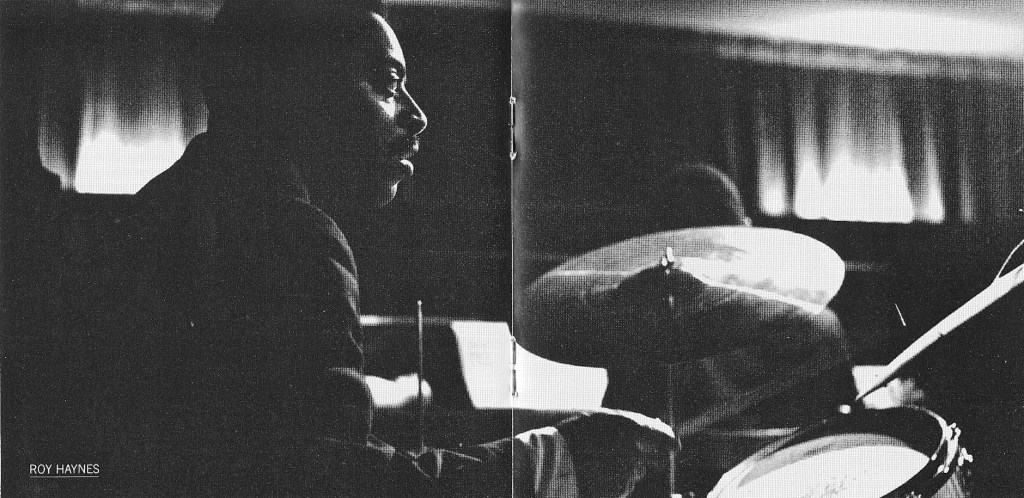
Roy Haynes from his “Out of the Afternoon” album.

SKF NOTE: Happy Birthday to drum pioneer Roy Haynes. I am thankful to have listened to Roy in concert twice, and to have interviewed him.

I can’t explain why, but what I remember most of my interview with him, was Roy telling me, “Not everything I play has a name.” His point was, his drumming is made up of sounds, creativity, and not just variations on drum rudiments, Stick Control, or anything else.

Brilliance.

Posted in SKF Blog | Tagged , , | Comments Off on Roy Haynes – Not Everything I Play Has a Name

Re-Release of 1957 Philly Joe Jones Date

SKF NOTE: A re-release of note. Recorded in 1957, Hank Mobley Poppin’ date’s lineup of musicians is stellar: Hank Mobley (tenor), Pepper Adams (baritone), Philly Joe Jones (drums), Art Farmer (trumpet), Sonny Clark (piano), Paul Chambers (bass). I just bought the MP3 album. Any chance I get to hear new-to-my-ears Philly Joe Jones, I take advantage of it.

Thank you, Blue Note.

Posted in Drum/Music News, SKF Blog | Tagged , , , , , , , | Comments Off on Re-Release of 1957 Philly Joe Jones Date

SKF Goals for 2020: Doing the Work

IMG_1869


February 21, 2020
by Scott K Fish

This year, 2020, I set personal goals. One goal is simple: keeping a list of books I read this year. The key is finding one convenient place to keep a running list, remembering to add to it as I finish reading each book.

Not having one convenient place doomed my 2019 book list. I’d finish books, put the keepers on a bookshelf, and giveaways in a box. Later I’d remember my book listing goal, try to remember what I’d read, give up, and vowing to get it done “next year.”

This year I set up on my personal Facebook page an “SKF Books Read in 2020” photo album. It’s working. The six books I’ve read or finished reading this year are already listed. If I’m near a computer or my smart phone I can easily update my list.

I have another longstanding goal. Achieving it is more complex than my book list, but I’m committed to reaching this goal too.

I’m a songwriter. That started back in the 1970s or earlier. I have a music publishing company, professional song demos. I’ve been in bands where songs I’ve written were part of our repertoire. My songs were ideas coming to me in song format.

I write songs on guitar, piano. Sometimes melodies and/or lyrics come to mind while I’m driving. I have to take care to write down those ideas as soon as I can — which sounds perilously close to my past trouble keeping book lists.

Back in my band days, when music was my life focus, my circle of friends included guitar players and pianists. I relied on them to take my hesitant guitar and piano playing, and play them as the songs I had written.

Years ago I put my band days behind me. Three of my closest musician friends died. Others drifted apart. My songs lay quiet for decades. My non-musical career was such that I never developed new friendships with musicians.

Then around year 2014 I accepted an invitation from a co-worker friend at the Maine Department of Corrections to a few jam sessions with folk musicians. I played percussion, mostly wire brushes on a snare drum. Just that modest reintroduction to music making made me realize how much I missed that part of my life.

I wanted my songs back and decided I would figure out a way to record them myself, and then — win, lose, or draw — I’d release my songs to the public. That’s my 2020 goal.

My reluctance, my fear, is my biggest obstacle. But there were/are other lesser obstacles.

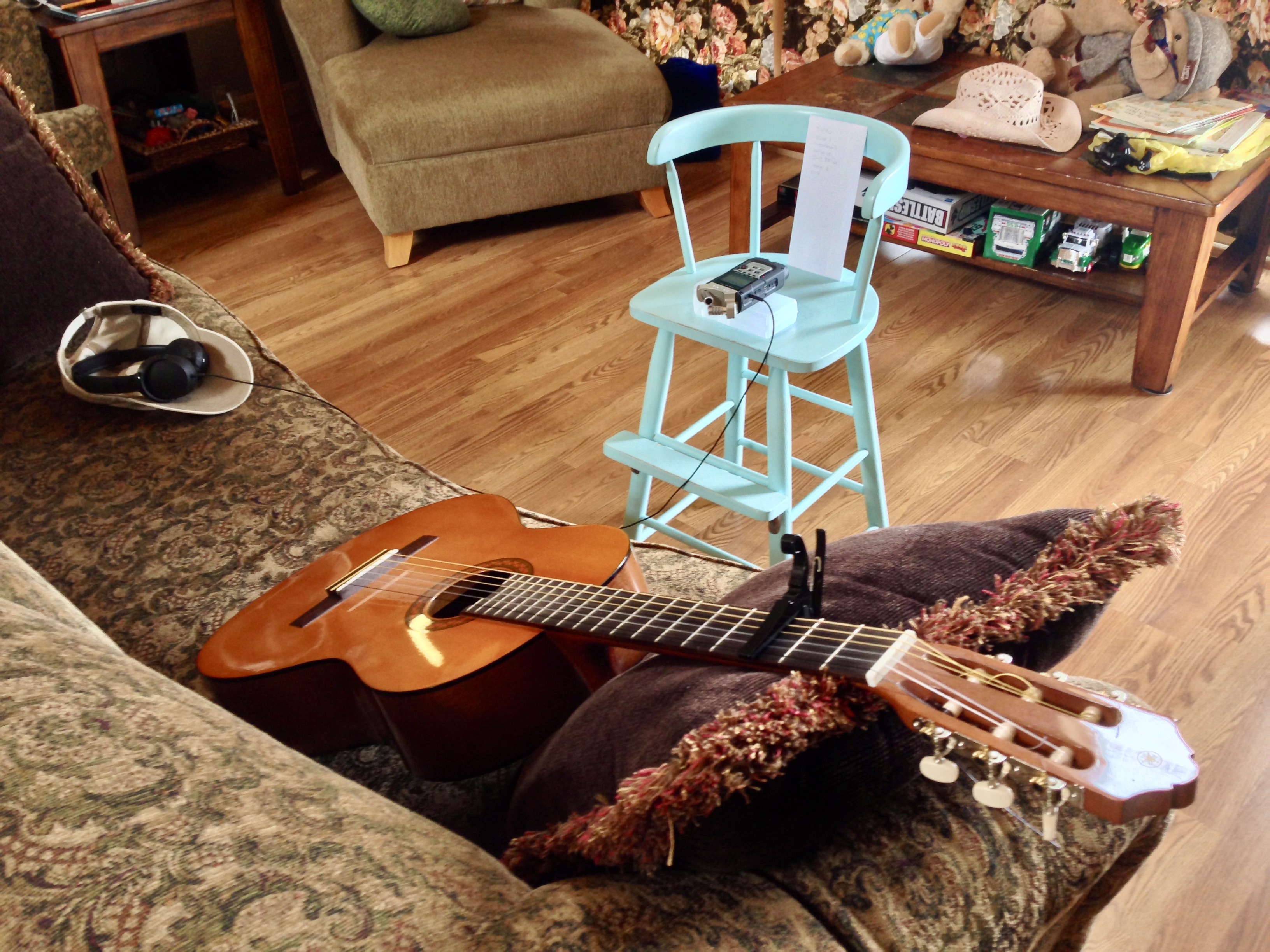
I owned neither a guitar nor a piano. I bought a guitar. Obstacle cleared.

Next I discovered I had forgotten how to play most of my songs. What chords did I use? Was it this chord or that chord? What were the second verse lyrics? In some cases I had forgotten altogether writing certain songs.

After many months I had learned again to play and sing 15 original songs well enough to record them on rough digital demos. Obstacle cleared.

My next obstacle is recording my songs as finished products, to give the public a quality listening experience. That means learning how to use a computer based recording studio called GarageBand. Just to learn the basics of GarageBand I paid to take two online how-to courses. Obstacle clearing.

Once I’m able to play my 15 songs without mistakes, I need a quality digital recorder to capture the songs so I can edit the songs with GarageBand. For that I bought a ZOOM H4n PRO recorder. It fits my “quality digital recorder” bill. That leaves trial-and-error period obstacles with both the recorder and recording studio.

Then the only obstacle to reaching my 2020 goal is me doing the work. Think good thoughts. Most of all I don’t want to be buried someday with the music still inside me.

Posted in SKF Blog | Tagged , , , | Leave a comment

Neil Peart on Music Marketing – ‘It’s a Sad Mess’

Ed Uribe

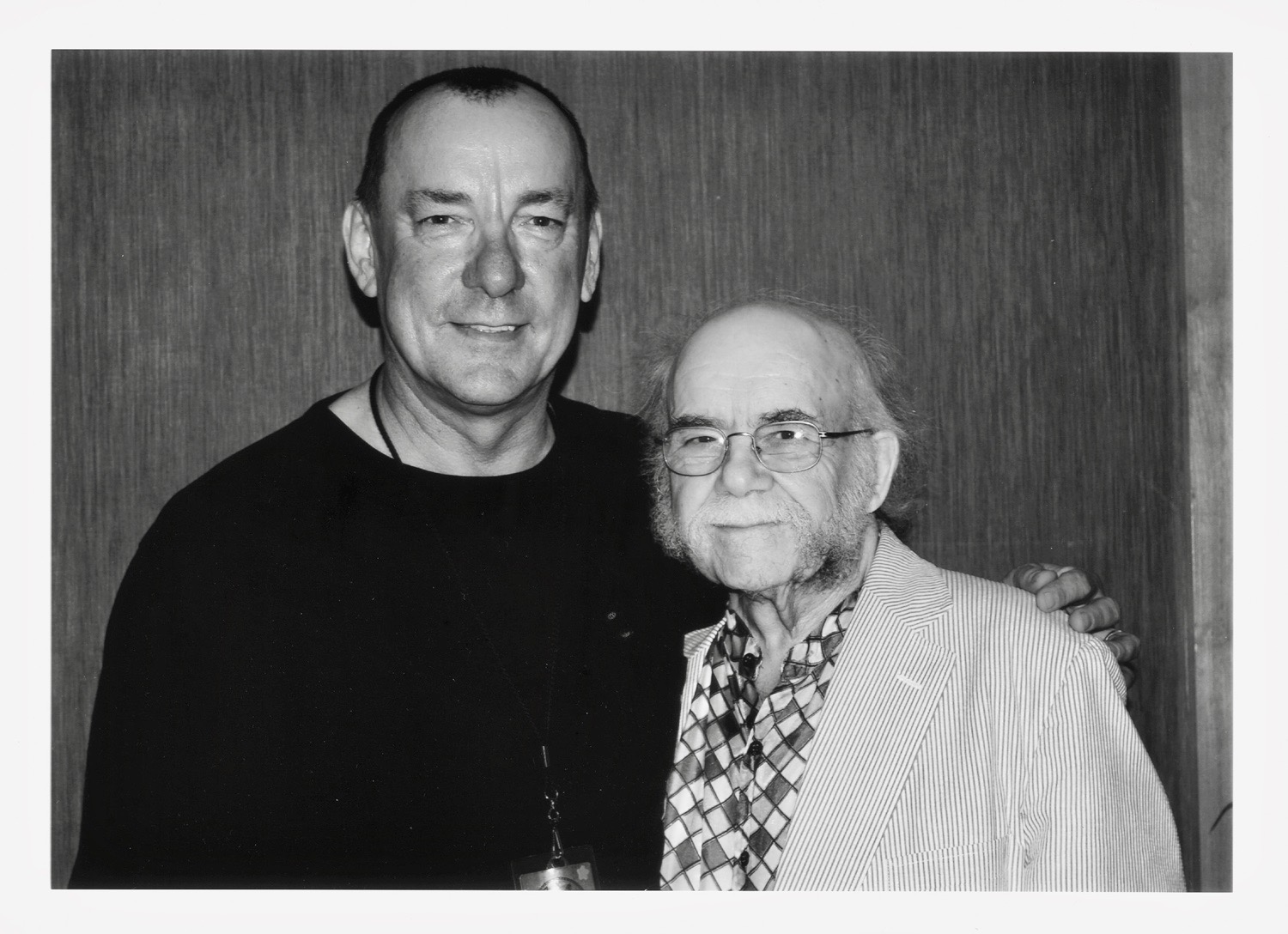
Neil Peart with Zildjian’s legendary Lenny DiMuzio

SKF NOTE: Digital music devastated the old order of earning a living in the music business. I still don’t understand all the nuances those changes made. But I understand enough to know album sales and airplay lost much of their money earning potential for musicians, while live performing became a major option for musicians’ compensating for their loss of song/album royalties.

In 2015 I asked Neil Peart how Rush was adapting to the music marketing changes. Neil’s reply was, and is, clear, helpful, and eye opening.

=====

Scott Fish – Mar 15, 2015, 9:01 AM

Sometime maybe you can explain how Rush – and, by extension, all popular musicians – adjusted to the changes in marketing music. It wasn’t so hard when the end product was a vinyl LP. The record company produces X, sells Y, and Z is the amount of return LPs.

But now, with digital music – holy smoke! Actually, albums are sometimes digital, CD, and vinyl. From my perspective, it seems as if musicians almost consider albums as loss leaders, making up the loss with concerts and swag.

In the 50s, as you probably know, all the Indie rock labels (i.e. Sun, Chess) would produce boxes of 78’s, then 45’s, throw them in the trunks of cars, and barnstorm radio stations across the U.S.

So, on one hand the new technologies make it much easier for musicians to produce and promote their songs. On the other hand, the new technologies seem to make it tougher for musicians to earn a buck, or a living.

[Neil Peart] — Mar 15, 2015, 11:51 PM

Re: your question about the “economics” of being a rock band today. Yes, in the ’70s until the late ’90s/ early-Noughties touring was often a break-even proposition, while record sales (and publishing etc.) were the income generator.

Now, alas, for us even to make a modestly-budgeted album would struggle to break even — and touring and its associated revenues (merch) are the wage-earners.

Which sucks when you’d really like to retire from all that — to feel free of it. And you pine for the days when after a lifetime of work, artists used to be able to live off *ahem* royalties (such a quaint concept).

Because as the media of musical commerce change, corporate entities struggle to keep up — always, by definition and temperament, well behind the true zeitgeist. And when they do get their fingers into the pipeline, they find ways to diminish the flow to artists to a trickle. (I sense there’s a metaphor with water rights in the West, but am too tired to pursue it. Lucky you.)

In another example — once upon a time writing a theme song for a hit TV series could be a lifetime annuity. No more. Bean-counters hate the idea of anyone else making any part of what they see as “their” pie — or at least (and this is good) their pie-chart!

(Because it’s quarterly earnings on which their personal performance is judged, nothing more.)

Now such specimens dictate, without negotiation, that the composer will only be paid a flat fee — not very much — and nothing more ever, in perpetuity. They buy out the composer before any eventual success or failure is even known. Thus they feel justified in paying on “failure” terms.

In the bigger picture of the entire music business, as the suits struggle to keep pace with digital downloading and streaming, they institute structured deals that give the artist a pittance. (Classic example of “too little, too late.”) As if to say, “It’s this or nothing — because we are stopping ‘them’ from stealing it all.”

It’s a sad mess.

NEP

Posted in SKF Blog | Tagged , , | Comments Off on Neil Peart on Music Marketing – ‘It’s a Sad Mess’