Frankie Dunlop: All The Geniuses are Like That

SKF NOTE: The background on this Frankie Dunlop interview is posted here. Most of Frankie’s published comments, rightly so, are about his work with Thelonious Monk. Here Frankie is sharing words of wisdom about Charles Mingus.

stampFrankie Dunlop: I said something to Mingus about a tempo one time when I was playing with him. He looked at me in the middle of a tune and said, “Hey, Frankie. Keep playing. I got to go over here and talk to Joe.” Joe was the fellow who owned the Half Note.

The tempo was way upstairs and I wasn’t adjusted to playing that fast anyhow. I’d just gotten into New York.

Now, Don Friedman was on piano. It was just me and him. No bass.

Now, it would’ve been bad enough for me with the bass. Jimmy Knepper and Booker Ervin were in the band too.

Mingus finally comes back on the bandstand, picks his bass up and starts playing. Same tune. He turns to me and says, “Hey, man. Hey, Frankie. The tempos gone down, man. That not the tempo I started.”

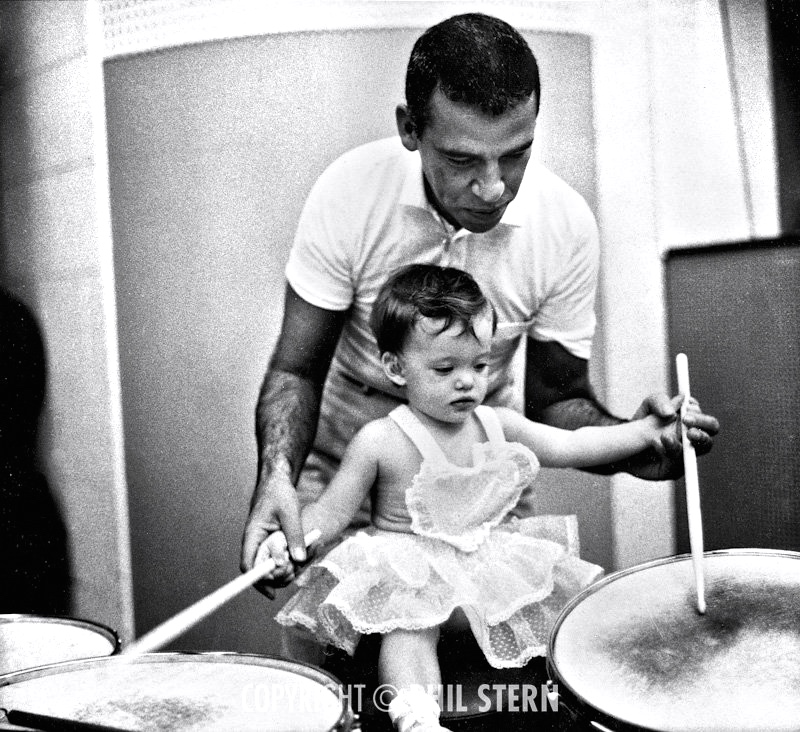
Frankie Dunlop

Frankie Dunlop

And I guess it had gone down. I was scuffling. That man was a perfectionist. He didn’t tell me that because he disliked me. If he disliked me, if he didn’t think I could’ve made the gig, he wouldn’t have hired me. But Mingus was such a perfectionist that the things the average musician or bandleader would say, “The hell with it,” he wouldn’t let it slide.

All of the geniuses are like that. They may be eccentric, but deep down inside they’re concerned about their music. Monk, Rollins, Miles Davis, Mingus. They didn’t want any substitutions, anything second-hand, for what it was really supposed to be.

And I’m glad that I came up under that, under the guiding lights of those cats.

end

Posted in SKF Blog | Tagged , , , , , | Leave a comment

Buddy Rich: Two Kinds of Technique I Admired

SKF NOTE: Mel Torme‘s two-part 1978 Down Beat interview with Buddy Rich is one of my all-time favorites. It is a conversation between friends, between first-class musicians, and between people with utmost respect for each other. Both Messers Torme and Rich are relaxed, they’ve both lived through the experiences discussed.

Compared with the umpteen times I’ve heard Buddy interviewed on t.v., read Buddy interviewed in magazines and books — Mel Torme’s Down Beat is hands-down the best of the best. It is the interview every Buddy Rich admirer wanted: no wise cracks, just one of the world’s greatest drummers talking about drumming.

The DB intro to this interview says, “The interview will be used by Torme in a forthcoming biography of Rich.” This interview is so good it raised high the expectations for the Rich biography, published as “Traps – The Drum Wonder: The Life of Buddy Rich” in 1991. In my opinion, the book – while good to have from a historical perspective – was disappointing. This interview is much, much better.

Here’s a snippet:

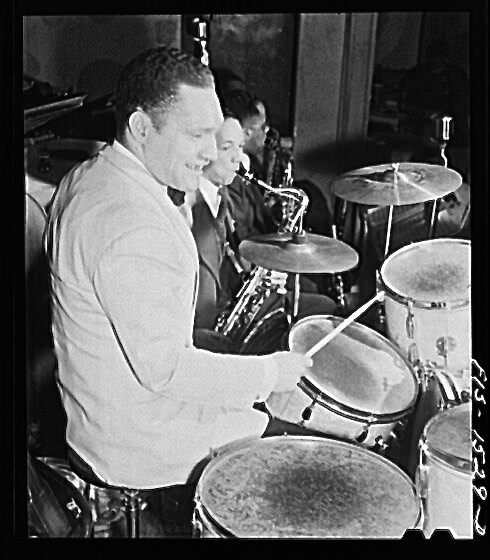
Buddy Rich (Photo by philsternarchives.com)

Buddy Rich (Photo by philsternarchives.com)

Buddy Rich: Some of the best drummers I ever heard had no technique at all. [W]henever I played Chicago on Saturday night they used to have a breakfast show for the various entertainers. They always had a line of 16 girls…. I used to go only because Red Saunders was the greatest show drummer that ever lived. He had a 10-piece band, playing all these outside jazz things for the girls to dance to. He was a cue drummer, he would catch every step the girls did. He would catch comics, catch their lines. He had things with the band that were just impossible to know. You just have to instinctively know that this is the way to play.

As far as technique was concerned, he could play a roll if they slipped him a jar of butter.

Red Saunders (Photo by myweb.clemson.edu/~campbe)

Red Saunders (Photo by myweb.clemson.edu/~campbe)

He had no technique, but he had the innate ability to play drums. He wouldn’t astound you by playing a solo. He couldn’t play a  solo, probably.

I was very into that kind of playing, the show type drumming.

And I had a great respect for Billy Gladstone. He used to play snare drum at Radio City Music Hall in New York. I used to go to see him and I used to sit in the last row in the balcony, in the back, only because I wanted to hear his roll. [W]ithout the slightest bit of motion he could almost shatter your eardrum. He had that kind of technique. When he played a roll you couldn’t tell if it was a roll or if he had only one stick on the drum. It was that pure. That was the other kind of technique that I admired.

Source: “Rich + Torme = Wild Repartee,” by Mel Torme. Down Beat, February 9, 1978.

Posted in SKF Blog | Tagged , , , , , , | 1 Comment

Revisiting My Life in Music: The Rise of Writing Influences Pt. 2

Nat Hentoff
Nat Hentoff, a superb jazz writer, in his office.

SKF NOTE: This is my latest post in answer to a new friend asking how I “got the gig” as managing editor for Modern Drummer. Here is my first post. And here is The Rise of Writing Influences Pt. 1.

Listening to other musicians is a must for aspiring musicians. Reading is a must for aspiring writers. Doing both is part of my becoming a music writer. One benefit of growing up when the long-playing (LP) vinyl record was the best way to hear recorded music, the LP back covers – just under 12.5 inches square – have liner notes.

Liner notes are essays, profiles, interviews, written by knowledgeable music journalists, music producers, music deejays – sometimes musicians themselves – about the music on the LPs. Writers like Nat Hentoff, Ralph J. Gleason, George Avakian, Dan Morgenstern, Leonard Feather, Ira Gitler, Orrin Keepnews, Leroi Jones, Barry Ulanov, Norman Granz – liner notes were as interesting as the music they were describing.

51MojalmlKL._SY344_BO1,204,203,200_

Good liner notes were history lessons by people who lived or were living the history. By writers who were close, trusted friends of the musicians. Many of these writers wrote the “must read” books on jazz, and later on, some of these writers, along with newer writers, gave us great liner notes on rock.

As important as knowning drummers and their history, I studied – and still study – all kinds of musicians and the histories of their instruments: trumpet, saxophones, piano, bass, voice, songwriters, arrangers, trombone, guitar. The history of drumming – the instrument’s pioneers, how the drumset evolves – none of this happens in a vaccuum. Knowing the history of the music – be it jazz, rock, blues, country – made interviewing drummers and writing about drums much more interesting.

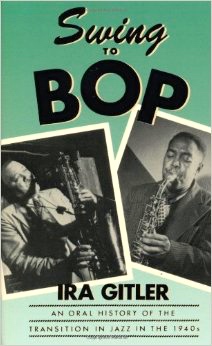
Ira Gitler
Ira Gitler

Two examples: When I first interviewed Jim Keltner, he mentioned right at the start, his musician friend, Al Stinson. Jim paused and said, “But you probably don’t know who Al Stinson was, so….” “Yeah, I do,” I said. “He was a jazz bassist. I’ve heard him on a Chico Hamilton record.” To which Jim replied, “Okay, then. This is going to be alright.”

Last week I interviewed drummer Roy McCurdy. I was familiar with all the musicians he spoke about during our 90-minutes on the phone. Roy also told me about someone he met with one time who wanted to help Roy write his memoir. But the writer didn’t know any of the musicians in Roy’s life. Didn’t know their names, their role in music history, or their sound. How do you write about them? Roy asked. The answer is, you can’t.

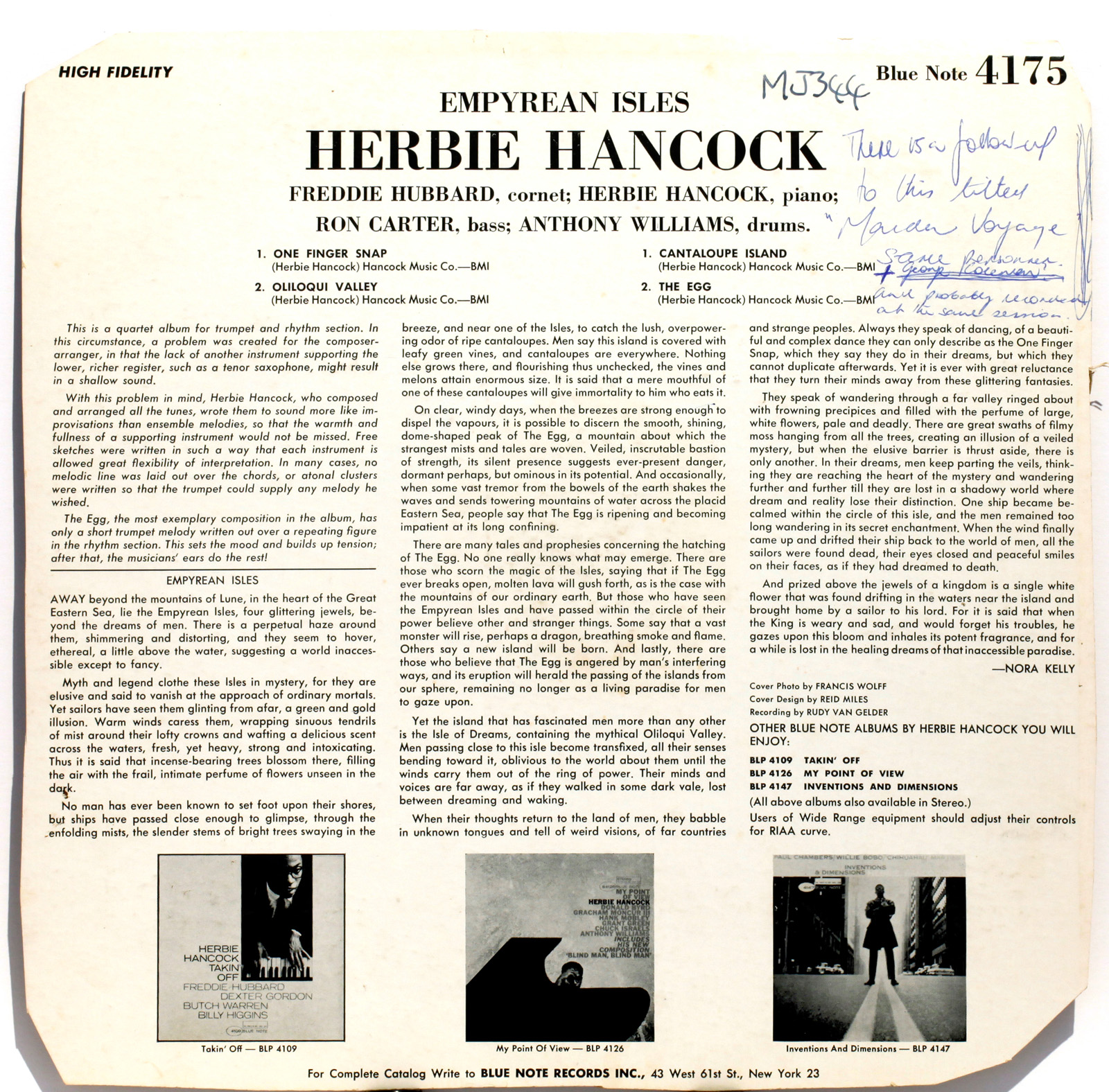
Liner notes from a Herbie Hancock LP.

In addition to liner notes and books, certain magazines were a great source for study. Down Beat and Rolling Stone were probably the best. There were a number of jazz and pop magazines that came and went. They often had bits of valuable music writing. I collected LP’s, magazines, books – thousands of music information sources. Interviews, profiles, record reviews, historical essays – I loved reading them, absorbing the information. I underlined key passages, wrote notes in the page margins. And this library was my chief source of musical information.

To be continued….

Posted in Revisiting My Life in Music | Tagged , , | 4 Comments

Memorial Day: Thank You!

IMG_5036

Posted in SKF Blog | Tagged , , | Leave a comment

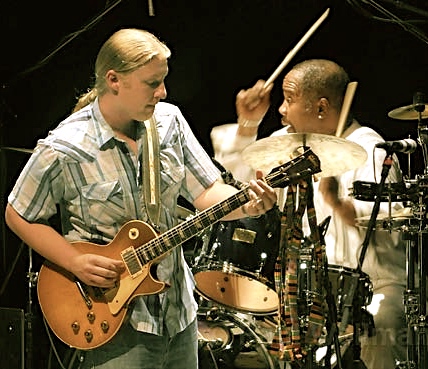
Derek Trucks: Inspired by Elvin Jones’s Mother

Watkins: Tedeschi Trucks ‘happy and soulful’
Billy Watkins, The Clarion-Ledger 11:16 a.m. CDT May 14, 2015

Derek Trucks

Derek Trucks

Q. I wanted to know about [Derek Trucks‘s] style, about what he tries to say using his guitar.

A. “I try to convey some kind of emotion,” he says. “Like the great jazz drummer Elvin Jones said his mother used to say to him. She was a gospel singer, and whenever Elvin would play she would shout out, ‘Tell your story.’

“I totally get that. There has to be something behind what you’re playing. With all the great musicians, you can feel there is an art to it. It’s not, ‘Hey, check out all the stuff I figured out in my practice room.’ It’s more about improvising and playing what you feel. One of the first things I learned from hanging around blues clubs or during my time with the Allman Brothers was the importance of not playing the same thing the same way two nights in a row. It was all about ‘take it somewhere else tonight.’ ”

Full Story

Posted in Drum/Music News | Tagged , , , , , | Comments Off on Derek Trucks: Inspired by Elvin Jones’s Mother