SKF NOTE: This is an excerpt from my interview with drummer Fred Below, arguably the father of Chicago electric blues drumming. Mr. Below recorded with Muddy Waters, Sonny Boy Williamson, The Aces, Little Walter, Chuck Berry, and other pivotal blues musicians. The interview was published in Modern Drummer‘s September 9, 1983 issue as, Fred Below: Magic Maker.
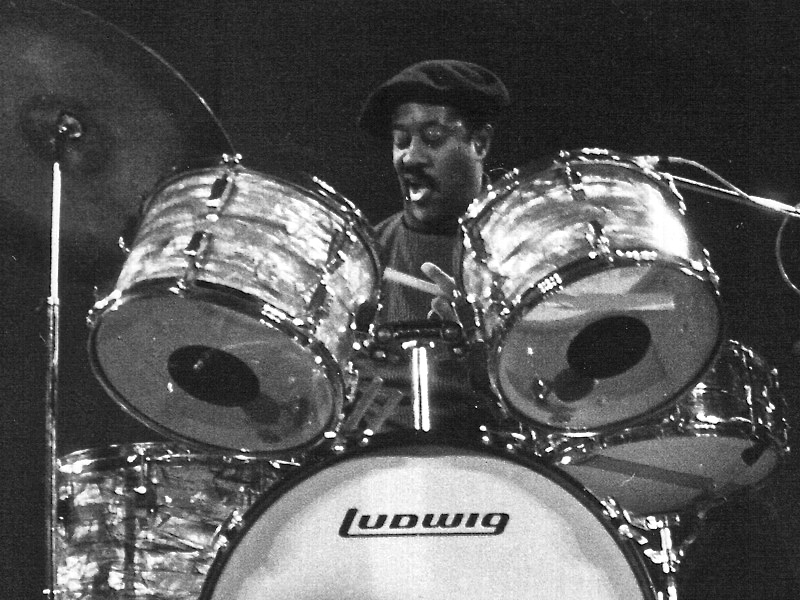
Mr. Below is shown in this blog post behind Ludwig and Sonor drumsets. He was playing the Sonor kit when we had this interview. In fact, the Sonor photo here is one of several MD used for this interview.
Fred Below
Scott K Fish: Do you have a preference between matched grip and traditional grip?
Fred Below: I use traditional myself because it works good. But, I’ve seen guys use drumsticks like mallets. To me, that gives off a different sound and a different beat. It’s harder. It’s not soft enough.
I like my way best, the traditional, because of the technique and the pressure. You’re no so much slamming/bang, slamming/bang.
The drum is a beautiful instrument if you play it correctly. You can get beautiful sounds. And your drums should be tuned so that you can hear different tones coming out of all the different sizes.
You can be playing in a band, and all of a sudden you hear that their tones are going up. You can’t reach it up if your drums are flat. You just have a plop sound that don’t have no tone. But if you’ve got tone, if the band goes up, you can go right up with it.
SKF: Was there any one person that taught you how to tune drums?
FB: That was back when I was going to DuSable [High School]. Way back in the early ‘40s.
SKF: How do you like to tune your drums?
FB: I tune my drums left to right, so that the two tom-toms have different tones. My floor tom has the lowest tone. My hardest, flat tone would be my bass drum.
My snare drum has an intermediate tone. That is, it’s between the two tom-toms on the top so that, when you flick the snares off, you’ve got three tones. The two tom-tom tones and the snare drum in the middle of both of them.
I never put anything inside the drums. I never understood why drummers want to stack all that stuff in there. It’s okay for recording purposes — putting padding in the drums. But not for when you’re playing! God! That just kills all the tone. You don’t know what you’re playing. I don’t put no foreign matter whatsoever in there.
SKF: Are you using a wood beater on your bass drum?
FB: No. Felt. Hard felt.
SKF: Obviously you were using calfskin heads when you first started playing and recording. Did you mind switching to plastic heads?
FB: No. I think I liked it better. It’s a different tone. The calfskin gave a little sharper tone. The plastic heads are better for different weather conditions. That’s the main thing. When it got damp and muggy and bad weather them calfskin heads would go up and down. They’d be flabby and all other kind of stuff.
With the plastic heads you don’t have that problem.
Then it was the way you had them tuned. The part that you beat on is the only part of the drum that you tune. The part that you do not beat on — you do not tune it. Like, on the bass drum, you loosen the part that you’re playing on and that’s all.
But when you’re playing on the top head, you keep the top head for tuning. Tighten the bottom head of all the drums. You just tune from the top. You never tune from the bottom. The bottom stays like it is. Once you tighten it up, then it stays. The top head is what you tune. You can loosen it or tighten it.
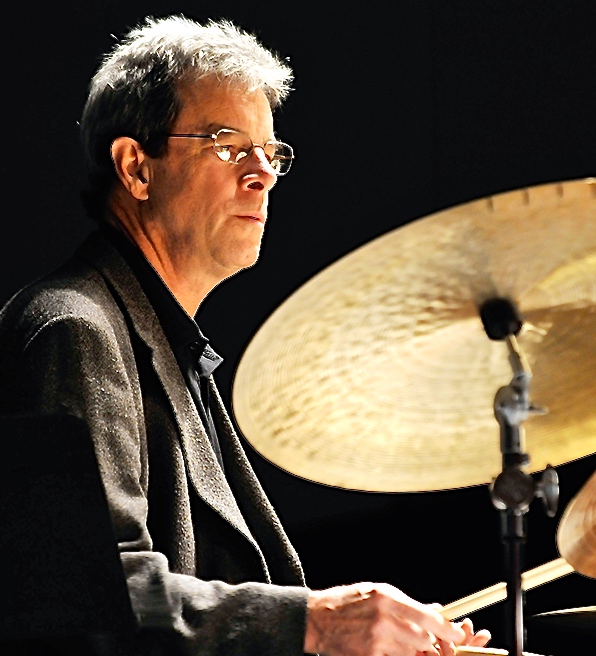
SKF NOTE: Ed Soph and I have reconnected by email — about which I am very happy. Ed is a great guy, marvelous drum teacher, a student of drum history, and a thinker. Plus, he was fun to interview the several times he and I chatted in the 1980’s over a tape recorder. The back story to all that is in this earlier Ed Soph Life Beyond the Cymbals post.
This exchange about essential and non-essential drum studies, and drummer pitfalls, took place at Ed’s home in North Haven, CT.
Ed Soph
Scott K Fish: You’ve had a lot of legitimate drum studies. Your five-year old son is starting to play drums. Now that you’re 40, is there any part of your studies that you would tell Steven is a waste of time? And are there any parts of your studies that you would tell him are absolutely essential to learn?
Ed Soph: No. The only thing I could tell him about would be his attitude, and about how to approach the instrument or whatever he’s doing. That none of it is drudgery. That any event with the instrument can be positive — and should be positive — even if it’s an event that, once you’ve gone through it you know you never want to do it again.
As soon as that instrument becomes something that you’re going to say right, wrong, good or bad with — then, to me, it’s lost its validity. Because that instrument is neutral.
As a musician, if you take a gig, your job is to play it well. There’s nothing worse than going on a gig where you’ve got a one-arm bass player. If you get angry and say, “Oh, shit,” — first of all, that’s the most egotistical thing in the world. If you look hard enough and approach it the right way, you can make music at some level, in some form, with that person. If you give and if you take. Mostly give.
It’s like Baby Dodds said. Your job is to make everyone in that band feel like playing. It’s a very idealistic way of looking at it, but you have got to. Because that’s your outlet.
SKF: Were you ever in a situation where you were the one-arm drummer?
ES: Oh, definitely. When I was 14 I was playing with great players like Jimmy Ford and Don Wilkerson. I’d be rushing, dragging, playing too loud or too soft. And instead of going, “What the fuck are you doing?” they would take me aside on the break and say, “Listen, do you know what you were doing on that last tune? I’d say, “No.” They’d say, “Boy, you’ve got to listen. Listen to your time. You were up and down.”
It wasn’t negative. They weren’t saying, “You can’t play.”
SKF: Has anybody ever jumped on you like that?
Ed Soph
ES: Woody Herman. We came into a gig in Kansas City in a country club. The bus got in about 20-minutes before we were supposed to hit. It was one of those smash-o insta-setups.
Woody was ready to give the down beat and I was going through my stick bag getting sticks out. You reach a point where you feel real good about yourself with the band. You know the book. You can look around and scope out the ladies while you’re playing. Mr. Cool. I’d reached a point like that.
Whenever your mind’s off the music, no matter how many times you’ve played the chart, the music suffers.
So, I said, “Hey, Woody. Just a minute. I’m getting some sticks.” He says, “Oh! While you’re down there, try to find some with time on them.”
Boy! The clouds parted. The lightning bolt hit. Back to earth, folks.
It’s so easy to let yourself get into that frame of thinking, “I’m in control. I’M THE DRUMMER!”
SKF NOTE: Web surfing last night I found this Jo Jones clip I’d never seen before. Great camera angle. This is not the best Jo Jones I’ve either seen or heard — but it’s very good, wonderful to study. Thank you, Louis Panassie for posting it.
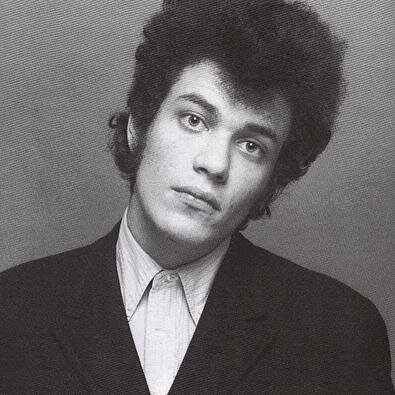
SKF NOTE: Mike Bloomfield brought me hours and hours of musical joy and education — especially when I was in high school — as a member of the Paul Butterfield Blues Band, The Electric Flag, and other musical situations.
Bloomfield’s advice to “young, promising guitarists” is a keeper. And his advice easily translates to all musicians — including drummers. This is part of an interview the 26-year old Bloomfield had with writer Don DeMichael called, Up With The Blues: Mike Bloomfield, in June 26, 1969 Down Beat.
==========
If he could gather together 100 young, promising guitarists, what would he tell them?
“I would tell them to try to play as simple as possible,” Bloomfield said, “to reassess their musical knowledge to see how much of their music is just mechanized licks, just something they can play with their eyes closed, just involuntary hand usage, and to assess their music on that point — and then clear all that garbage away. Think, if you’ve got a lick, where can you use it, and break it down into just notes, leading one note into another, see the logic of music, and learn the value of a note.
“These things…took me so many years to learn because I did it wrong for so many years. I just learned licks and put them together any old way I could. I finished my one licks, and then my brain would immediately come up with another lick that was there by rote in my mind. After a while, I would be able to alter the licks a little, and this is how I learned. But it’s not the right way to learn. You should be hearing the music in your head, what you want to play, a definite musical pattern. Then play it the way you’re hearing it.
“To a young guitar player, this will sound like just so much bull, because he’ll hear someone playing 500 notes and he only knows 50 notes. And he won’t even know that maybe his 50 notes are being better played and more intelligently played than this guy’s 500 notes, because 500 notes makes no sense at all.”
SKF NOTE: Another backgrounder interview for my History of Rock Drumming series for Modern Drummer. This, too, was a phone interview — the only backgrounder transcript so far with a date on it: March 21, 1982.
I describe the full back story to these interviews in introduction to my Life Beyond the Cymbals interview with guitarist Bob Berryhill of The Surfaris. Reading these transcripts today I wish I knew at the time of this interview what I know now about drumming history.
And, as with the other backgrounder interviews, Jerry Allison‘s comments are published for the first time here. I was tempted to rephrase some of my questions before publishing, but chose to leave them alone. I’m sure I was nervous at the start of this interview. Maybe that’s why some of my questions are phrased so poorly.
L-R: Jerry Allison, Buddy Holly, Joe B. Mauldin
Scott K Fish: You played very uniquely and musically with Buddy Holly. What influenced you in developing your style?
Jerry Allison: Well, I started playing drums in the school band in the fifth gradde. I started studying music and the rudiments an the regular drumming deal, going through, like, band and high school band and all that.
The kind of music I liked was like Little Richard and Fats Domino. So that about wraps it up, I guess. (laughs)
No. Really, I took drum lessons and learned to read music and all that sort of thing. Couldn’t get much rock ‘n roll around Lubbock, Texas. But when it started happening I really enjoyed it and tried to play like Little Richard’s drummer, Earl Palmer. I think I played a lot of that stuff. He’s a good friend of mine. We play together a lot in L.A. when I use to live out there. I use to do a lot of sessions with him out there.
SKF: I was noticing [on Little Richard and Fats Domino records] the bass drum work he [Earl Palmer] did on those records.
JA: Yeah. He did great.
SKF: Was country music or blues an influence on you as a kid?
JA: Oh yeah. Country was about all you could listen to on the radio around there for the longest. I was, I guess, already in high school — it must have been the early 50s — where you didn’t get anything besides country music around there. I wasn’t ever particularly crazy about it at the time, but I heard a lot of it. But there wasn’t much drums on it. I mean, I don’t remember ever stealing any licks from any country records.
SKF: How about blues? Did that effect you at all?
JA: Yeah, we got into that. There wasn’t much of that to listen to that we knew. We use to listen to a station in Shreveport had some blues like Etta James and the Peaches and that sort of thing. I mean, I wasn’t ever a big blues collector either. Some old rock ‘n roll, sort of in between country and blues, like Jimmy Reed and those sort of things when they came out.
SKF: Little Richard and Earl Palmer were only a few years ahead of you guys. Almost contemporaries.
JA: Yeah.
SKF: They were about three or four years ahead of you?
JA: Maybe not even that much. Maybe just a couple. When we first went on the road we were doing shows with Little Richard. And Earl Palmer wasn’t on the road with him at that time. There was a guy named Cornelius Coleman that played on the road with Fats Domino. We were on the road with them the first tour we dd. Fats Domino’s band. I liked the way he played real well.
SKF: What was the cut-off point with Buddy Holly’s recordings where you weren’t playing on the records, and it was New York studio musicians?
JA: There was really only one date like that. It was a big string date. I mean, I was there, but it was all, like, Dick Jacobs‘ Orchestra sort of thing. And he [Buddy Holly] did some things in his apartment that were overdubbed later that were just awful for my money.
But other than that he [Buddy Holly] just did one session. He did one Early in the Morning — and that was a rush cover job. Joe B. [Mauldin] and I had gone back to Texas and he was covering Bobby Darin or some deal.
But that’s the only two I didn’t play on that I know of.
SKF: Did they use a drummer on the [New York Buddy Holly] string dates?
JA: Oh yeah, there was a drummer. It was just really a written out part. I don’t remember who the guy was. The sax part was really good. I can’t remember who the sax player was.
SKF: Did you do the Nashville sessions with the real country sounding stuff?
JA: Well, I was in high school when Buddy got the first deal. But, I played on some of those. He did three Nashville sessions and I did one of them. I think it happened in the summertime where I wasn’t in school. We did That’ll Be The Day and Ting-A-Ling and a couple of more tunes.
SKF: Did Buddy have the tunes completed himself? Or were they a group effort?
JA: Well, Buddy and I wrote That’ll Be The Day. So it was definitely a group effort. We wrote a lot of songs together because he was just getting into rock ‘n roll himself. And we went to school together too. Just hung out, learning together. Getting a lot of ideas.
And I played with a few country bands in Texas. Just around joints. But, it would be second groceries. Like, while I was still in high school I was doing that for spending money. That’s all it was. We’d split the door or something.
SKF: The band [Buddy Holly and the Crickets] was great. And, like on Well, All Right, you’re just playing the cymbal. But that was perfect.
JA: Well, shit, thanks, Scott. I appreciate it.
SKF: Most drummers might try to play as much as they could.
JA: We always tried to keep everything relatively simple. That was part of the plan. I have run across a lot of drummers in the 25 or 30 years — however long it’s been — and they play every lick they know. And a lot of them, they play so much you can’t even pick it up on a recorder. It’s all blurred. I always liked to kind of keep it pretty simple. Besides that, you don’t have to practice as much.
SKF: You didn’t practice a whole lot after the rudimental stuff?
JA: No. After that I sort of figured, “Well, this is working. I’ll sort of stick with this.”
SKF: Did jazz drummers have an influence on you?
JA: Not really. There use to be a guy named Paul. I can’t remember his last name. He played with Hank Thompson. He was a real good jazz drummer and he and I would sit around and talk about that. [SKF NOTE: It was likely drummer Paul McGee.]
Well, Gene Krupa. I was flipped out with him. He was my era, sort of, when I was a kid. I went and saw him a couple of times in different clubs when we’d cross each other on the road. I was real impressed with all his drum solos and stuff he did. But it wasn’t ever my ambition to be like that.
I never did like drum solos to start in with. I was impressed if someone could play them and come back in on one.
SKF: When you were playing the drum part on Peggy Sue, did anybody ever say, “Hey man! You can’t put in drums like that on a rock ‘n roll song?”
JA: Basically, that was just paradiddles. Just a basic old rudiment.
SKF: But it was unique. Nobody else was doing that. Did anybody ever say, “Hey! What are you doing?”
JA: Nobody ever asked. We just went ahead and did it.
SKF: This has been interesting trying to uncover the drummers’ contributions to rock ‘n roll. Things like, Who was the drummer on Bo Diddley records?
JA: Yeah. I never knew that, actually.
SKF: Clifton James. Did you get your Bo Diddley beat stuff from Bo Diddley?
JA: Oh yeah. For sure. We use to play the shit out of Bo Diddley at dances and all that.
One thing I forgot to mention: I always listened to big band stuff. Like, in the school band — I did quite a few gigs like that — senior proms and that kind of shit — where it would be three saxes and two trumpets, and maybe a couple of trombones, and that sort of thing. Swing band stuff.
I guess the first stereo record I bought when stereo came out in something like ’56 — my first record I bought was a Stan Kenton record.
You were talking about jazz drummers? Ted Heath use to have an amazing drummer — just play more with his left hand than I could play with both mine! But it wasn’t something you’d want to dance to. I did quite a few gigs like those.
Like, Little Richard’s band was sort of a swing band except it learned over toward rock ‘n roll. You know, it had the horns and all that.
SKF: That must have been a kick playing on the same date with Little Richard.
JA: Oh yeah. It was great. He use to come through Lubbock. Holly and I use to go out every time he came around. He played a place called The Cotton Club there. I don’t remember what his drummer’s name was at the time, but it wasn’t Earl Palmer. The drummer that was with him was just great. He, like, leaned on his knees with his elbows while he played. Just sitting down real low and played those really off-the-wall licks. [SKF NOTE: The drummer with Little Richard was likely Charles Connor.]
Remember Larry Williams had Dizzy Miss Lizzie and Slow Down and that stuff? It sounded like the same drummer. Some of the stuff didn’t sound like Earl Palmer to me. And I don’t know which he played on and which he didn’t.
SKF: He [Earl Palmer] told me he played on all of Little Richards records.
JA: Well, the guy that played with him on the road sounded like he did some of it. Like, he wouldn’t come in on one when he played a lick…. Well, one of my favorite licks ever was on Lucille — I think it’s in the instrumental part — where he goes [insert drum lick]. Where it’s all syncopated stuff.
We use to work out some of that stuff, like for Maybe Baby and those tunes.
But, anyway, that guy — like I said, I can’t remember what his name was — a real thin guy. He just played his ass off, ‘though different stuff than you’d ever heard, and totally not concerned about it! That was probably ‘567. This was right when we were recording and all that stuff, that we’d go out and see him. We were tickled to death when we finally got on the road to do some shows with him.
SKF: I read somewhere that you and Buddy Holly use to play duets a lot?
JA: Yeah, that was always fun. I think that helped his playing and mine both, ’cause you’ve got to play a whole bunch of stuff. We did that occasionally because there wasn’t that many musicians around at the time. Now, you find a picker on every corner. But at that time in Lubbock, there…. If you didn’t plan way ahead, you wouldn’t have anybody playing with you that night. Because there just wasn’t that many musicians around.
SKF: What was the town population?
JA: I guess it was near 100,000 at the time. That’s a wild guess. I don’t even know what it is now. It was a big town, but it was also a dry town. Like, you had to drive a hundred miles to buy beer unless you bought bootleg. In fact, now you still have to drive out of town before you can buy a six-pack.
There’s not much club activity because everybody has to bring their own bottle, and they sell them Cokes for 50-cents.
So, there wasn’t a lot of clubs to play. There just wasn’t a lot of live music going on.
When I was doing those country clubs we’d do one on Tuesday night and one on Thursday night. You know, one of those places where maybe you had 15 people. But that’s better than sacking groceries because we split the door, and it was like two-and-a-half apiece to get in or something.
SKF: Big bucks, huh?
JA: Oh man! You figure 50-cents an hour for sacking groceries. I thought I was rich. Make five dollars for playing three hours? And enjoy it? It was great.







You must be logged in to post a comment.