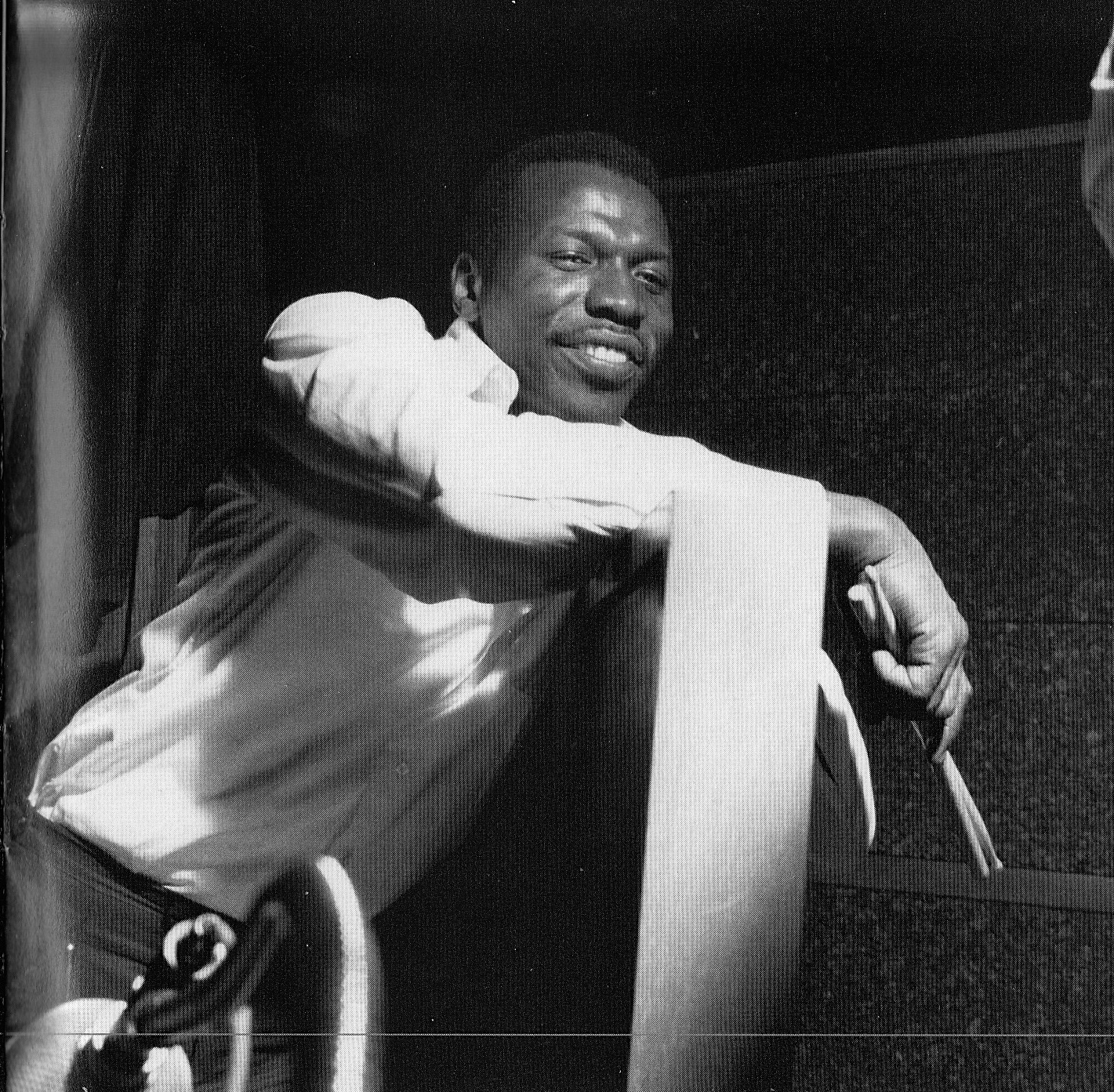
Keith Copeland MD Interview 1984

84_may_md_skf_keith_copeland_interview

SKF NOTE: I rediscovered my Keith Copeland interview transcript in July 2015. Keith and I spoke over dinner at a Centre Island, NY restaurant. I have forgotten the restaurant name. Neither do I remember how this interview came to pass. But re-reading the transcript for the first time in about 30 years, I am impressed! Keith and I had a good rapport, both asking very good questions and giving very good answers.

My Modern Drummer interview transcripts were often longer than their corresponding published interviews. Each Modern Drummer had only so many pages, plus it is the rare interview that isn’t more readable after editing.

When I began posting segments from Mr. Copeland’s tanscript I could not remember when, if at all, the interview was published. I left MD in October 1983. With my interviews published after that date I’m missing memories of the hands-on work of putting together the MD issue involved. Even as of this writing, neither a Google search nor a search of Modern Drummer‘s web site shows any online reference to Keith’s feature interview.

Here then is Keith Copeland’s May 1984 MD interview. It’s a keeper.

[SKF NOTE: 6/17/17 – Keith Copeland’s full interview is now available on MD‘s Archive Page.]

end

copeland_keith
Posted in SKF Blog | Tagged , , , , | 2 Comments

Taking Coltrane’s Jazz Listening Test in 7/8

elvin andrew hill judgement cdSKF NOTE: When I want to practice John Coltrane’s method of listening to jazz records; when I want to test my ear and my ability to keep time, I often turn to the song Siete Ocho from Andrew Hill’s Judgment! album on Blue Note. The tune is in 7/8 (thus the song title!). The band is Hill on piano, Richard Davis (bass), Bobby Hutcherson (vibes), and Elvin Jones (drums).

Focus on one band member ONLY — from the start of the song to the end — and see if you can do so without getting lost. That is, without dropping the time or losing your place in the song. I like to start with Richard Davis. It’s a fun exercise with any of the musicians.

SKF NOTE #2: I have always done this exercise listening ONLY. No playing along on an instrument.

Drop me a line and let me know how you make out with this.

end

Posted in SKF Blog | Tagged , , , , , , | Leave a comment

Freelance Writing: Today and Yesterday

SKF NOTE: One aspect of the pre-internet days I miss, and have not yet replaced, is paid freelance writing for music magazines and newspapers.

Freelance writing was a great way to sharpen researching/writing skills. A great way to record for posterity stories of musicians whose stories deserve preserving — all while earning a decent part-time income.

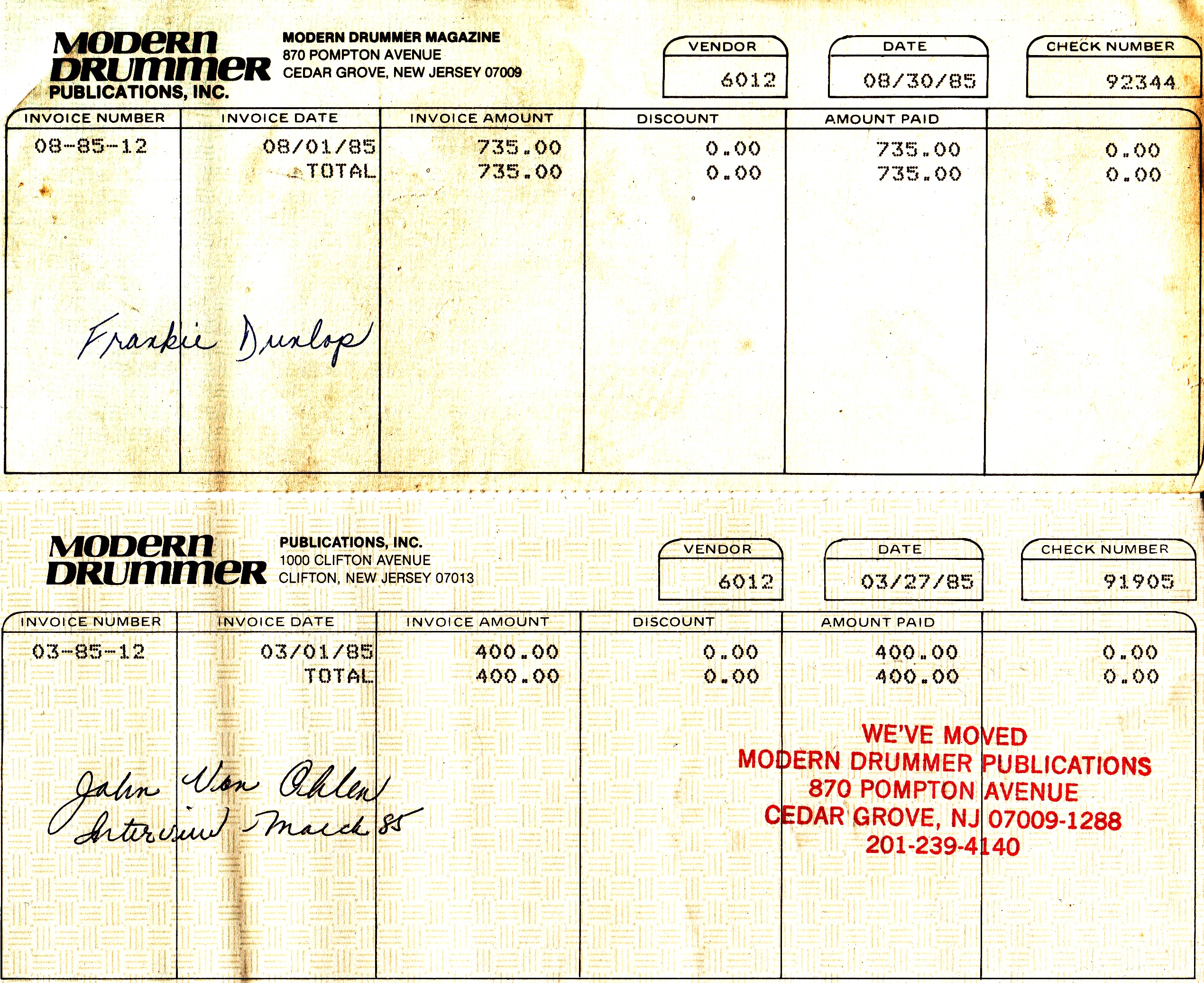
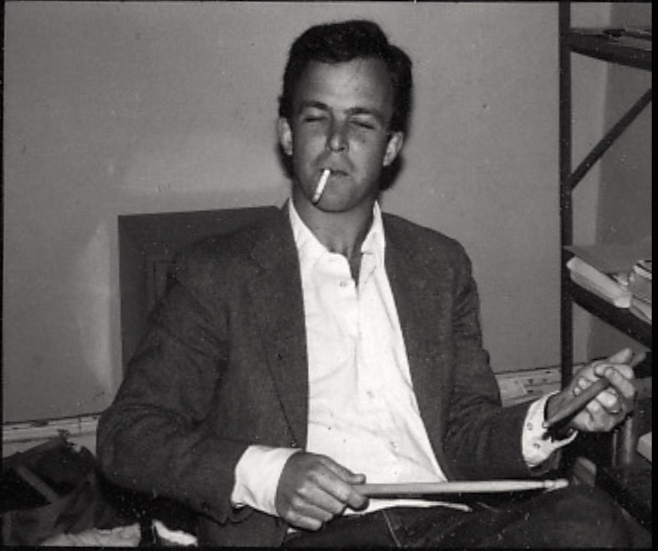
This morning I found in a box of music CD’s check stubs from some of my Modern Drummer interviews: Frankie Dunlop and John Von Ohlen.

Adjusting these amounts for 2015 inflation, the $735 and $400 I was paid in 1985 would today be $1632.07 and $888.20 respectively.

Money was never my prime motivator for writing, but, as always, it helped pay bills and it helped make more freelance writing possible. Not complaining. Just making an observation about opportunities today compared with opportunities yesterday.

md invoices dunlop von ohlen

end

Posted in Revisiting My Life in Music | Tagged , , , , , | Leave a comment

What To Do When ‘Jazz Groove #22’ Doesn’t Apply?

kennedy_seanSKF NOTE: Drummer 44Ronin, on DrumForum.org, takes issue with me where, on my Drumming Beyond Playing ‘Awesome Grooves’ post, I write: Groove is a buzz word.

44Ronin relied: Groove is not a buzz word. Groove is the sum of all parts of effective musicianship.

That point is worth discussing, so I replied to 44Ronin, asking, What are “all parts of effective musicianship”? I would like to see the list. How, and from where, does a drummer acquire these parts?

Here is the rest of what I wrote in reply to 44Ronin, who also said groove happens to be a by-word for beat :

Groove may not always be used as a buzz word. But when every third online drum video, it seems, is promising to teach drummers “Jazz Groove #22” and “How to Play a Tony Williams Groove,” well, groove is a buzz word.

Groove, you say, is another word for beat? Fair enough. Two popular drum books when I was young were Jim Chapin’s Advanced Techniques for the Modern Drummer, and George L. Stone’s Stick Control. Both books are meant to help drummers with coordination on the drumset (Chapin) and controlling drumsticks (Stone). But there were drummers who viewed Chapin’s book as a catalog of jazz drum beats (grooves?), and Stone’s book as a treasure trove of drum licks (grooves?).

Today I see video posts of alleged awesome drummers, killer drummers, grooving along note-for-note with tracks of pre-recorded songs AND drummers. I prefer to see/hear these drummers without the fallback of pre-recorded songs — especially pre-recorded drummers. Yikes! Okay, so the drummer has chops, a smidgen of dynamics, and he/she can memorize and recreate. But can they create? What do they do when Jazz Groove #22 doesn’t apply?

end

Posted in SKF Blog | Tagged , , , , | Leave a comment

If Ever Again I Have Drum Students

SKF NOTE: If ever again I have drum students I know what I will do. At least in part.

Each lesson will end with me handing the student personally selected music. It might be one of Little Walter‘s Chess records, Count Basie Live at Birdland, Taj Mahal’s The Natch’l Blues or Max Roach’s Drums Unlimited.

Sometimes the personally selected music will have no drummers. Andres Segovia. Bill Evans.

Sometimes the personally selected music will include Latin percussion, like Patato, Conga Kings, and Jerry Gonzalez.

And sometimes the personally selected music will include electronics like Bill Laswell and Jeff Oster.

What all the personally selected music will have in common?

1. It is worth listening to.

2. I will give it to the student with no comment other than, “Here. Listen to this before your next lesson. We can talk about it then.”

scottkfish_drumsticks3. At the next lesson if the student wants to talk about what he or she has heard – we’ll do that. If they don’t want to talk about it – that’s fine.

Of course, I will like it if every student loves every piece of personally selected music I give them. But when a student says, “That was awful”? That’s okay. If they hate it today — who is to say they won’t love it up the road?

The most important part of the lesson is: the student will have heard lots of music he or she probably will never hear anywhere else.

If ever again I have drum students.

end

Posted in SKF Blog | Tagged , , , | Leave a comment