SKF NOTE: I came across this newspaper report yesterday. It contains a nice tip of the hat from NRBQ leader Terry Adams to the great drummer Frankie Dunlop. As far as I know, the only Frankie Dunlop feature interview in existence is available on this blog. The seven part interview begins here.
NRBQ’s Adams remembers Monk, Ludlow Garage, Crosley Field Chris Varias Enquirer contributor September 14, 2016
Terry Adams, founding member of the half-century-old bar-band institution NRBQ, is an otherworldly piano pumper. He can rock like Jerry Lee Lewis, and he can funk like Monk.
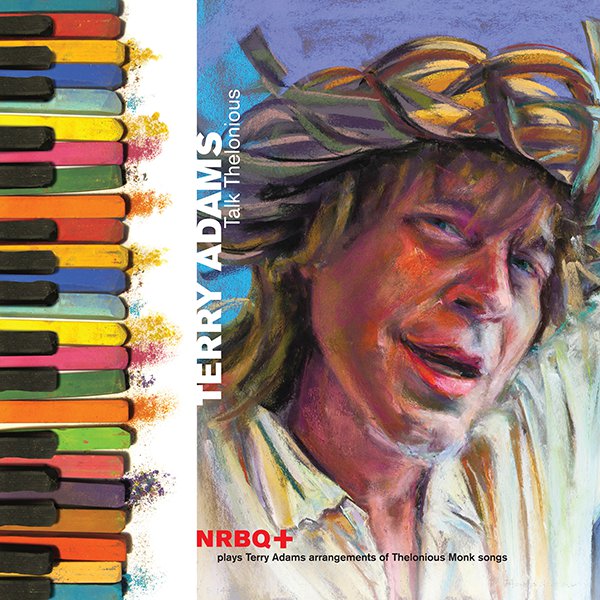
The Adams-Thelonious Monk comparisons have been made time and again. Adams doesn’t shy away from them. Last year he released “Talk Thelonious,” an album of compositions by the late jazz giant, and no live NRBQ show is complete without Adams banging out a Monk phrase or two.
It turns out that the first time Adams attended a Monk performance was here in Cincinnati. Adams, a Louisville native, can recall that show, as well as early NRBQ performances at the original Ludlow Garage.
Terry Adams: I used to come up to the Ohio Valley Jazz Festival….
Q: Do you remember who played that year?
Adams: Well, I do. Thelonious Monk was the reason I went. Roland Kirk was there. Milt Jackson, I remember. That was ’63.
Q: Do you remember Monk’s performance?
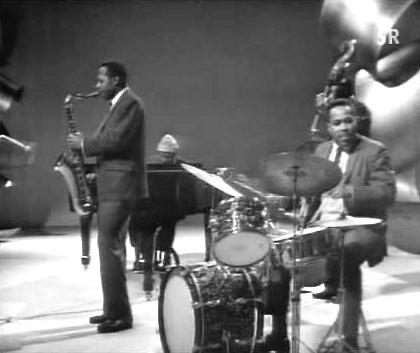
Adams: Yeah. It was one of the best musical performances I’ve ever seen. It certainly was. He had Frankie Dunlop on drums. He was my favorite drummer he ever had.
Rainbows and Butterflies (Excerpt from “Born Again” CD) In 2017 Maine Hospice Council and the Sounds of Comfort band made prison reform history. MHC Executive Director Kandyce Powell had devoted 15 years to training qualified Maine State Prison inmates as … Continue reading →
SKF NOTE: After sharing my Gordon Lightfoot Band post on Linkedin‘s THE JAZZ NETWORK WORLDWIDE & NOT JUST JAZZ NETWORK group, Sherrie Maricle gave it a “like.” Her Linkedin profile says Maricle is “Leader and Drummer for The DIVA Jazz Orchestra and FIVE PLAY. Member of 3Divas.”
Maricle’s brand new to me musical groups were intriguing. She was intriguing too. The music and background info I discovered on the DIVA web site surpassed my expectations. Although, time has taught me to listen to new musicians and music with, if possible, no expectations. Expect nothing. Take the music at face value.
Setting aside for a moment the experience and qualifications of all of the musician members of DIVA Jazz Orchestra, FIVE PLAY, and 3Divas, let me cut to the chase: Sherrie Maricle swings like crazy; a pleasure to hear whether she’s drumming for big band, quintet, or trio. Even her drums and cymbals sound musical.
I love the DIVA web site. Lots of music videos to watch, listen to, and learn from. And one, new to me excellent jazz player after another.
Are there DIVA CD’s available? I’ll say! The orchestra, quintet, and trio combined have 22 music CD’s listed on the “Meet the DIVAs” section of the web site.
Each DIVA member has her own bio available on the “Meet the DIVAS” section of the web site. After Maricle, pianist Tomoko Ohno caught my attention during a 3Divas trio performance. Ohno’s bio took me to her own web site, which listed her extensive musical credentials, and several CD’s under her own name and with other musicians.
I haven’t looked at all DIVA members bios, but apparently all DIVA members have extensive musical accomplishments. For example, trumpeter Jami Dauber‘s web site says of her, in part:
Jami has toured the world as a longtime member of The DIVA Jazz Orchestra and its breakout quintet, FIVE PLAY. Other tours include the Washington, DC and Atlanta productions of Maurice Hines is Tappin’ Thru Life and the Living Arts, Inc. international tour of Porgy and Bess.
She has performed with the jazz orchestras of Christian McBride, Wycliffe Gordon, Victor Goines, and Bria Skonberg, as well as with The Smithsonian Jazz Works Orchestra, The New Alchemy Jazz Orchestra, and the George Gee Swing Orchestra. She is also a member of the Duke Ellington Legacy Band, performing alongside Edward Ellington (Duke’s grandson).
And Sherrie Maricle? Her impressive bio says, in part:
From the drum set Sherrie leads The DIVA Jazz Orchestra, her quintet FIVE PLAY and co-leads the 3D Jazz Trio. She is also a busy freelance performer, a published composer/arranger and a dedicated educator, clinician, guest conductor and soloist.
With her bands Sherrie has performed at many of the world’s most acclaimed music venues and festivals, from Lincoln Center to the Kennedy Center and the Hollywood Bowl, to Jazz Festivals in Germany, Switzerland, France, Portugal, Ireland, England, Croatia, Japan, Vietnam, and Israel and beyond. Additionally, Sherrie and DIVA were featured at the 2017 NEA Jazz Master’s Awards Ceremony, the soundtrack for the NBC-Macy’s Fireworks Spectacular; on CBS Sunday Morning with Charles Osgood, on TCM’s televised broadcast of the 25th Anniversary of the Kennedy Center and NHK Japan’s New York Jazz. The band also co-stars in the award-winning documentary filmThe Girls in the Band.
What a treasure trove of music and musicians. Navigating my way through it all will be a blast.
Gordon Lightfoot and his band in concert. (Photo courtesy Gordon Lightfoot Facebook page.)
SKF NOTE: The passing on May 1 of Gordon Lightfoot is the passing of one of the world’s greatest singer songwriters. Lightfoot’s passing also ends one of the world’s greatest singer songwriter bands.
I was going to say I doubt many Lightfoot fans realize how central the songwriter’s band is to his songs. But I don’t think that’s true. I’m no authority, but from observing many fans at several Lightfoot concerts, I’d say the majority of Lightfoot fans fully appreciate the Lightfoot band, individually and collectively.
The Lightfoot band I first heard in concert in Saratoga Springs, NY was Rick Haynes (bass), Terry Clements (guitar), Pee Wee Charles (pedal steel guitar), and Barry Keane (drums). That was in 1980 with the release of Lightfoot’s excellent Dream Street Rose album.
When Charles left the band to tackle other pursuits, keyboardist Mike Heffernan took his place. And when Clements died, Carter Lancaster became the Lightfoot band guitarist.
Each new player, naturally, added his own personality to Lightfoot’s music. But whenever you heard the band accompanying Lightfoot in concert, it was always the Lightfoot sound, always a band of attentive professionals creating Lightfoot music, Lightfoot songs.
In 2016, Lightfoot told a reporter for the Pocono Record newspaper in Pennsylvania, “This really is a folk rock band. Everything I do has a momentum of its own. Some if it really is really good, solid folk rock. Everything I do has a beat to it. I like everything to swing.”
It speaks well of Gordon Lightfoot that, for so many decades, he had such loyalty from a band that set the bar very high for other singer songwriter bands.
For readers interested in knowing more about Gordon Lightfoot’s band, here are two interviews with drummer Barry Keane spanning 41-years.
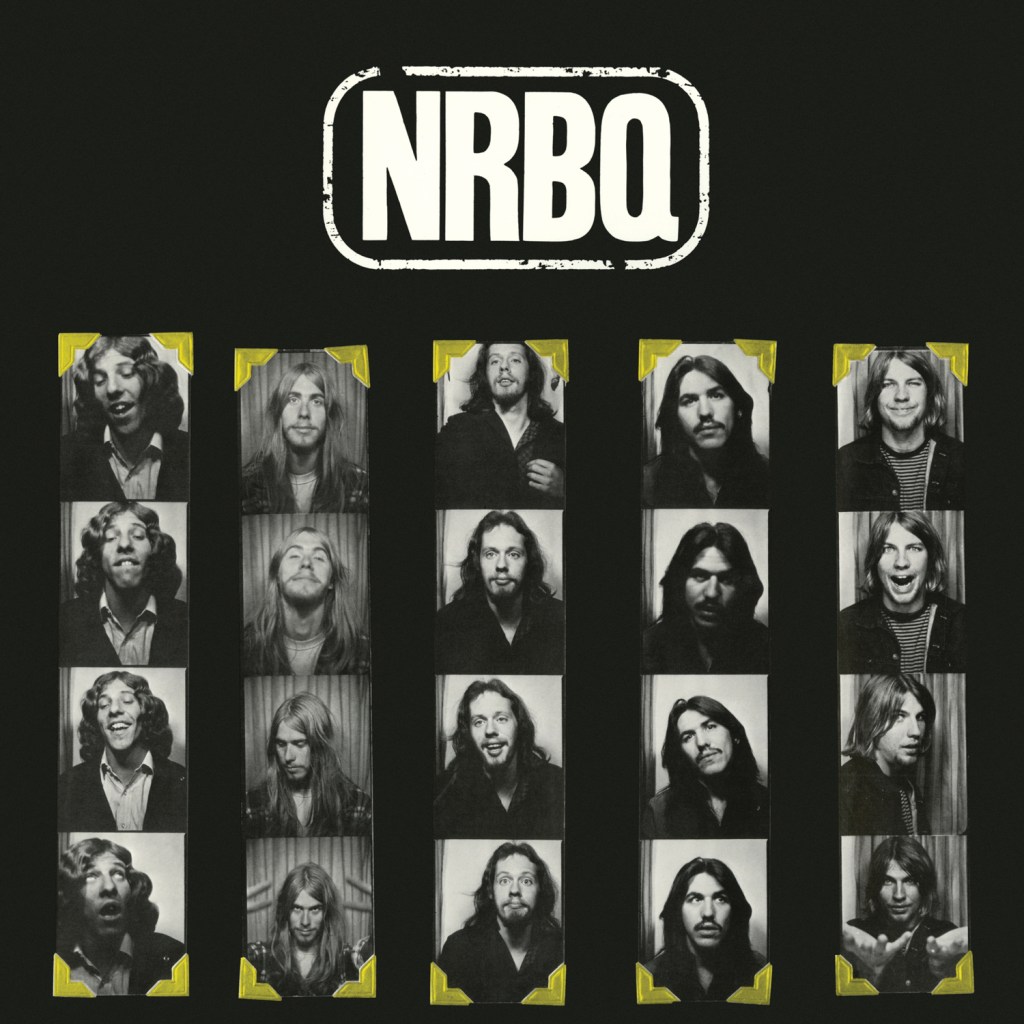
Two days ago I bought the digital format of NRBQ’s first album. I owned a vinyl copy of the album when it was originally released in 1969. (Full disclosure, I was given a brand new promotional copy of NRBQ by my neighbor, Ed Matthews, who was, if memory serves, head of Artists & Repertoire at CBS records.)
What happened to my copy of NRBQ’s album, I don’t know. But for the last 52 years, in those life moments when I sing out loud some song snippet, my snippets were often from NRBQ’s first album recording of Rocket #9 or C’mon If You’re Comin’.
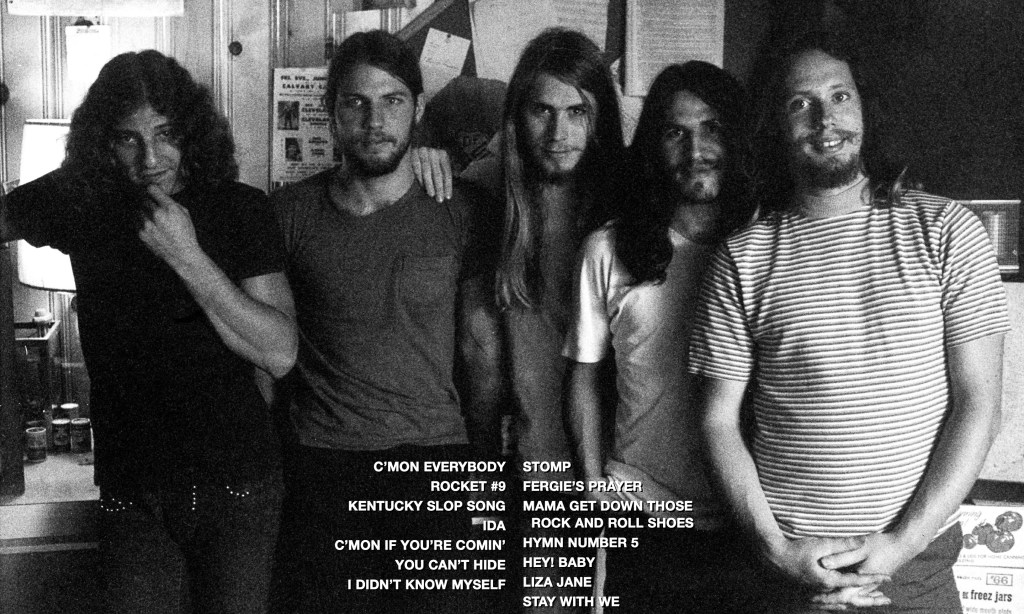
Truth to be told, until I sat down to write this post, I didn’t know Tom Staley was the drummer on NRBQ’s first album. I couldn’t tell you the drummer. My affection for NRBQ’s first album was for NRBQ as a many-sided band. Yes, it was/is a band of imaginative players sounding as if they were pulled from jazz, traditional country, rockabilly, and country blues bands.
If I was influenced by any specific about Staley’s drumming – which, if 52 years later I’m still singing the album songs, and downloading a new digital version of the album, Staley certainly influenced me – it was his contribution to NRBQ’s overall sound. It was Staley’s knack for bringing the best out of salad of songs ranging from rockabilly Eddie Cochran to avant garde jazz musician Sun Ra.
Today, for people who like to label music, NRBQ’s music might be called Roots or Americana music.
Staley played on NRBQ’s first four albums: NRBQ, Boppin’ the Blues (with Carl Perkins), Scraps, and Workshop. I’ve listened to them all while prepping for this post.
Soon after Tom Staley joined NRBQ he was first exposed to the music of Thelonius Monk and Sun Ra. Jazz drumming was already on Tom’s radar…. Tom had begun taking lessons when he was ten, while also playing in the Fort Lauderdale Drum and Bugle Corps, and his junior high, and high school bands. Tom’ s main drumming influence was the legendary jazz drummer Joe Morello. He attended numerous Dave Brubeck Quartet performances, and also Morello’s drum clinics. This provided Tom with the strong foundation needed for NRBQ’s eclectic – jazz improvisational approach to playing music.
After leaving NRBQ, according to several internet accounts, Staley played drums in other bands, mostly in southern states. He also has a handful of albums under his own name. Twitchin’ in the Kitchen, Thenceforward, and We’re Gonna Be OK.
Tom Staley’s internet drum activities end at year 2020 and Staley’s wife, Karen, launching a GoFundMe page to help pay for treatment for what Karen describes as Tom’s “degenerative disc disease.” She said, “A little over a year ago, Tom started experiencing pain in his lower back so severe that he had to cancel all his gigs. Over fifty years of playing drums, gigging, late hours and lugging his gear have taken a heavy toll.”
I’ve written to Mrs. Staley, hoping to hear back good news about Tom. Wouldn’t it be great to thank him personally for making music that’s embedded in my head and heart for over a half-century?
Tom Staley second from left. Photo included with Omnivore Records’ release of NRBQ’s first album.




You must be logged in to post a comment.