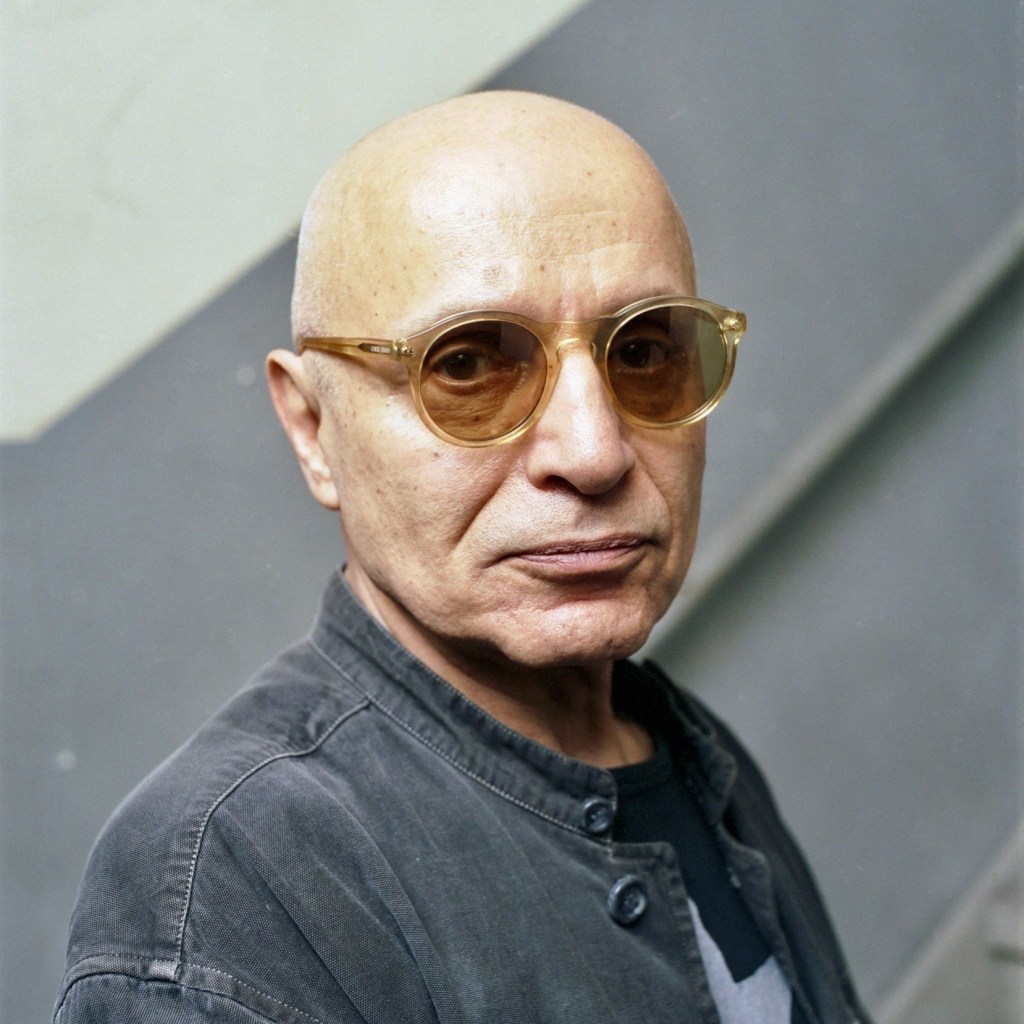
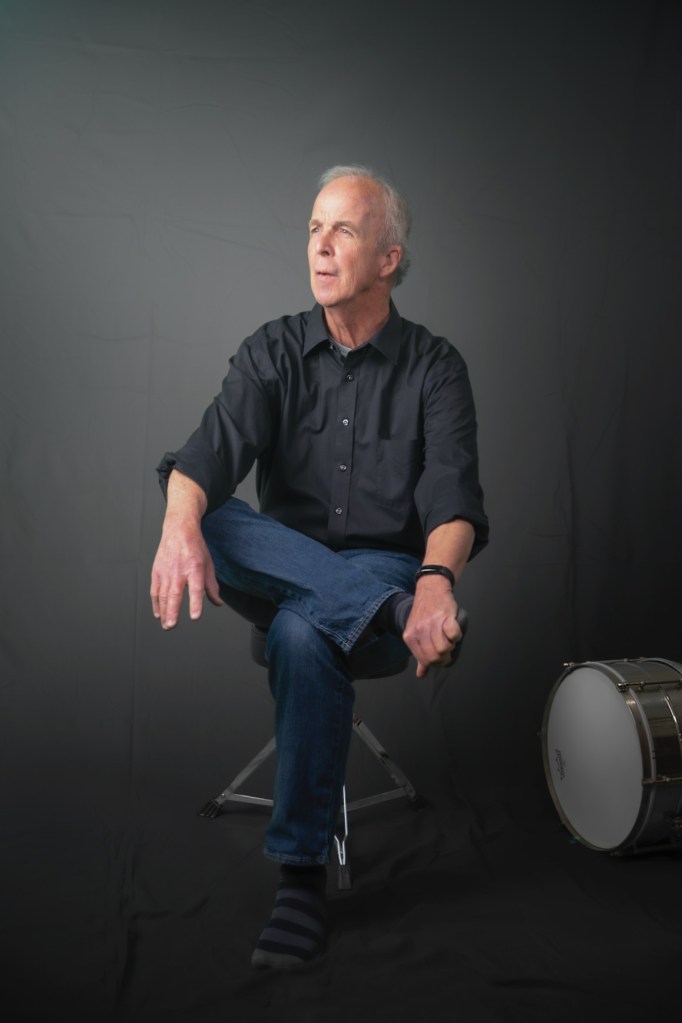
Alan Dawson – MD 10th Anniversary Interview Pt 1

SKF NOTE: In 1985, freelance writing again for Modern Drummer magazine, I was asked to contribute two drummer interviews to MD‘s upcoming January 1986 10th Anniversary issue: Neil Peart and Alan Dawson.

Unlike MD‘s other feature interviews, 10th Anniversary interviewees were asked to answer two basic questions: In the last ten years, what were the drum world’s key moments? And, gazing into the crystal ball, what are the probable key moments in the ten years ahead?

This is part one of my conversation with Alan Dawson at his Massachusetts’ home. Listening to it almost 40-years up the road, I’m reminded of how music styles like “fusion,” and electronic equipment like the LinnDrum machine, had, and were, blurring the lines among music styles.

At the start of this interview, when I ask Dawson who he thinks are the greatest jazz drummers to have emerged in the last ten years, the two of us first have to answer Dawson’s question: What’s a jazz drummer?

Looking ahead ten years, this great drummer/teacher had learned to take drum innovations and fads in stride. We talk about Dawson’s own drum sets over the years, where his choices are based on need versus practicality. In 1985, Dawson played a five-piece kit. Maybe he would play more drums, he said, if he had a roadie.

Starting with a mutt set of drums acquired at different times from pawn shops, Dawson graduated to Gretsch drums, then Fibes drums, and then to Ludwig drums. Partially influenced by the times (All the BeBop drummers like Max Roach and Art Blakey were playing Gretsch.), Dawson’s drum choices were based primarily on sound and functionality.

Regrettably, part two of this conversation seems to have survived on paper only, not on tape.
Posted in Audio, Backgrounder Interviews, SKF Blog | Tagged , , , , | Comments Off on Alan Dawson – MD 10th Anniversary Interview Pt 1

My Jazz Yin and Yang

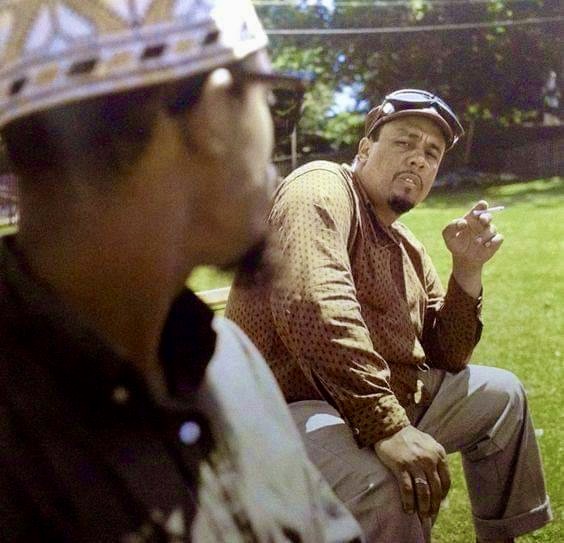
This morning the Friends of Charles Mingus” Facebook group showed this photo taken at the 1960 Newport Jazz Festival of a relaxing Charles Mingus and Eric Dolphy. Those two musicians represent for me the yin and yang of jazz.

After trying for awhile to get a handle on jazz, Mingus’s band at the 1970 Newport Jazz Festival was the first band to play jazz that went straight through my ears to my heart.

Ever since I have been a Mingus fan. Do I own all of Mingus’s albums? No. But I sure do own a lot of them.

I also own plenty of multi-instrumentalist Eric Dolphy’s albums. His complete “At The Five Spot” albums are among my favorites. What a band! Dolphy with Ed Blackwell (drums), Richard Davis (bass), Booker Little (trumpet), and Mal Waldron (piano).

But Dolphy’s music, with exceptions, hits my head and not my heart. If that’s a problem it’s my problem, not Dolphy’s. So I keep listening. Not just to Dolphy on his own albums, but to Dolphy on other musicians’ albums. Mingus and John Coltrane, for example.

My yin/yang with Dolphy and Mingus is an apt description of my music listening in general. Sometimes an artist or a song grabs my attention in an instant. Other times taking hold takes time.

And still other times, like yesterday afternoon while eating frozen custard at a Culver’s in St. Petersburg, FL, I’ll hear music and think, “Who listens to this music? This is awful,” knowing full well today’s awful music can become tomorrow’s interesting discovery.

That’s how my music learning goes.

Posted in SKF Blog | Tagged , , , | Comments Off on My Jazz Yin and Yang

Paul Motian – Songwriter Drummer

Paul Motian (Photo courtesy ECM Records)

SKF NOTE: Rolling Stones drummer Charlie Watts described his first hearing of jazz pianist Bill Evans’s early 1960s trio as a group where no one, including drummer Paul Motian, served as timekeeper. Instead, observed Watts, he heard and felt the trio-as-one playing loosely in time.

In the mid-1980’s, Motian’s no-time/time playing first attracted me to his drumming. Before I first heard Motian with the Evans Trio, I listened to his albums Dance (1977), and later, his debut ECM album, Conception Vessel (1972).

I was already exploring ways of drumming outside the restrictive ding-dinga-ding ride cymbal, and hi-hat on beats two and four. Examples I’d heard of “free” drumming were interesting, but not exactly what I had in mind.

Motian’s drumming on Conception Vessel and Dance, a mix of color and swing, attracted my attention. Although, on the first several hearings I didn’t fully understand Motian’s musical concept, I always liked the overall sound and feeling of his music.

But, what truly cemented by admiration for Motian’s musicianship was his beautifully written song, Byablue, on Keith Jarrett’s album of the same name. Motian plays drums on the album, the last album by Jarrett’s “American Quartet.”

Of the two versions of Byablue on the album, my favorite is the shorter “Alternate Version,” memorable for its focus on Jarrett’s acoustic piano playing.

When I interviewed Paul Motian for Modern Drummer, I was equally curious about his songwriting and drumming. He had a beautiful five-piece black drumset in his apartment. MD used a couple of my photos with Motian’s interview in the April-May 1980 issue. I think the set was Slingerland, with a spare wooden snare drum (snares off) serving as a second mounted tom-tom. Typical of Motian’s sound, his drums had, at best, minimal padding. I remember them as wide open.

What I recall most of the songwriting portion of the interview is that Motian sat at the acoustic piano in his apartment, asked me to turn off my tape recorder, and then played me a sketch of a new song.

Motian finished playing his song and said he intended to bring it to a Jarrett recording session. “Keith will play the shit out of it,” he smiled.

March 25 was Paul Motian’s birthday. Hard to believe he’s been gone 12 years. A great player, I discover new aspects of Motian’s music to love time and again.

Posted in SKF Blog | Tagged , , , , , , | Comments Off on Paul Motian – Songwriter Drummer

How Does He Do That?

SKF NOTE: I’ve been asked later this morning to take part in my friend Jason Carey‘s mini-documentary. My role is to talk on camera about how this blog, Life Beyond the Cymbals, came about. That is, I’m to talk about how my love of drumming, starting at age six, became a lifelong passion, a subject to study and write about.

Who knows why drumming became a passion? I remember the bug bit me in the drafting room at my grandfather’s Charles R. Fish Nurseries, listening to my Uncle Bob’s record of the Gene Krupa Quartet playing “China Boy.” Krupa’s press rolls were impressive and mysterious.,

The road to Life Beyond the Cymbals began with my search for an answer to the question, “How does he do that?”

Posted in Revisiting My Life in Music | Tagged , , , , | Comments Off on How Does He Do That?

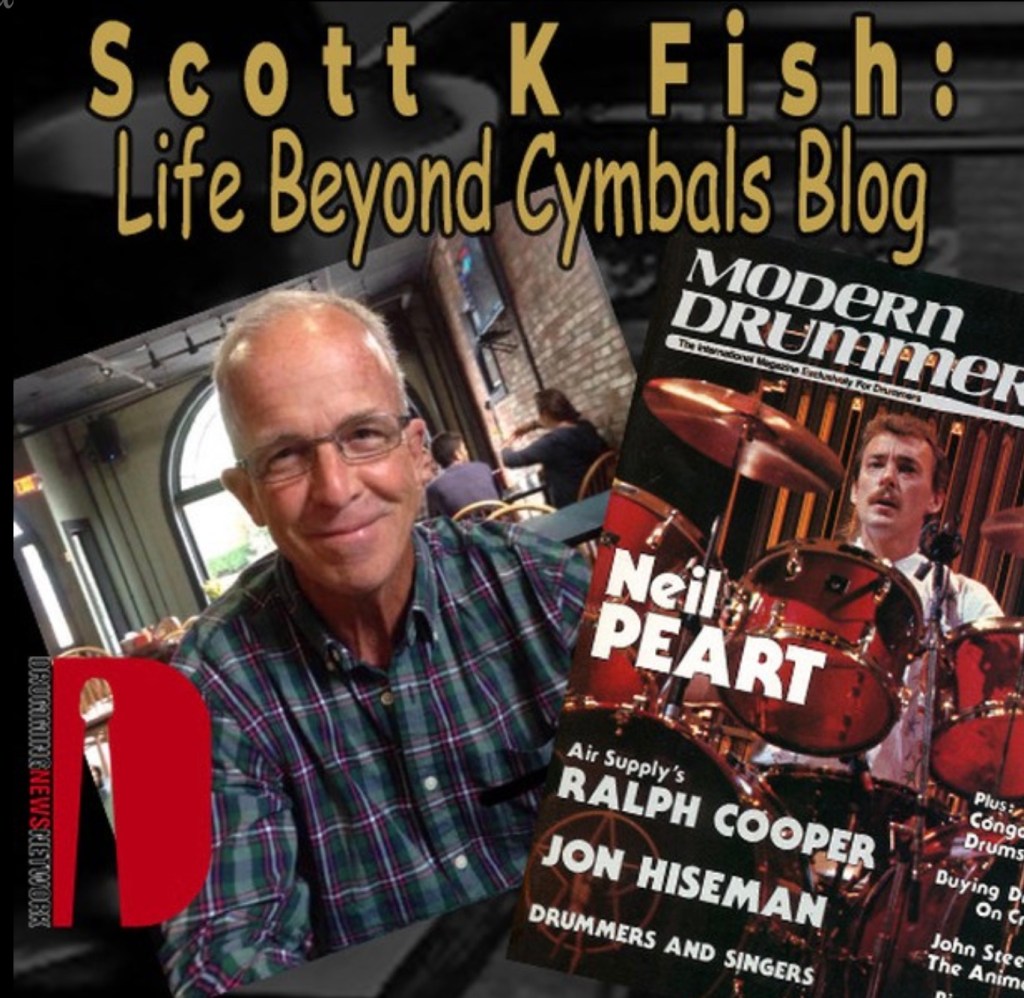
DrummingNewsNetwork Features SKFBlog

SKF NOTE: DrummingNewsNetwork.com is an impressive web site where it’s hard to imagine a part of the drum world not covered.

A few months ago, DrummingNewsNetwork.com owner, Paul Rogne, and I, had our first phone conversation.

Two weeks ago Mr. Rogne asked if, every Thursday, DNN could feature one of my blog posts. It might be my most recent blog post or it might be a post from the Life Beyond the Cymbals archive.

I happily to say yes to the offer. And I look forward to working with Paul Rogne and DrummingNewsNetwork.com.

Posted in Drum/Music News | Tagged , , , | Comments Off on DrummingNewsNetwork Features SKFBlog