Bonnie Raitt: ‘By 1987, I’d Had Enough’

SKF NOTE: Bonnie Raitt is one of my longtime favorite musicians. Very much looking forward to hearing her new album, Dig In Deep. Helping to kick off that album, the Wall Street Journal published the backstory to Bonnie Raitt’s hit song, Nick of Time. Keep ’em coming, WSJ. These music stories are terrific.

ARTS ANATOMY OF A SONG
Bonnie Raitt’s Turning Point: ‘Nick of Time’
‘Nick of Time’ was written out of an appreciation for newfound optimism

In 1988, a year after becoming sober, Ms. Raitt wrote “Nick of Time,” a soulful midtempo ballad about aging and rebounding that became a personal turning point.

Bonnie Raitt: By the end of the ’80s, I was closing in on 40 and decided it was time to re-evaluate my health and lifestyle. I saw what my peers and I had been getting away with—indulging in eating and partying without exercising. None of it was wearing well.

My downslide started around 1983, when Warner Bros. records dropped me just as I finished a new album.

… in ’86, I was mad and hurt, and I internalized everything, relying more and more on alcohol and drugs to numb the pain.

By early 1987, I’d had enough. With the help of some sober friends, I was able to stop drinking, lose weight and get in shape. Almost immediately I felt I’d had a spiritual awakening and physical rebirth. I felt optimistic for the first time in years.

I wanted to kick back and reflect on all the changes of the past year and maybe write some music honoring how grateful I felt to have made it through.

In Mendicino…I began thinking about the most poignant aspects of my life. That’s when the first verse of “Nick of Time” came to me.

…I had brought along my Yamaha portable electric keyboard. I also had my guitars and a little four-track Fostex cassette recorder. For a beat, I used a Roland TR-606 Drumatix, a compact drum machine from the early ’80s. Unfortunately, the “Philadelphia Soul” beat I liked on there had Syndrums built in.

After I signed with Capitol in 1989, I wanted Don Was to produce my first album for the label. I told Don about this song I had written, and he asked to hear the demo. When I put it on, the groove was there but so were those hilarious Syndrums. [H]e loved the song and understood immediately that cool soul inspiration.

We recorded “Nick of Time” at Ocean Way Recording in Hollywood. The song’s arrangement was the same one I had used on my demo, except we used Ricky Fataar on drums, James “Hutch” Hutchinson on bass, Mike Landau on guitar and I played the keyboard. Ricky is an astonishing drummer. He got a kick out of the demo with the disco effects, but he knew exactly how to translate the basic elements I had written.

[W]e wanted to add that heartbeat pulse you hear on Marvin Gaye’s “I Heard It Through the Grapevine,” but we didn’t have a hand drum. So Ricky picked up a burlap sandbag used to hold down mic stands and put it on his lap. They miked the bag and he played the heartbeat of the song with his hands.

Full Story

— end —

Posted in Drum/Music News, SKF Blog | Tagged , , , , , , | Comments Off on Bonnie Raitt: ‘By 1987, I’d Had Enough’

Thad Jones/Mel Lewis Orchestra – All My Yesterdays Mini Documentary

SKF NOTE: More backgrounder on Resonance Records first official release of this historic Thad Jones/Mel Lewis date.

— end —

Posted in Drum/Music News | Tagged , , , | Comments Off on Thad Jones/Mel Lewis Orchestra – All My Yesterdays Mini Documentary

Byron Nicholai: Where I Come From is Very Important

SKF NOTE: This young man has his head screwed on straight. What a great story. Living in the outer reaches of Alaska, Byron Nicholai falls in love with his native drumming and song. Then, using modern telecommunications and social media, Byron teaches his traditional music to young people by mixing it with contemporary music.

I look forward to listening to his just released CD, I Sing, You Dance.

— end —

Posted in Drum/Music News | Tagged , , , , | Comments Off on Byron Nicholai: Where I Come From is Very Important

The Day the King of Music Photographers Screamed at Me

The Beatles © Jim Marshall Photography LLC

Ringo Starr © Jim Marshall Photography LLC

SKF NOTE: I posted my What Makes a Music Photographer Good? on DrumForum.org, and member bbunk replied, “Whoa – Jim Marshall!!! You got to work with the king of music photographers!” To which I replied, “Someday I’ll write about, The Day the King of Music Photographers Screamed at Me.” Here goes.

In 1981 I had a very hard time finding a photographer who had for sale pictures of Ringo Starr playing drums. Action shots. Modern Drummer had secured a feature interview with Ringo Starr — which was a major coup for the magazine. (Once again, I think Jim Keltner was responsible for making that happen.)

It was up to MD‘s managing editor – me! – to make sure we had photos. I was able to have a photographer on location when freelance writer Robyn Flans interviewed Ringo. We used one of those photos for the cover, and a couple inside with Ringo’s interview. But I also very much wanted to have action shots of Ringo. Preferably great action shots no one had ever seen before.

Enter legendary photographer Jim Marshall. I vaguely remember, when I decided to call Jim Marshall, feeling as if I was approaching the Great and Powerful Oz. I felt that way many times on initial calls to photographers, musicians, and industry people when their work and reputations preceded them. I am pretty sure I had also heard that Jim Marshall had a volatile personality. Great photographer. Just don’t get on his bad side.

starr_ringoAt the time, Modern Drummer paid something like $50.00 for one-time use of a photo, paid on publication. Would I be insulting Jim Marshall with that offer?
Jim Marshall did have photos of Ringo from The Beatles‘ final concert in 1966 at Candlestick Park in San Francisco, CA. They were not Marshall’s best work. But they were unique and they were action shots of Ringo. We used them with MD‘s Ringo interview.

Jim might have insisted on a somewhat greater amount per photo than MD‘s standard offer. He also insisted on getting paid right away, not on publication. He said he would express mail his photos, and as soon as I had them in hand, MD should send Jim a check for the full amount. The total amount that keeps coming to mind is $150. That amount may not be exactly right, but it’s close.

I approached MD founder/publisher Ron Spagnardi with Jim Marshall’s terms. He said okay. So I phoned Jim Marshall and said, “It’s a deal.” He sent his photos as promised. I let Ron know and reminded him of our promise to cut-and-send Jim Marshall a check immediately.

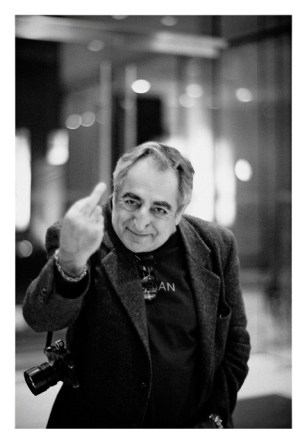
marshall_jim

Jim Marshall

A day or so later, Jim Marshall called me. “Did you get my photos?” he asked. “Yes,” I said. “They’re great. Thank you.”

“I haven’t received the check. Did you send the check?”

“I think so,” I said. Truth is, I assumed the check would be sent.

“Well, I don’t have it,” Jim said. “How did you send it?”

“I don’t know,” I said. “Let me find out and I’ll call you right back.”

Long story short, the check had not been sent. I think Ron passed along the invoice to MD‘s check writer, who dismissed it.

I was not happy. I had given Jim Marshall my word, Ron had given me his word. And Jim Marshall was the only one who was true to his word. MD‘s check writer assured me the check would be written and sent out that day. And it was.

But I had to call back Jim Marshall and tell him what happened. He screamed and yelled at me about our broken deal, our broken promise. He was right. All I could do was listen and say, “I’m sorry.” It remains among my very few awful memories at Modern Drummer.

Chalk up another lesson. From that point on, whenever anyone promised me they would do something, I practiced President Reagan’s approach to the Soviet Union: Trust, but verify.

— end —

Photo Credits: Jim Marshall, Ringo MD Cover, Ringo at Candlestick Park

Posted in Revisiting My Life in Music, SKF Blog | Tagged , , , , , , | Comments Off on The Day the King of Music Photographers Screamed at Me

Phil Seaman Obituary 1972

SKF NOTE: Drummer Phil Seaman‘s obituary as it appears in the December 21, 1972 Down Beat magazine.

722112_down_beat_phil_seaman_obit

— end —

Posted in Drum/Music News | Tagged , , , , | Leave a comment