Elvin & Miles: 18 Year Photo Mystery Solved!

milesd carnegie hall

SKF NOTE: May 19, 1961, Miles Davis and the Gil Evans Orchestra performed their legendary concert at Carnegie Hall. In 1998 Columbia/Legacy released a 2-CD package of the entire concert with extra songs not included with any earlier releases of the concert.

milesd carnegie hall roster

The 1998 CD booklet includes a photo of the Miles Davis Quintet with the Gil Evans Orchestra onstage at Carnegie Hall. The liner notes list all the musicians onstage that night. Except there is a mystery. Elvin Jones is not among the musicians listed in the ’98 CD booklet. Yet, the CD booklet photo by Vernon Smith shows Elvin in the upper left of the photo sitting in the percussion section, a pair of maraccas in hand.

elvin_jones_carnegie_hall

Last night I came across the Miles Carnegie Hall CD again while going through a box of CD’s hauled up from my basement. Renewing my quest to solve this mystery, to give Elvin credit where credit’s due, I found my answer. This time, 18 years since buying the CD, 55 years — almost to the day — since Miles’s Carnegie Hall Concert — I found the official Miles Davis web site credits Elvin Jones as a percussionist.

Has Columbia corrected their Miles Davis at Carnegie Hall CD booklets? Or will the photo mystery continue a while for future CD buyers?

end

Posted in SKF Blog | Tagged , , , , , , , | Leave a comment

Arvo Part: Now You Have to Prepare Yourself

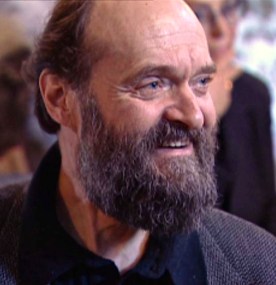
part_arvoIn his liner notes to this recording [Tabula Rasa], Wolfgang Sander quotes Arvo Part relating a conversation he had with a Russian Orthodox monk.

Part asked the monk what an artist can do to become better — write more prayers, for instance?.

The monk told him that he could do nothing:

“All the prayers have already been written. You don’t need to write any more. Everything has been prepared. Now you have to prepare yourself.”

Arvo Part Photo Credit

end

Posted in SKF Blog | Tagged , , , , , | Comments Off on Arvo Part: Now You Have to Prepare Yourself

Tribute to Drummer Phillip Wilson

wilson_phillip

SKF NOTE: Blues drumming developed into a fine art in the late ’40s, into the ’50s with the electric blues musicians playing and recording in Chicago, i.e. Muddy Waters, Little Walter, Sonny Boy Williamson, Chuck Berry, and Howlin’ Wolf. The drummers included Fred Below, Clifton James, and Odie Payne.

Blues took a different turn, starting in the ’60s, when played by British blues and pop bands. And sometimes British blues bands became pop bands: John Mayall & the Bluesbreakers, Fleetwood Mac, The Rolling Stones, and The Animals, for example.

east_west

As the 12- and 16-bar blues format became a pop music staple, the drumming lost the subtleties of the Chicago blues innovators. In pop music, blues drumming quite often is played balls-to-the-wall with a simple 12/8 beat on the ride cymbal, and a heavy snare backbeat on beats 2 and 4.

Some drummers in pop bands kept alive the dynamics of the best blues drumming: Levon Helm with The Band, John Bonham with Led Zeppelin, and Phillip Wilson with The Paul Butterfield Blues Band.

In my experience, the Butterfield Blues Band’s 1966 East-West album helped many baby-boomer listeners transition to jazz from rock. East-West has all jazz’s key elements: the blues song forms, jamming, and three unique soloists willing and able to stretch out: Paul Butterfield on harmonica, and both Mike Bloomfield and Elvin Bishop on guitars.

Billy Davenport plays drums on East-West very much in the Chicago blues drumming tradition.

pigboy_crabshaw

In December 1967 the BBB released The Resurrection of Pigboy Crabshaw with an added horn section and drummer Phillip Wilson. In my view, Phillip Wilson’s playing on Pigboy Crabshaw and the group’s 1968 follow-up album, In My Own Dream, took the innovations of the great Chicago blues drummers to a new level.

Mr. Wilson blazed a trail in a direction opposite his plodding, balls-to-the-wall blues drumming contemporaries. Listen to his playing on the opening song on Pigboy Crabshaw, Last Hope’s Gone — which was my first exposure to Phillip Wilson. Wilson used his drums and cymbals to dance his way through these songs, slipping and sliding, singing, joking, and when need be, digging in.

in_my_own_drea

Phillip Wilson was a first-class listener. His interaction with his team mates on these two albums is superb. Re-listening to these albums yesterday I had trouble picking just two songs illustrating Wilson’s transitional drumming. Also, the Butterfield Blues Band — especially these two albums — were such a part of my musical life in high school. My musician friends and I listened to these albums countless times, playing several of the songs — Drunk Again, Born Under a Bad Sign, Driftin’ and Driftin’ — as part of our Neighborhood Blues Boys repertoire.

One day, walking in New York City’s Washington Square, I saw Phillip Wilson walking my way. “Are you Phillip Wilson?” I asked. He hesitated a moment before saying he was. I don’t remember exactly what I said, but I remember telling Phillip Wilson how much I liked his drumming. He said thank you.

I am glad our paths continue to cross musically, and I am glad I was able to thank Phillip Wilson, in person, for inspiring this young drummer, opening my ears to new musicial possibilities for blues drumming and beyond.

Phillip Wilson Photo Credit

end

Posted in SKF Blog | Tagged , , , , , | Leave a comment

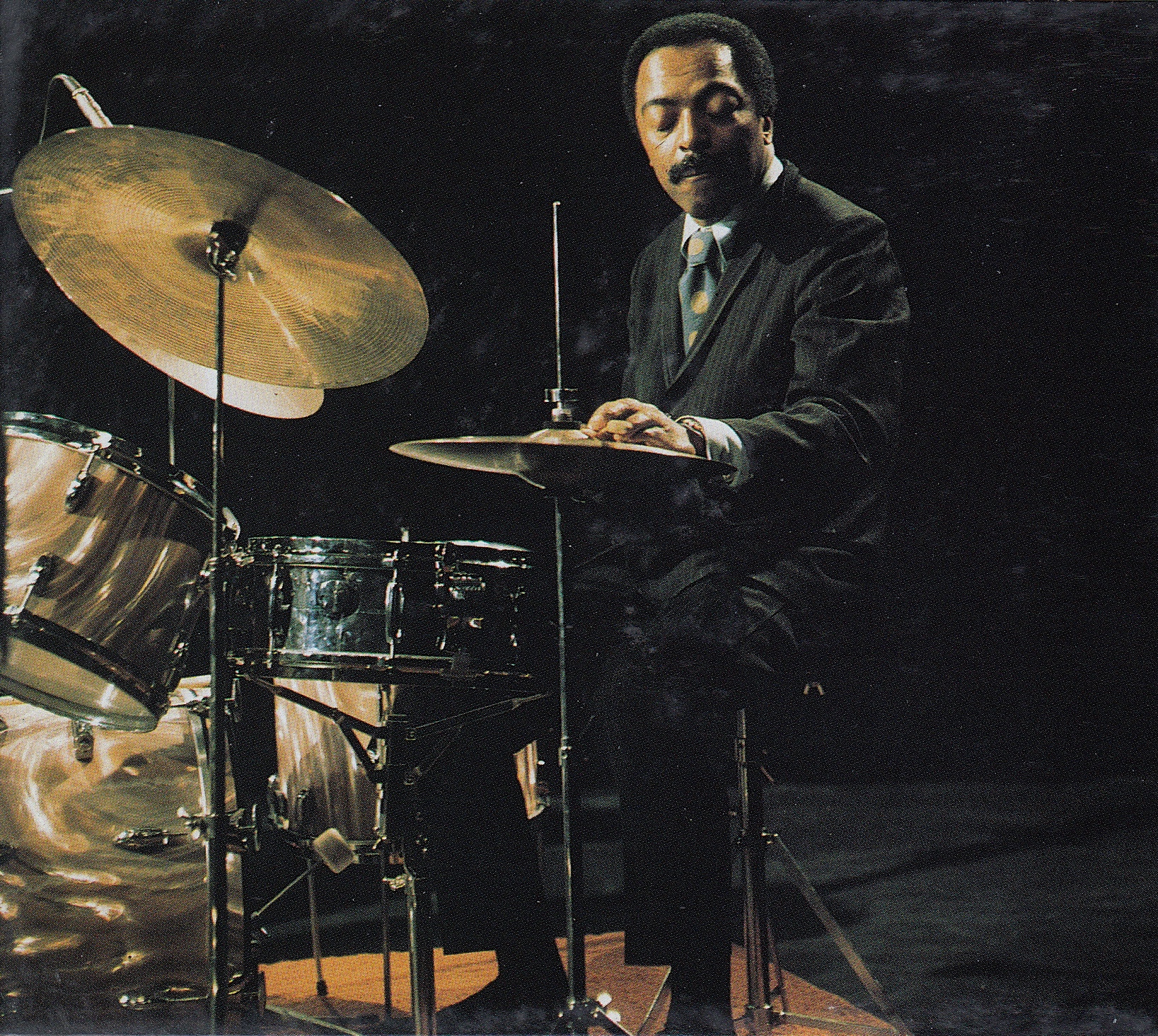
Roy Haynes: Snap Crackle Drumming

roy haynes outoftheafternoon cd

SKF NOTE: Roy Haynes on his Gretsch drumset from the CD booklet of Roy’s 1962 classic Out of the Afternoon album. Don’t own Out of the Afternoon? There’s still time!

end

Posted in SKF Blog | Tagged , , , , , , | Leave a comment

Tracking the Elusive Crisp Snare Drum

SKF NOTE: It was years and years before I found someone who could — and did — explain how to tune a snare drum to get the crisp sound of Joe Morello, Ed Thigpen, Buddy Rich, Elvin Jones, Max Roach — great jazz drummers I had been listening to most of my life.

One common piece of snare drum tuning advice involved muffling the drum or deadening the drum to reduce or stop it from ringing: Tape the batter head. Tape a small piece of cloth to the batter head. Put your wallet on the batter head. Use the snare drum’s internal muffler.

gretsch_snare

Advice on tensioning the snare drum heads, top and bottom, was less helpful. Usually the advice was something like, “Just tune the bottom head tighter than the batter head until you get the sound you want.” Then there was the Buddy Rich interview where Buddy said, “You don’t tune drums. You tension them.”

My snare at the time, and for a long time, was a 1972 5.5″ X 14″ Gretsch Chrome Snare with Remo Ambassador heads top and bottom.

Around 1974, living in Iowa, playing professionally, I met an “older” drummer from Springfield, MA named Bernie. I have forgotten Bernie’s last name. He was about 42-years old.

When I asked Bernie if he had figured out how to muffle a snare drum to get a crisp sound, Bernie looked at me like I was crazy.

“You shouldn’t have to use any muffling,” he said.

“No muffling???” I responded to Bernie’s reversing of everything I had been told up to that time.

“No muffling,” Bernie repeated. He then went on to explain how, when a snare drum is tuned properly, it will have an open sound because a drum is made to have an open sound. But, when tuned properly, a snare won’t have unwanted overtones or ringing.

I settled on tuning my snares this way: Mostly I used a white coated Ambassador batter head and a clear Ambassador snare head. Sometimes I used Remo Diplomat heads, but not often.

My Gretsch snare had 8 lugs. With snares removed, lugs clean and slightly lubricated, I first hand tightened the bottom lugs until I could no longer tighten them with my fingers.

Then, using the snare throw-off as a visual for a 12 o’clock position, I used my Gretsch drum key to tighten each lug one full turn. And I tightened the lugs diagonally opposite each other. So, if I started with the 11 o’clock position lug, I next tightened the 5 o’clock position lug.

Usually I would need to hand tighten some lugs after after tightening some lugs with the drum key.

Using that system I would end with lugs top and bottom tightened with my drum key two full turns. Working diagonally opposite again, I tapped the drum head, top and bottom, about an inch or less out from each lug. My goal was a uniform tone. If the sound at one lug was noticeably different from the other lugs, I would tighten o loosen that lug accordingly.

After re-attaching the snares to the throw-off switch I fine-tuned the snare. If memory serves, I usually tightened the snare head no more than a half-turn on each lug.

And that system gave me that crisp snare sound evading me for a decade.

end

Posted in Revisiting My Life in Music, SKF Blog | Tagged , , , , | 1 Comment