Max Roach: What You’re Playing for is Sound

SKF NOTE: This exchange with Max Roach took place on July 15, 1981 at his home in Connecticut. The back story is posted here

How up-and-coming drummers learned from their drummer elders has always interested me. In this interview segment, I asked that question of Max Roach. As sometimes happens in interviews, one question leads to others. Max’s story about Haitian drummer Tiroro‘s (also written as Ti Roro) teaching method impressed me greatly. It is one of the stories I recall most often from among all of my drum interviews and studies.

Now, thanks to internet technology, I can include a link to a Tiroro album and readers can listen to Tiroro or not. I didn’t have that option 35-years ago.

Scott K Fish: Were the older drummers receptive to you as a young guy? Could you go up to Baby Dodds or Jo Jones and say, “Hey, what is that you’re doing?” Or would they say, “Get lost, kid.”?

Max Roach: It was always… You had to first…. They would have to come to you. I wouldn’t dare approach them. You’d learn from them by watching and listening to records, and…whenever they’d come to town.

It’s not so much asking them how they did it, as to the fact that they could do something creative.

You don’t necessarily want to do what they did, but you want to be as creative as they are. That’s what it is.

So you may ask, “Well, how do you do such-and-such a thing?” They’ll never show you how to do it. But you saw [what they did] and figured out your way of dealing with it so you…preserve your own individuality. Contrary to saying, “Okay, you must hold the stick like this. You must do this with the right hand and left hand.” No. Then that would make you a slave to someone else’s technique.

SKF: And that would kind of diminish you in [the older drummers’] eyesight?

MR: Yeah. Well…. You know, you’re after being creative. So you have to listen to it — and we all learn like this — you have to listen to it and figure out how it was done on your own. That’s ear training. That’s what it is.

That way, it keeps you in the frame of mind to think and create. You think and figure out ways of doing things. Because the minute you say, “Oh, let me see how that was done,” and you listen to it over and over again — eventually this kind of thinking becomes a part of you so that…you know how to arrive at [an answer] by your own ingenuity, not by someone coming up to you and saying, “Well, okay. You do this this way. And that this way. And raise your stick to a certain height. And don’t hit this too hard.” Or whatever!

I know I had an interesting experience. I went to Haiti and a great, great drummer there, Tiroro, he played the skin-on-skin instrument. And he knew how to make the drum sing. I watched [Tiroro] teach a student and it was very close to the way we learned.

We used to listen to records and take off the record what the [musician] was doing. You didn’t see the [musician]. You would just hear [musicians]. We’d figure out what was happening with our ears. And then we’d duplicate the sound.

Well, [Tiroro] taught that way. He’d put a student in another room with a partition. And then [Tiroro] would make a sound, and the student would have to imitate the sound.

And when I asked [Tiroro] why he [taught] like that, why he would never have the student look at how he, [Tiroro], did things, [Tiroro] said, Because everybody’s anatomy is different. So it’s beholden up the student to listen, and then figure out a way — using [the student’s] own hands and the skin on the drum — how to create that sound.

SKF: That’s tough [to do].

MR: It is tough. But since [Tiroro’s] is a system they use — kids get it faster.

And I said, “Wow. That’s so close to the way we did things. Because I had to listen to records and find out what was happening. If it was a snare — what [a drummer] did on the snare; or if it was a hi-hat, or what kind of cymbals was [a drummer] using as rides, and all these things.

First, hear these things. And then find…out [what was happening], and maybe write it down, or just duplicate [the sound] by playing it.

SKF: How would that apply to different stickings?

MR: Same thing. If you heard [a drummer] traveling across the drumset, you had to figure out the stickings, and figure out just where the accents were. Maybe slowing down the records helped too.

SKF: Do you think it’s a bad approach for a kid to learn from a book that might have Steve Gadd‘s drum part from Fifty Ways to Leave Your Lover written out? Not only written out rhythmically, but also with the stickings?

MR: It has always been like that, even with the old books…. They always put sticking in. The old Haskell Harr books.

But I know what you mean. What would happen when we’d learn the stickings? Sometimes I would play something that sounded like what I heard on a record. And I’d create my own stickings and it would be totally different. Then, when I’d go to a theater and see, [for example], Jo Jones [play what I was trying to duplicate from Jo Jones on a record], I’d say, “Wow. He does it completely different.”

But the sound was there. I had the sound.

As I said earlier, getting that involved with sticking makes you lazier.., because you can do the same thing so many different ways, as far as sticking is concerend. You don’t necessarily have to say, “Well, this is the way it has to be sticked.” Because, actually what you’re playing for is sound.

In a case like, perhaps, what Gadd is doing [on Fifty Ways to Leave Your Lover] it is a rhythmic device to accompany a certain style of playing that particular number. It may work like that. Then, the sticking probably has to be done a certain way.

But for improvisational playing you don’t want to get wound up with “this is the sticking” all the time. Because every time you move from one thing to another, you’re not as felxible as if you can just play for the sound itself.

Now, I never think about sticking. I just hear the sound. I hear a certain amount of sound in a certain amount of space. And how you [create] that [sound] in that space doesn’t necessarily depend on the sticking.

I would be interested to slow it all down and say, “Ah ha! That’s what my sticking was.” But, basically it’s single [strokes] and double [strokes] unless you’re going to switch over sometimes.

end

Posted in SKF Blog | Tagged , , , , , , | Comments Off on Max Roach: What You’re Playing for is Sound

What Drummers Haven’t I Heard?

SKF NOTE: For a moment last week — a brief moment — I wondered, “Have I exhausted my lifelong study of drummers and drumming?” This was one of my rare “What drummers haven’t I heard?” moments.

I was scanning 1973 Down Beat album reviews. Many of the albums had drummers I had listened to — and liked — many times: Sam Woodyard, George Brown, Ralph Humphrey, Joe LaBarbera, Steve Gadd, Shelly Manne, Donald Dean, and Mousey Alexander.

But among the DB album reviews were drummers whose names or music, as far as I know, I never heard: Arlington Davis, Jr., Esco Cromer, Harry Wilkinson, Billy James, and Jean Louis Viale.

There really is always someone new to hear. It might be a drummer who is new in that he or she is just gaining wider public exposure. And it might be a drummer who — as with the five drummers I just mentioned — was recording over 40 years ago, and for some reason I never even knew their names until last week.

And that, for me, is one the best parts of drummers/drumming. Five new starting points: Here is a sample of the five drummers on the albums DB reviewed in 1973.

Arlington Davis, Jr 

Esco Cromer

Harry Wilkinson

Billy James

Jean Louis Viale

end

Posted in SKF Blog | Tagged , , , | Leave a comment

Sonny Greer on Buddy Rich and Jo Jones

Sonny Greer

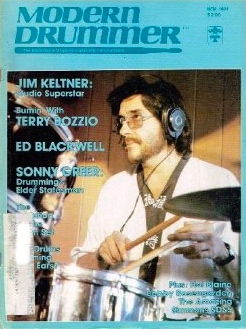
SKF NOTE: My interview with Sonny Greer took place at Sonny’s New York City apartment on March 4, 1981, published in an edited version in the November 1981 Modern Drummer.

Brooks Kerr, a pianist and Duke Ellington aficionado, was performing with Sonny as piano/drums duo at New York City’s West End Cafe when we met. I was glad to have Brooks taking part in the interview. He knew much more about Sonny Greer as a person and as a musician that I did.

Sonny’s interview transcript is full of Sonny’s verbal character sketches of well-known drummers I think worth preserving. Here is one example:

=====

modern_drummer_greer

Brooks Kerr: Sonny, what was your first remembrance of Buddy Rich?

Sonny Greer: He hung around Chick Webb and all those guys. That’s where he got a lot of his stuff from.

Scott K Fish: Buddy got a lot of his stuff from Jo Jones too.

SG: Well, Jo wasn’t in New York. Jo was out West there in 1936. Jo Jones! That’s my number one man. He’s something else.

SKF: When did you first see Jo Jones play?

SG: I saw him with Basie out in Kansas City somewhere. With the Bennie Moten band. I liked Jo right away. He was the same Jo Jones that you know now. He ain’t never had no hair.

BK: Sonny, the last time Jo Joes was up at the West End, you looked at him and said, “If you’re so rich, why don’t you buy yourself a toupee?”

SG: Yeah. He got mad.

BK: Jo’s nickname for Sonny is “Mr. Empire State Building.”

SG: That’s what he calls me all the time.

One Christmas time he found the oldest pair of shoes that he could find, gift wrapped them and said, “Here’s your Christmas present. Cost me a lot of money.”

They were shoes, man, he must have had them a thousand years. Said, “Here’s your Christmas present.” All wrapped up nice, man. I threw them in the garbage can. He’ll tell you about it. Next time you see him thell him, “Sonny told me about the Christmas present you gave him.”

SKF: As drums progressed through the ’30s, ’40s, and ’50s — with people like Jo Jones and then on up — did you [like] what was happening?

SG: Well, Jo Jones played then like he does now. He never changed his way of playing. Not that I know of. And I’ve seen him many times.

end

Posted in SKF Blog | Tagged , , , , , , , | Leave a comment

Filling the Instrument with the Breath of Life

baldwin1

SKF NOTE: Here is a favorite universal description of the relationship of living musicians to their lifeless musical instruments.

In James Baldwin‘s story, Sonny’s Blues, Mr. Baldwin’s character, Sonny, is an aspiring jazz pianist. Baldwin’s musician/instrument description is written through the eyes of  Sonny’s unamed older brother — a non-musician math teacher:

I had never before thought of how awful the relationship must be between the musician and his instrument. He has to fill it, this instrument, with the breath of life, his own. He has to make it do what he wants it to do. And a piano is just a piano. It’s made out of so much wood and wires and little hammers and big ones, and ivory. While there’s only so much you can do with it, the only way to find this out is to try; to try and make it do everything.

end

Posted in SKF Blog | Tagged , , , | Leave a comment

Harvey Mason on ‘Chameleon’

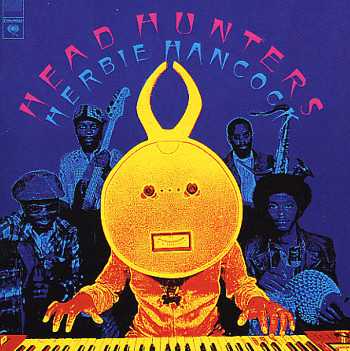
SKF NOTE: Listening to Chameleon by Herbie Hancock‘s Headhunters when the song was first released in 1973 was an experience today’s listeners missed. Cutting edge music in 1973, the best of Chameleon — the music, the sounds, the rhythm — are part of today’s music vocabulary.

The Headhunters’ Chameleon was the first time I heard Harvey Mason playing drums. It’s fair to say the Headhunters album put Harvey Mason on the map.

In 1976, Harvey Mason sat with one of the great jazz writers, Leonard Feather, for one of Feather’s signature Down Beat Blindfold Tests. Mr. Feather plays album cuts and his guest reacts to the cuts.

Mr. Mason’s response to Louis Bellson‘s 1975 version of Chameleon caught my eye for a few reasons. First, Harvey Mason tells us how Chameleon — a “group effort” — was written. Second, in a case of double irony, Mason singles out Headhunters percussionist Bill Summers — who plays Chameleon’s signature beer bottle into — as an equal partner in the song’s creation. Yet instead of Bill Summers, Harvey Mason in this Blindfold Test credits Bill Simmons.

Getting Bill Summers’s last name wrong could have happened for many reasons: Harvey Mason could have misspoken. Leonard Feather, or Feather’s tape transcriber, could have heard and transcribed the name wrong. The name might have been botched at Down Beat or at the magazine printer’s. It was nice of Harvey Mason to give Bill Summers credit where credit is due.

Leonard Feather plays Louis Bellson’s 1975 version of Chameleon, and Harvey believes he, Mason, is hearing Maynard Ferguson’s 1974 arrangement of Chameleon — which has drummer Dan D’Imperio. Reading this Blindfold Test in 2016, I was expecting Harvey Mason to identify Louis Bellson. I don’t know if my expectations would have been different in 1976.

At any rate, I enjoyed Mason’s response to Bellson’s Chameleon both before and after Mason knows he has just heard Louis Bellson on drums. And for good measure I am including all three Chameleon versions in chronological order in this post.

=====

LOUIS BELLSON, Chameleon (from Explosion, Pablo). Louis Bellson, drums; Blue Mitchell, trumpet; Bill Holman, arranger.

Harvey Mason: That’s very familiar. I think that was the first cover of that tune. That was interesting, the way that tune came about. When I was playing with Herbie [Hancock] we were rehearsing for the album and trying to get tunes together. It was really a cohesive unit; we really felt good when we played together. We always carried tape recorders and just started playing and editing the things that we played in rehearsals. We came up with a great tune and put it together and it turn out to be … wow! Unbelievable success.

It was a group effort. Unfortunately, Bill Simmons [sic] was left off a lot of the credit, but he contributed as much as anyone else.

On the version we just listened to, the arrangement is good. I’d give it four stars. It was performed very well. I believe it was Maynard. I hope it was anyway. The drummer I don’t know. It was interesting to hear him play the same pattern that I played on the record. Fine. I really enjoyed it.

Leonard Feather: Did you know it was recorded by Louis Bellson?

HM: If it was Louis Bellson, then it was Blue Mitchell on trumpet, not Maynard Ferguson. It was interesting to hear Louis. Beautiful, Louis!

Source: Blindfold Test: Harvey Mason, by Leonard Feather, Down Beat, February 12, 1976

Posted in SKF Blog | Tagged , , , , , , , , , | Leave a comment