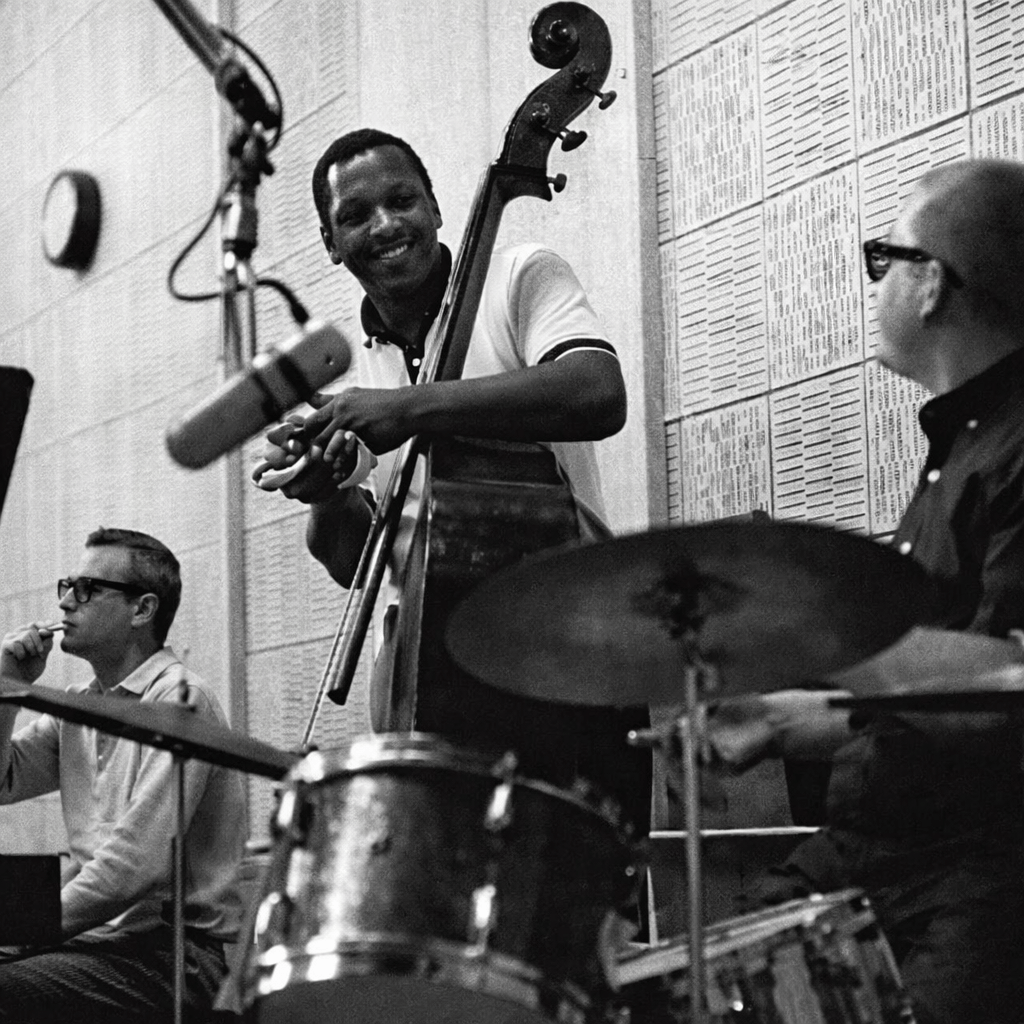
SKF NOTE: Ron Spagnardi asked me to interview two drummers for Modern Drummer‘s 10th Anniversary issue published in January 1986: Neil Peart and Alan Dawson. I don’t know exactly when this interview took place, but it was certainly in 1985.
Mr. Dawson and I met at his home in Massachusetts. The overall focus of these 10th Anniversary interviews was to ask drummers to reflect on drumming highlights from the decade just past, and also, on what was likely to happen in the drum world over the next ten years.
In this excerpt, I ask Alan Dawson about changes in his students. His answer leads into a broader discussion of the role of studio drummers past and present, and also, a glance into Dawson’s years (1963-68) as a popular studio drummer for Prestige records.
SKF NOTE: I always read books with a pencil nearby for underlining good passages so I can easily return to them.
Sound is at the heart of the musical conception of great jazz musicians. Miles Davis once said to me: “Sound is the heart of my music. Ideas are a dime a dozen, but creating a sound all your own is most important.”
Sonny [Rollins] agrees[:] “I think that sound is the overall biggest component. It’s more important than ideas, really. …I have found that sometimes ideas can help generate a sound. That can happen if you have a definitive style, that your ideas are usually part of the sound itself. But sound itself supercedes ideas in general.”
SKF NOTE: Alan Cornett practiced, became a good drummer, and then misfortune forced him to either start all over or quit. Mr. Cornett chose to start all over. God bless all musicians like him.
What first caught my attention is the loose, swinging feeling when Cornett is drumming in the video accompanying his Washington Post story. I’ve heard drummers whose arms and legs work fine unable to play as loose and swinging. Mr. Cornett is literally singing his bass drum parts. Here’s a more detailed account of Alan Cornett.
=====
Washington Post
Perspective
A car accident cut this drummer’s career short. He wouldn’t let the music stop.
By John Kelly Columnist August 8
What did Alan do before he was flung from his seat and struck his head on the pillar of the car, severely bruising his spine between the C5 and C6 vertebra?
“I’m a musician,” Alan said. “I play the drums.”
“Well, I don’t think you’re going to be able to do that..,” the doctor said. “I think drummers need to use their legs.”
Alan played with various bands around Washington and twice won a DC101-sponsored “Best Drummer in D.C.” contest.
But the same way he’d become a drummer in the first place was how he became a drummer in the second place: He practiced.
Alan needed his right foot to [play] the bass drum thump. But…didn’t have the strength…
In 1992, Alan…donned a headset microphone attached to a computer module made by…Ddrum. By making a clicking sound with his tongue, Alan could trigger a digital bass drum sound through a set of speakers.
SKF NOTE: Take a moment to read Steve Hideg’s, Neither Bills Nor Advancing Age Can Dim the Glow of a Drummer’s Dream, and watch the accompanying video. I almost didn’t. That would’ve been my loss. For me, Mr. Hideg’s story is as much about loving freedom as it is about drumming. Although, in Mr. Hideg’s case, his lifelong struggle to play “American jazz” on his drumset is about his love and pursuit of freedom.
Thank you, Kat Chester, for bringing Mr. Hideg’s story to my attention. Thank you to the dedicated members of DrumForum.org who also find true inspiration in Steve Hideg’s story. Readers can follow updates on a GoFundMe campaign Tim Lawler started to help Mr. Hideg.
Finally, thank you, columnist Steve Lopez and photographer Francine Orr of the Los Angeles Times for their insight in telling Steve Hideg’s story.
You must be logged in to post a comment.